Global conflicts are reshaping the behaviour of Canadian travellers seeking to save money as they plan their holidays.
Airlines are facing pressure from soaring fuel costs stemming from the war in Iran and passing on the costs in the form of higher fares and fuel surcharges.
Travel agents say they are already seeing 20 to 30 per cent increases in the price of domestic and international flights.
According to the International Air Transport Association (IATA) the average weekly price of jet fuel has climbed to US$175 compared to US$99.40 the week before the war on Iran began. The more than 50 per cent surge in price puts massive cost pressures on airlines and is expected to lead to even higher fares for travellers on popular destinations and fares.
“People are not wanting to pay those higher prices. So, booking early is the thing to do. We’ve already seen some prices go up 20 to 30 per cent on flights for the summer,” said Rachel Lalonde, Canadian Automobile Association (CAA) store manager for North and East Ontario.
Air Canada adjusting prices
Air Canada has already said that it has adjusted its fares to account for jet fuel increases. It’s also considering cutting regional routes in order to save money.
In an email to CTV News, Westjet said: “The recent sharp increase due to the situation in Iran has already made operating flights more expensive.” Based on this, Westjet spokesperson Julia Kaiser wrote that “it’s likely further pricing adjustments may be needed.”
Air Transat has also begun tacking on fuel surcharges for flights to Europe and raising fares on peak travel dates and routes said Air Transat CEO Annick Guerard.
Volatility around the globe has also resulted in changes to where Canadians are booking their getaways.
Global Affairs Canada has warned people to avoid non-essential travel to Cuba due to worsening shortages of fuel and electricity. Basic necessities such as food, water and medicine are also in short supply, which has led to Canadian airlines suspending service to Cuba.
Last month’s violence in Puerto Vallarta Mexico, sparked by the killing of a mafia cartel boss may have also deterred some from travelling to the country.
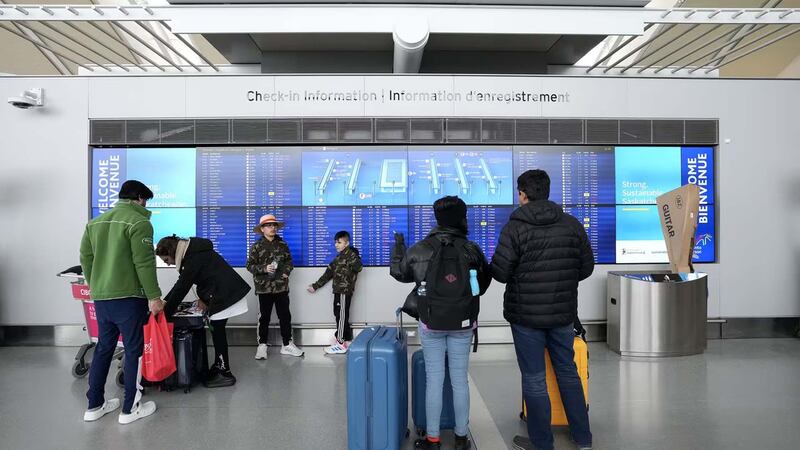
Island travel
This March break, Lalonde said her CAA office has seen an increase in bookings to the Dominican Republic and Jamaica.
After Hurricane Melissa devastated Jamaica last October, the island has re-opened for business.
There has also been an uptake in bookings to smaller islands such as Aruba, Curacao, Barbados and St. Lucia.
Lalonde said vacation stays on those “premium islands” may be more expensive and require connections, but travellers are willing to be inconvenienced and pay more for destinations that are safe, fun and warm.
Lalonde says Canadians are still travelling to Mexico, but she’s seen a shift of reservations from Puerto Vallarta to Cancun resorts.
Meanwhile Canadians continue to shun U.S. destinations. Statistics Canada has reported that Canadian travel to the U.S. is down 14.5 per cent from a year earlier and 31.5 per cent from February 2024.
The U.S. tourism industry is projecting a 5.7-billion-dollar loss in 2025-2026, driven by the ongoing boycott by Canadian travellers.
Europe over U.S. flights
Instead of the U.S., Lalonde says some Canadians are choosing to travel to Europe instead.
European destinations like England, France and Portugal have more cost-effective vacation options, especially with non-stop flights out of Ottawa and Montreal.
The exchange rate is also having an impact on where Canadians travel. The exchange rate for the Canadian dollar has hovered around C$0.73 against the U.S. greenback since 2023.
Lalonde said there is more Canadian interest in travelling to Japan because of how strong the Loonie is, compared to the Yen.
The exchange rate for the Japanese yen is US$0.63, 10 cents lower than the Loonie.

