Six years after the COVID-19 pandemic forced Canadians into lockdown, many children are still playing catch-up for the time they missed learning in the classroom.
In Saskatchewan, the government is funding literacy instruction training for teachers, since students are falling behind on their reading and writing skills. But the issues aren’t unique to that region of Canada.
A 2023 international literacy test for 15-year-olds, known as the Programme for International Student Assessment (PISA) found that in Canada, 18 per cent scored below the benchmark for reading literacy.
But parents and caregivers can help children improve their reading skills outside of the classroom, according to an expert.
Kate Cattell-Daniels, a children’s librarian with the Toronto Public Library, told CTV Your Morning this week that while the pandemic led to some learning loss, there’s also been an enthusiastic return to libraries and library programs.
“The catching up is happening, it’s just maybe in progress still,” Cattell-Daniels said.
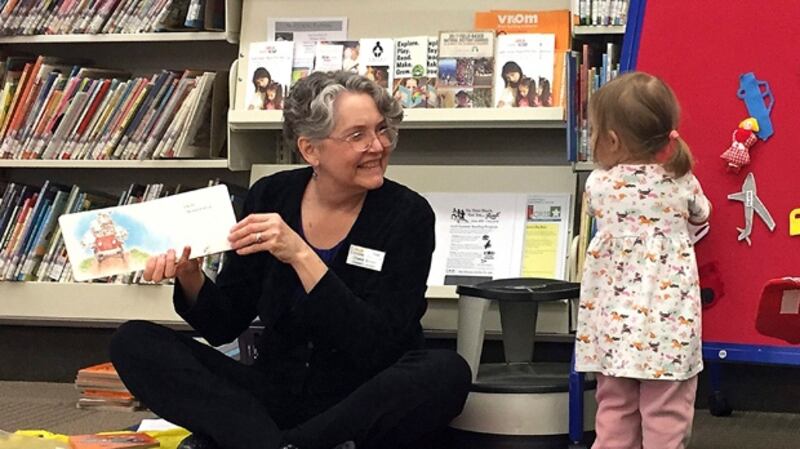
Meet a child where they’re at
Cattell-Daniels said the foundation of reading instilled in children between the ages of zero and five years, will have a long-lasting impact that can influence their life, learning outcomes, and career prospects all the way into adulthood. She stressed that it’s never too early or to late to get started.
“There’s a lot still to be done, and a lot of things that you can still do, and your kid can still do to develop that literacy that we love to see,” Cattell-Daniels said.
When it comes to helping improve a child’s literacy skills at home, Cattell-Daniel said it’s best to meet a child where they are at, and feed into their curiosities and passions as much as possible
“If your kid is interested in dinosaurs, follow that,” she said. “There’s no need to be forcing them to read books about something they’re maybe not as interested in.”
‘Books are books’
Cattell-Daniels admits that while the pandemic was an “artificial time” since kids “aren’t meant to learn in a vacuum,” screens can still be effective as a learning tool, depending on how they’re used. She said ebooks and audio books as great at helping encourage reading, and the library has seen a huge spike in circulation statistics around these forms of media.
Cattell-Daniels added that listening to audiobooks still counts as reading because it exposes children to language, vocabulary, words and sentence structure.
“When we talk about reading, we’re talking about the physical act of reading words, but also things like print awareness,” she said. “Just being aware of this is a book, this is how I hold it, this is how it progresses. These are chapters, these are the ways (they’re) structured, the way characters are developed.”
Cattell-Daniels also dismissed the belief that comic books and graphic novels aren’t considered “real books.”
“Comic books are real books,” she said. “All books are real books. Books are books, there are no fake books. I haven’t seen that yet.”

