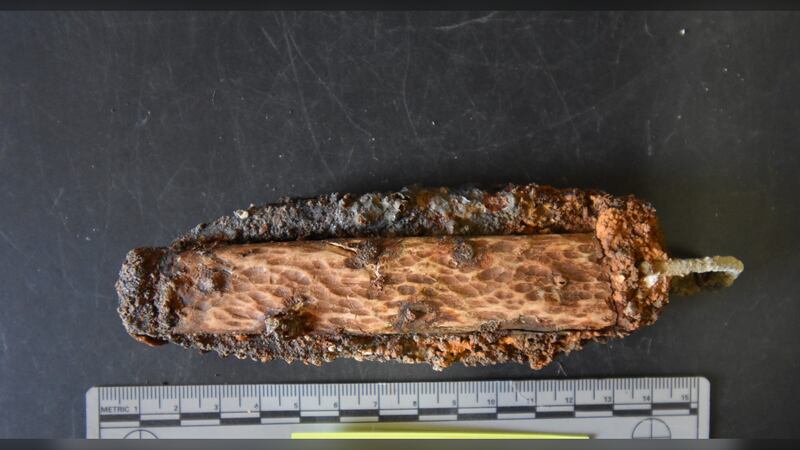
New testing has helped identify a set of human remains dating back to the First World War as those of a Manitoba soldier killed in action.
The Department of National Defence (DND) confirmed Tuesday that human remains found in Loos-en-Gohelle, France, are those of Pte. Albert Henry Detmold, who lived in Roblin, Man.
“The identification of Private Detmold more than 100 years after his death is a testament to our commitment to reconnecting fallen soldiers with their families, their units and the nation,” National Defence Minister David McGuinty said in a statement.
“Those who made the ultimate sacrifice are never forgotten.”
Detmold’s story
Detmold was born in Hamburg, Germany, in 1884 and later immigrated with his family from England to Canada, according to DND. He enlisted in Winnipeg in 1916 and joined the 107th Overseas Battalion, Canadian Expeditionary Force, which was later converted to a pioneer battalion when it arrived in Britain.
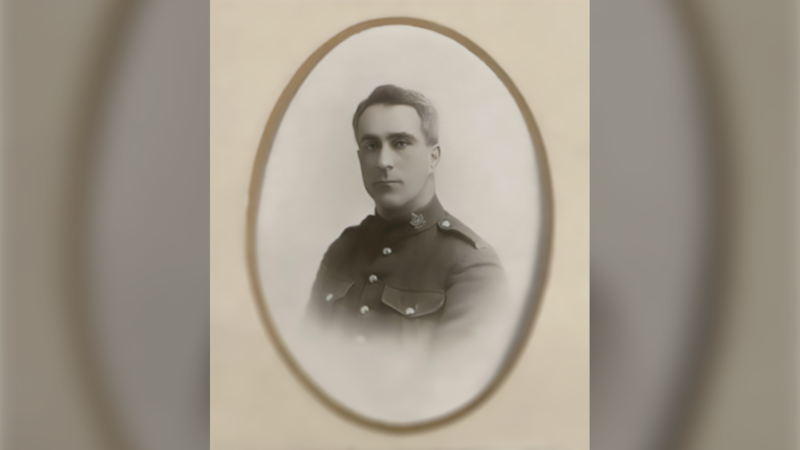
The battalion performed basic combat engineering tasks, such as clearing roads, maintaining light railway tracks and consolidating captured trenches, often under dangerous conditions, DND said.
Detmold was reported killed in action on the first day of the Battle of Hill 70 on Aug. 15, 1917 after he and other soldiers went missing while searching for the dead and wounded under heavy shellfire.
He was 33 years old and left behind a fiancé in London.
His name was engraved on the Canadian National Vimy Memorial, which commemorated members of the Canadian Expeditionary Force who died in France during the First World War.
Discovery during a construction project
Sarah Lockyer, a forensic anthropologist who works as the DND’s casualty identification coordinator, said the remains were discovered in August 2020 during a construction project.
“The grounds in France and in Belgium still have an incredible amount of unexploded ordnance, so it tends to be a munitions clearing crew who removes all of that before any construction happens on that particular site, who make these discoveries,” she told CTV News on Tuesday.
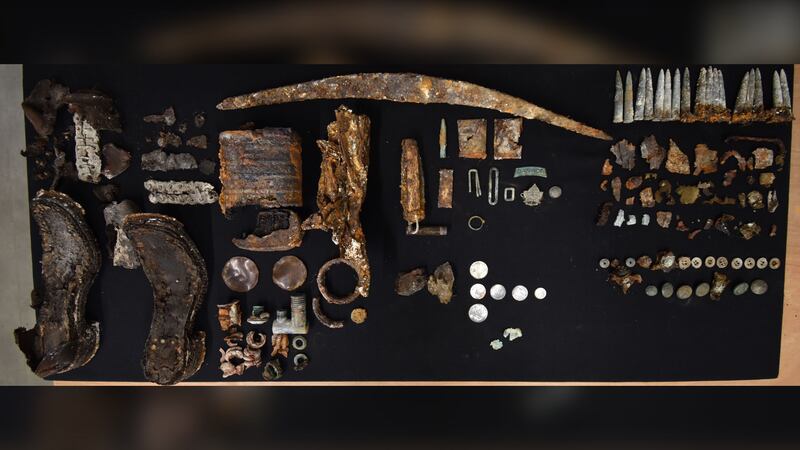
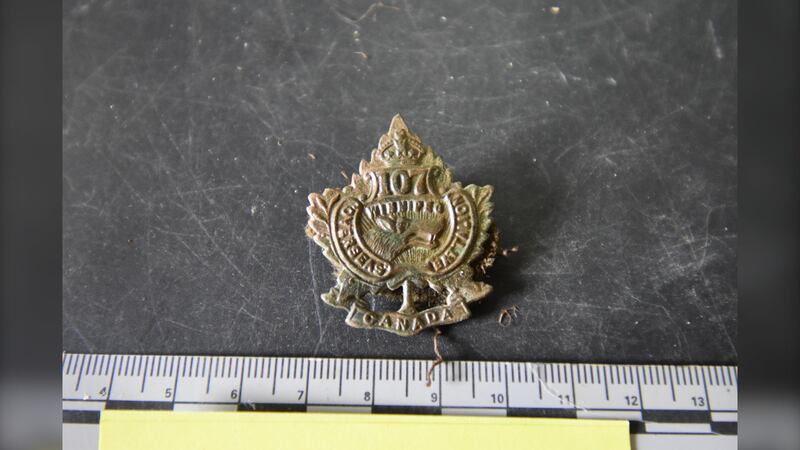
Lockyer said a cap badge identifying the 107th Overseas Battalion was found along with the remains, which helped narrow down who the missing solder was.
“If we look at the Battle of Hill 70, which is the battle where Private Detmold was killed in action, there’s about 1,300 Canadians that are missing from that specific battle,” she said. “Without an artifact to tell us which unit that they’re a part of, the list of candidates starts at 1,300 which is quite large. But if we have unit identifiers, it can very, very quickly be extremely narrowed down.”
According to Lockyer, there were only 11 soldiers reported missing from Detmold’s unit during the battle, and historical, genealogical, anthropological, archeological and DNA analysis was used to help positively identify Detmold.
“We actually needed a DNA donor both on the maternal side of the family and the paternal side of the family, because one DNA reference sample in this particular case wasn’t enough,” she said.
While it took more than five years from the discovery to positively identify the remains as Detmold, Lockyer said there have been longer investigations. Lieutenant Francis Henry Hemsley, a soldier killed in the same battle, was positively identified in 2024, 12 years after his remains were discovered in France.
Detmold’s family members were notified, and a burial ceremony will be held in France in July.