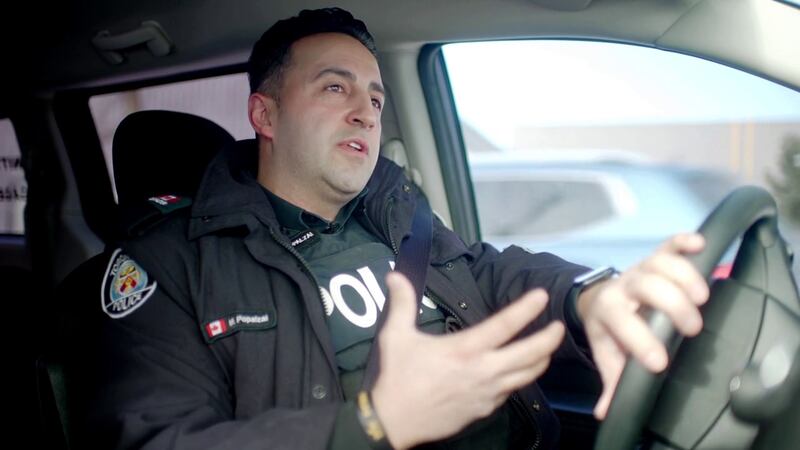
Riding around Toronto in Det. Const. Mustafa Popalzai’s police cruiser, it’s surprising that the man who once despised law enforcement decided to make it his life’s work.
“I never saw policing as a noble profession,” he said, driving in Flemingdon Park – one of Toronto’s most multicultural and densest neighbourhoods, where more than 80 languages are spoken.
Born in Afghanistan in 1986 during the Soviet occupation, Popalzai and his family fled to Peshawar, Pakistan, when he was two years old.
Some of his earliest memories are of his father getting stopped by police who asked immigration documents, adding that he even saw his father beaten by police, who often demanded bribes.
“They don’t need a reason,” he said. “That’s how some officers in some parts of the world make their money, because they are not paid very well.”
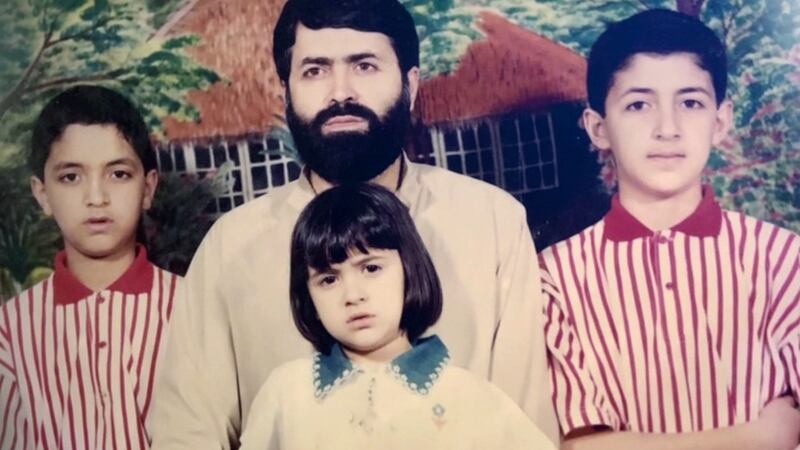
When Popalzai was 14, his family moved to Canada. But it took years after that for his anger towards police to subside, until he took as civilian job with the Ottawa Police Service and saw how officers can give back to their communities.
In 2014, he joined the Toronto Police Service, the country’s largest municipal police service, where he worked in homicide, guns, gangs and major crime.
But in 2021, something changed for him.
Popalzai was at the gym with a follow officer, Sgt. Farzad Ghotbi, when he saw searing images that he couldn’t get his eyes away from: thousands of Afghans clinging to a U.S. military plane in Kabul after U.S. troops withdrew and the city had fallen back into the hands of the Taliban.
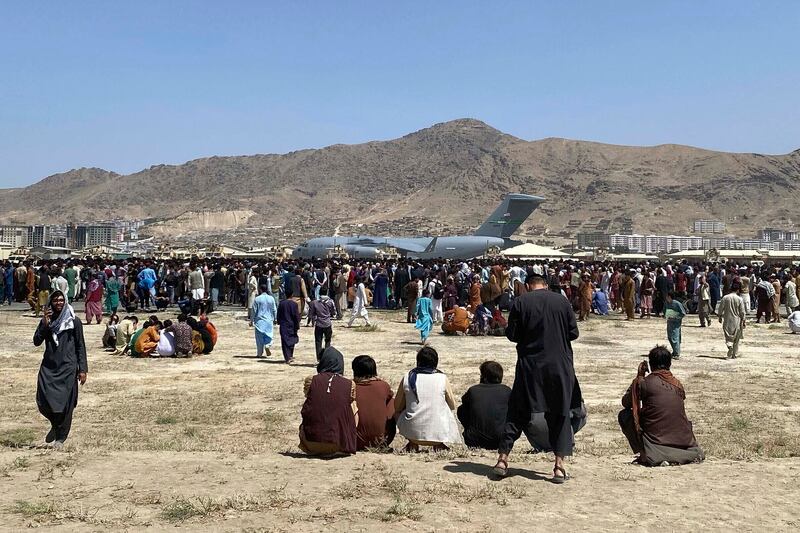
That triggered a frantic race to try and escape.
“Looking at the desperation, looking at the chaos,” Popalzai revealed, “I saw myself in the eyes of those children.”
That’s why he and Farzad decided to welcome Afghan refugees on the very day they landed in Canada at Toronto’s Pearson Airport.
But the children – almost reflexively – tried to hide because they were wary of police, just as Popalzai once was.
“I knew why they were running away, but at the same time I really wanted to make contact with them.”
That’s what planted the seed for a charity he co-founded with Ghotbi called Project Hope, which the father of four does on his own time. The program, initially for Afghan refugees, has now expanded to include all newcomers.
“One of our main things … is to reassure them and let them know that we as the police are here to serve and protect them, to make sure they’re successful.”
Some of the youngest volunteers, immigrants themselves, also want to be police officers.
“Policing is not really common for women back home in Iran,” said Tina Barzan, 23, currently a Toronto Police Service auxiliary officer. “So when I came here, I’ve seen female officers in uniform helping people, serving their communities … I thought, like, ‘I can do it.’”
Barzan, along with Mickael Ali, a 19-year-old student enrolled in police foundations at Centennial College, credit Popalzai for making a difference.
“(Popalzai is) able to bring all of this together for people he doesn’t know, but yet, will be the future of tomorrow,” Ali said.
As for Poplazai, he still has dreams of his own: making Project Hope available nationwide.
“I’m not going to give up on that.”
BY THE NUMBERS
1. Total donations delivered to newcomers (2021-2025): $1.5 Million
2. Information sessions to newcomers to Date: More than 60
A. Number of participants: More than 10,000 participants
3. Number of contacts/reach with newcomers: Approximately 20,000 newcomers
4. Number of youth/children newcomer contacts: Approximately 3,000-plus
5. Number of newcomer homes visited by officers: Approximately 100 homes
Source: Project Hope

