Sharan Kaur served as the deputy chief of staff for former Liberal finance minister Bill Morneau and is currently a principal at Navigator.
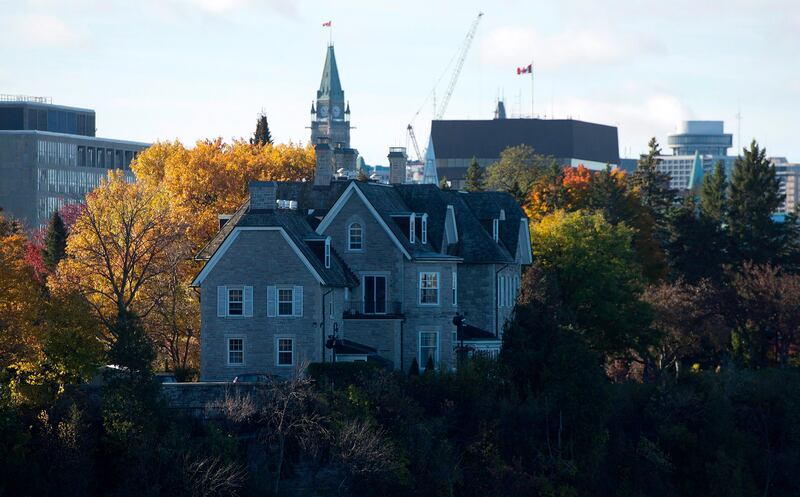
For years, the dismal state of 24 Sussex Drive has been a recurring punchline, a symbol of political paralysis, and a quiet national embarrassment. I spent years inside the machinery of government, close enough to watch good policy die, not from bad ideas, but from political timidness. The file on 24 Sussex is one I know well. It remains, after all this time, one of the clearest illustrations of how partisan reflex poisons even the most straightforward decisions a government can face.
A prime minister’s official residence in a G7 nation should embody dignity, a setting worthy of hosting world leaders. Instead, in the most exquisitely Canadian fashion, we have allowed our head of government to be relegated to a substandard cottage. This isn’t about building the palace of Versailles. It’s about basic upkeep. And having watched this file get shelved, again and again, as either ‘too hard’ or a convenient prop for partisan point-scoring, I believe it is time we demand action.
The decision to renovate or replace the residence has never been complicated as a policy matter. The building is structurally compromised, was previously riddled with mould and rodents, its mechanical systems a relic of another era.
Officials long ago pegged the cost of serious rehabilitation to be tens of millions of dollars. That is not a rounding error, but it is also not an unusual line in a federal budget that routinely moves billions. The government has spent comparable sums on modest infrastructure grant cycles without a single press release.
Policy versus politics
What has made this a simple maintenance question intractable is not the money. It is the culture of performative partisanship that turns every institutional decision into an opportunity for scoring points. The moment 24 Sussex becomes a wedge issue rather than a maintenance question, we have trained the public to treat institutional upkeep as a luxury rather than a responsibility.
We have taught Canadians that the appropriate response to a failing national asset is not repair, but outrage.The residence is one symptom of a broader issue: our collective inability to distinguish between policy and politics, between stewardship and scandal.
Successive prime ministers, regardless of their political stripe, have understood the problem and chosen inaction. Not for reasons of fiscal prudence, but raw political calculus. No leader has wanted to absorb the headline, ‘PM spends $100 million on house’ in a news cycle that rewards simplicity over nuance. So the building sits. Empty. Deteriorating. And with each passing year, the bill grows, as deferred maintenance always does.
This is not governance, it is a sign of cowardice.
Security and international embarrassment
There is a dimension to this debate that receives almost no serious attention: security. The Prime Minister of Canada is among the most symbolically significant targets on the continent. Providing them with a secure, purpose-built official residence is not a courtesy, it is an operational necessity.
The current arrangement, which has seen recent prime ministers housed in alternatives never designed for that level of protection, creates real vulnerabilities. When we defer this decision, we are not just embarrassing ourselves aesthetically. We are compromising the physical safety of the head of government.
The embarrassment, meanwhile, runs deeper than optics. Foreign diplomats and consuls general stationed in Canada are regularly housed in residences that far exceed the standard we have tolerated for our own prime minister. That gap is not just ironic. It is a quiet signal to the world about how seriously we take the office itself.
During my time at the Department of Finance, I worked alongside people who understood the distance between what was right and what was politically survivable. The 24 Sussex file was always in the latter category. Nobody in the upper echelons of the PMO wanted to touch it. The procurement realities alone gave staff heartburn: what might cost a reasonable sum in the private sector has a documented tendency to balloon under federal contracting. That fear, compounded by the optics, made inaction the path of least resistance. It always does, until inaction becomes untenable.
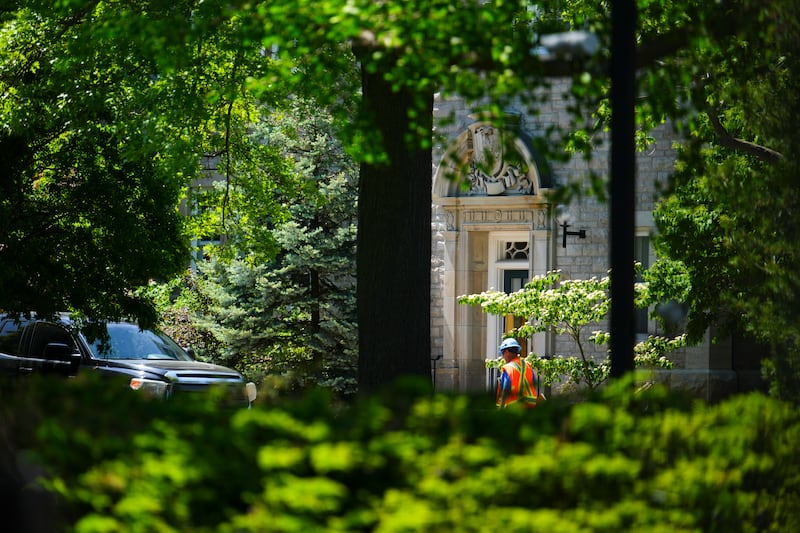
Despite the years of inaction, we may be at a moment for change. A government led by Prime Minister Carney, with PCO Clerk Michael Sabia’s fingerprints on its institutional reorganization, offers at least the hope of a different relationship with hard decisions. Despite Carney saying he is in no rush to deal with the issue, both men have demonstrated, in their respective careers, a willingness to absorb short-term political pain in the service of longer-term structural integrity. That is a genuinely rare quality in Canadian public life. The 24 Sussex question is, in its own modest way, an early test of whether that reputation holds.
What is required is not a lavish reimagining. It is a serious, honestly-budgeted commitment to either a comprehensive renovation or a purpose-built replacement, procured with market discipline rather than through the slow-motion disaster of conventional federal contracting. A combination of private-sector partnership and genuine project governance could deliver something both historically sensitive and fiscally defensible. This has been done elsewhere. There is no reason Canada cannot do it here.
The mansion at 24 Sussex does not belong to any party or any person. It belongs to the office and to the country. When we allow it to fall into ruin while foreign missions on our own soil maintain superior standards, we are not saving money. We are cheapening something that takes generations to build: the institutional gravity that makes a government worth taking seriously.
The leaders who kicked this can down the road were not being prudent. They were choosing their own comfort over their obligations. It is time for a government with a genuine mandate and, by all appearances, the backbone to match to end this chapter of managed embarrassment and give Canada its house back.
More from Sharan Kaur:

