The political fallout of changing Old Age Security may be too significant for any government to act.
On Wednesday, UBC policy professor Paul Kershaw unveiled a proposal aimed at reducing Canada’s growing deficit by cutting OAS benefits for higher-income seniors.
Kershaw says gradually phasing out OAS at a household income threshold of $100,000—or potentially as low as $81,000—could save Ottawa roughly $20 billion annually. He argues those savings could be used to eliminate senior poverty and address broader affordability challenges.
OAS is considered taxable income, and recipients are required to pay a 15 per cent tax on it if their global net income is more than a certain threshold—about $93,000 for income earned in 2025. That means a senior couple making more than $185,000 in combined income would still receive partial OAS benefits.
The benefit doesn’t go away completely until an individual’s income reaches more than $150,000. Kershaw calculates that only about four per cent of seniors do not receive at least partial OAS.
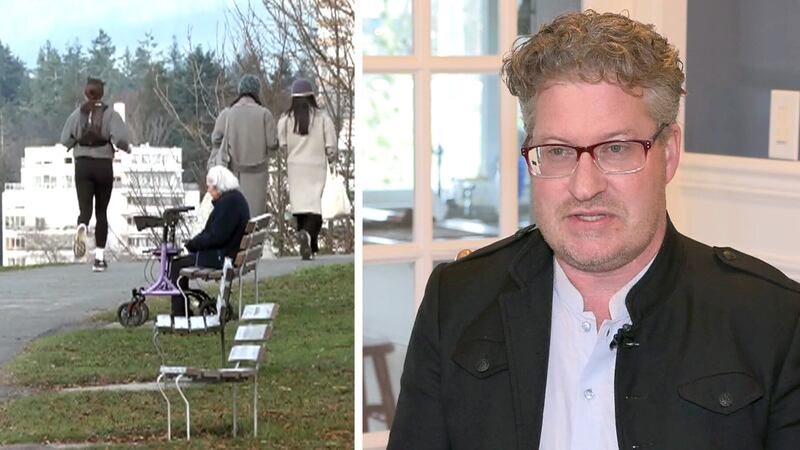
However, any move to reduce benefits for seniors is widely seen as politically risky.
Hamish Telford, a political scientist at the University of the Fraser Valley, says Canada’s aging population makes such reforms difficult.
“I think he’s torn,” Telford said, referring to Prime Minister Mark Carney.
“I think as an economist he understands the logic of reducing benefits to well-off seniors, but politically it could be very damaging to him.”
Liberals and Conservatives respond
In a statement to CTV News, federal Secretary of State for Seniors Stephanie McLean emphasized the importance of the current system.
“OAS is the cornerstone of Canada’s retirement income system, providing support to the more than 7.5 million seniors who built this country,” McLean’s statement reads. “The Guaranteed Income Supplement provides extra support for the most financially vulnerable seniors.”
McLean added the government is focused on growing the economy, lowering costs, and encouraging investment, but did not address whether changes to OAS are being considered.
Meanwhile, Conservative finance critic Jasraj Singh Hallan avoided directly commenting on the proposal, instead criticizing the Liberal government.
“Instead of attacking our seniors, Mark Carney should scrap the industrial carbon tax that drives up the cost of the things we make, grow and eat,” Hallan said.
“The Carney Liberals need to get control over their highest non-pandemic deficit in history, scrap anti-development policies, and get out of the way so we can build the projects needed to grow our economy.”
Public reaction mixed
A recent poll from Research Co. suggests broad support for Kershaw’s idea, with three in four Canadians in favour of revising OAS.
However, some seniors say the issue is more nuanced.
Collin Jeffares of Beaumont, Alta., says he and his wife receive OAS, but already face clawbacks due to their income.
He says he wouldn’t oppose lowering the threshold, but questions how much revenue the government currently collects from those clawbacks.
That figure remains unclear.
“I’d be willing to forgo my OAS if I was convinced the federal government could redirect it to low-income seniors who desperately need it,” Jeffares said.
He added that any reforms should ultimately aim to improve seniors’ quality of life, as the cost of living continues to rise.

