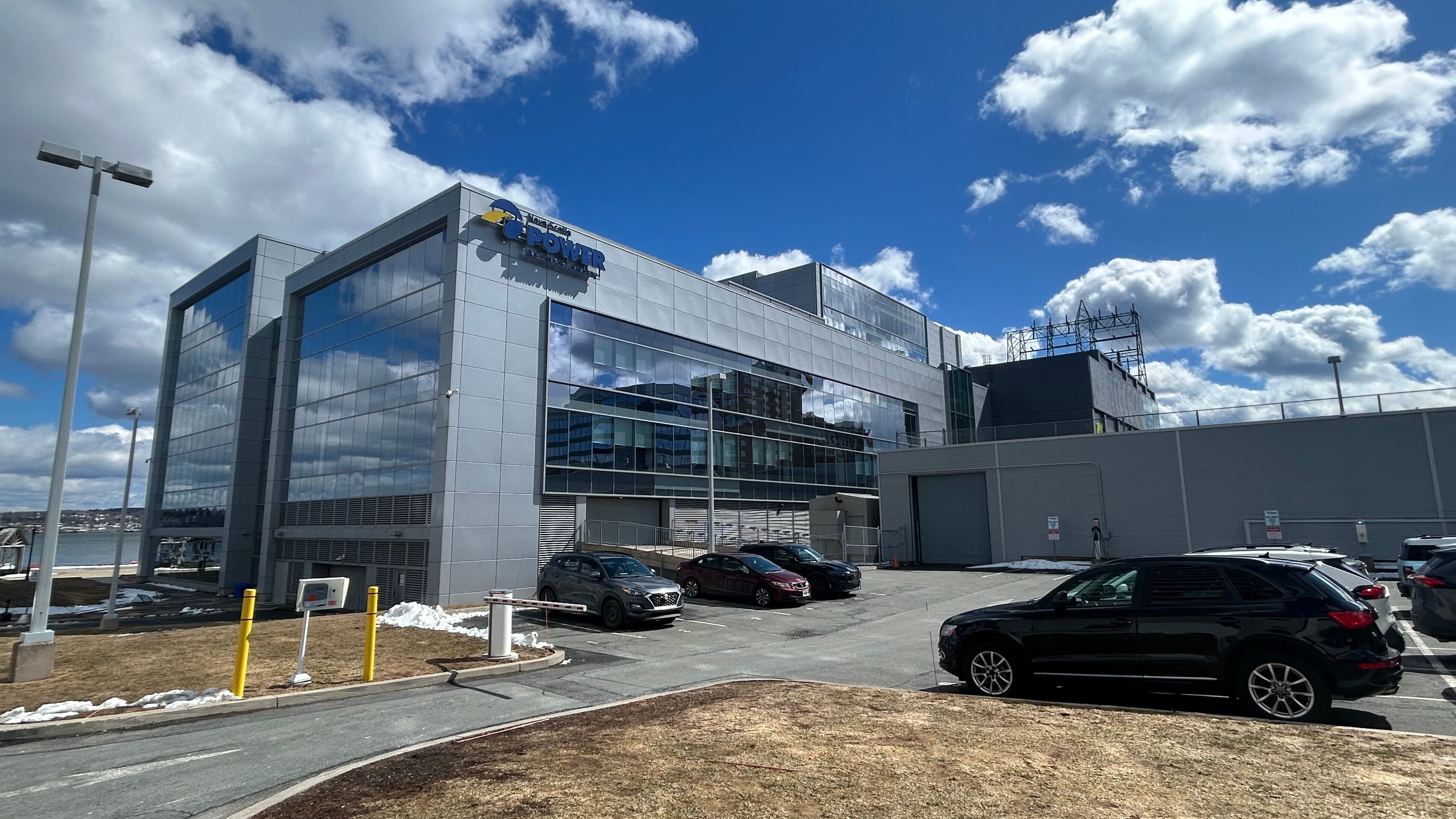
For more than 30 years, Nova Scotia Power has paid no direct municipal taxes on its roughly 250 properties in the Halifax Regional Municipality. Section 18 of the Nova Scotia Power Privatization Act of 1992 allows the company to instead make payments to the provincial government, which are then distributed to municipalities.
A new report for Halifax council could upend that arrangement.
Last month, Coun. Kathryn Morse put forward a motion seeking a staff report on repealing Section 18 of the act to require the utility to pay property taxes in Halifax. The motion passed unanimously, and the staff report was submitted ahead of council’s next meeting on Tuesday.
“HRM is experiencing budget pressures related to rapid population growth and requires more diversified revenue sources,” Morse’s original motion reads. “As a for-profit utility, NSP has capacity to pay commercial property taxes.”
The staff report, which recommends council ask the mayor to write a letter to the minister of Municipal Affairs to repeal Section 18, notes Nova Scotia Power owns 251 properties across the Halifax municipality, many of which have less than $100,000 in taxable value.
Their four highest-value properties in Halifax are:
- Tufts Cove Generating Station on Windmill Road (taxable value of $63 million)
- head office building on Lower Water Street (taxable value of $49 million)
- Mersey Hydro System in Head of St. Margarets Bay (taxable value of $26 million)
- Malay Falls Hydroelectric Plant in Sheet Harbour (taxable value of $22 million)
“The total 2026 taxable value of all NSPI property in HRM is $278,591,500 and falls entirely under commercial exempt,” the report reads.
The report says if all Nova Scotia Power properties in Halifax were taxed using the 2025 commercial rates, the revenue would be roughly $7.99 million. In 2025, the utility’s payment to the municipality in lieu of taxes was an estimated $6.5 million.
The report also notes the current structure under Section 18 “promotes greater equity among municipalities” by ensuring all affected Nova Scotia districts receive some revenue.
“Without Section 18, municipalities hosting major generating stations, substations, or transmission infrastructure could receive significantly higher property tax revenues simply because the assets are located within their boundaries,” the report reads. “This approach supports more balanced municipal funding across Nova Scotia rather than concentrating tax capacity in a small number of host communities.”
According to the Nova Scotia government’s website, Halifax received the largest grant payment from Nova Scotia Power in the 2025-2026 fiscal year at roughly $6.5 million. The Cape Breton Regional Municipality, which had a Nova Scotia Power assessment value of $153 million, received $3.7 million.
The Region of Queens Municipality got $1.3 million and the West Hants Regional Municipality received $258,000.
Council will vote on the motion to possibly send a letter to the minister of Municipal Affairs at their next meeting.
For more Nova Scotia news, visit our dedicated provincial page

