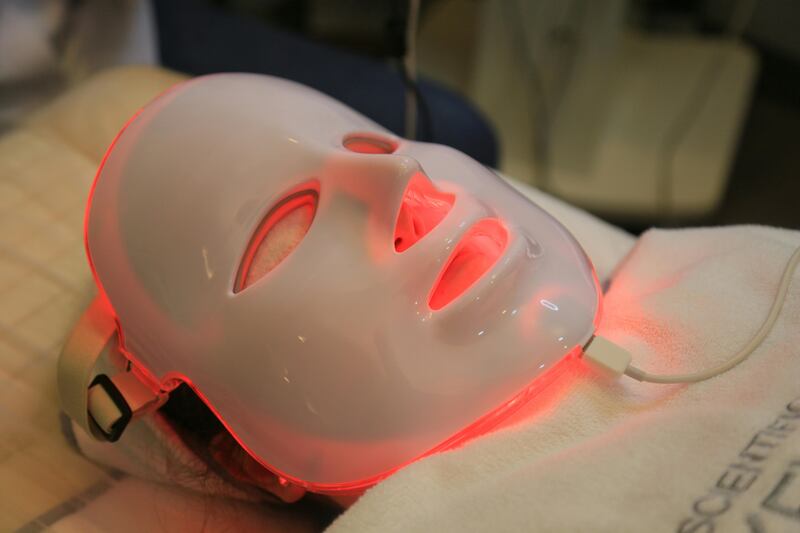
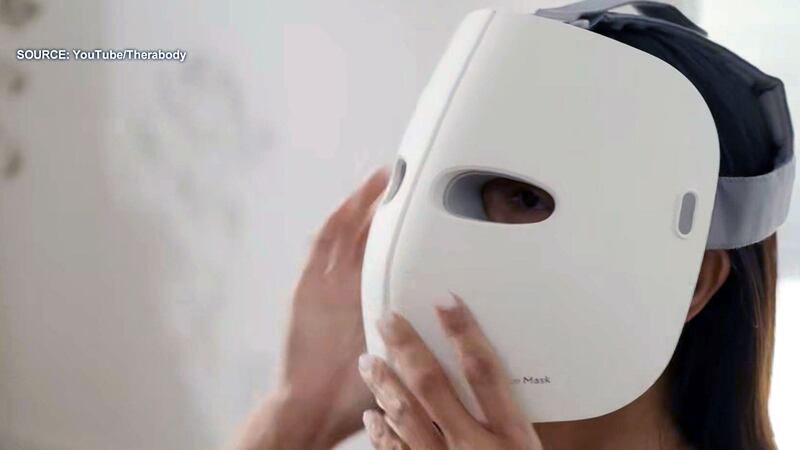
In the last few years, LED face masks have become incredibly trendy in the skin care space. The bizarre, robotic-looking devices are worn over the face like a mask, and are said to help different skin conditions.
Dr. Panteha Eshtiaghi, a Toronto-based dermatologist, sat down with CTV Your Morning this week to break down everything there is to know about these popular — and pricey — devices.
LED stands for “light emitting diodes,” which, Eshtiaghi explained, emit a specific wavelength or setting of light. The light from the mask, which is either red or blue, can penetrate through the skin and have different kinds of effects.
Red light helps reduce redness and inflammation for anti-aging purposes, while blue light targets bacteria associated with acne and oil glands.
Light therapy to treat skin has long been practiced, she added.
“It’s nothing really new in dermatology,” Eshtiaghi said of the light technology. “We’ve used it probably in the past 50 years, using those theoretical aspects of what we call photobiomodulation to exert those positive effects.”
The masks can be an investment for some, ranging from $100 to $400. However, Eshtiaghi said it’s not a “one-size-fits-all” device, so it’s important to consult a healthcare professional before committing to one.
How to use an LED mask
For those want to use a LED mask, Eshtiaghi recommends always following the instructions on the box.
But in general, the first step in a skincare routine that includes an LED face mask is to start by washing your face, without any products.
After you’ve pat your skin dry, you can start using the mask for about 10 to 20 minutes and then continue with the rest of your skincare routine.
What are the risks of an LED face mask?
When it comes to risks associated with LED face masks, Eshtiaghi stresses that it’s important to protect your eyes.
“Blue light therapy specifically has been shown to cause irreversible eye damage,” she said. “So it’s very important to wear the eye protection that comes with these masks or look for masks that provide eye protection.”
The heat from red light masks can cause some eye damage, she said, though there isn’t as much evidence around the potential for damage in that sense.
Eshtiaghi also warned of low-quality lamps on the market, which can cause the skin to burn.
What wavelength LED masks are best?
If you’re going to invest in a LED face mask, Eshtiaghi said to look out for irradiance, or how strong the light is. She likens it to the water pressure of a shower, but with light.
She said to look for a mask with irradiance of 40-100 milliwatts/cm2. For red light LED face masks, she recommends 630 nanometers, and for blue, look out for ones with 415 nanometers.
Who should use an LED face mask?
Eshtiaghi said she personally doesn’t agree with any anti-aging pressure put on children and teens, and that LED face masks aren’t “indicated for children.”
“We don’t know the long-term side effects of it, so I don’t really advocate for their use in children,” she said.
However, there isn’t an age limit for those who want to use an LED face mask for advanced skin.
“It’s fun, it’s trendy as long as you’re safe about it, I don’t have any issues,” Eshtiaghi said.

