


MERRITT ISLAND, Fla. — Canadian Jeremy Hansen is set to make history in many ways this week as the first Canadian and first non-American to leave low-Earth orbit.
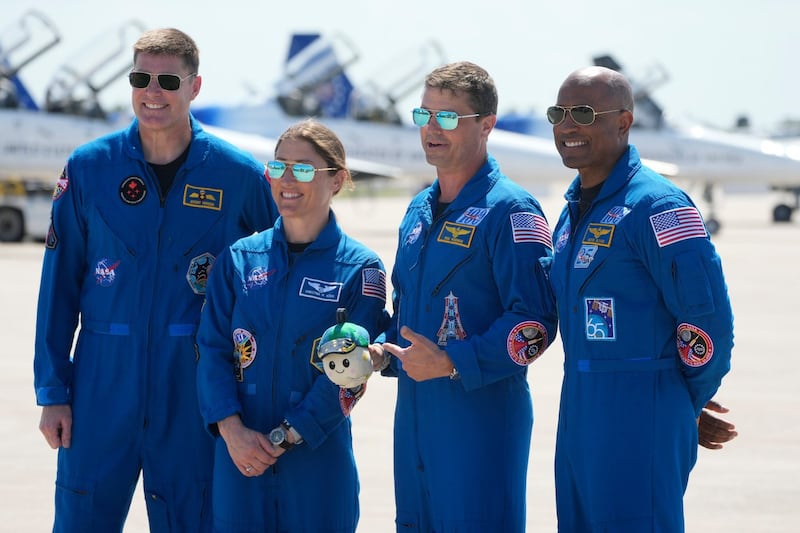
He is part of the crew of Artemis II, which could lift off from the Kennedy Space Center as early as Wednesday evening.
“Jeremy has this great line,” said Alexander MacDonald, a Canadian and former chief economist at NASA. “Being the first isn’t what matters. What matters is making sure you’re not the last.”
Artemis II marks the first crewed mission to the moon since Apollo 17 in 1972, but unlike the Apollo program, the goal is not to get to the moon – but go farther.
“The ambitions are much greater,” MacDonald said. “This is the first step to a larger program that will ultimately go on to Mars. There really is an incredible era of exploration that is opening up with this return to leaving Earth’s orbit.”
The Artemis II mission will last 10 days, and while the four-person crew will not land on the moon, it will slingshot around it on a free-return trajectory, landing back on Earth in the Pacific Ocean.
“Part of the process in establishing a greater understanding of operations around and on the moon is rebuilding a lot of the knowledge that was lost for more than 50 years,” said Jonathan Kelly, an aerospace professor at the University of Toronto. “One of the dangers with not pursuing these missions is that you start to lose that knowledge.”
Last week, NASA unveiled an ambitious plan for future space exploration, which includes at least one moon landing per year, starting in 2028, and the construction of a moon base by 2030.
NASA’s plans come at a time when Canada is scaling up its investment in the space industry after years of reduced spending. Earlier this month, Ottawa announced a $200-million investment in a Nova Scotia spaceport to enable sovereign satellite launches. Still, what Canada spends on space significantly lags its peers – Canada is last in public spending among 10 OECD Space Forum Members.
“It’s up to us to determine whether or not we are going to make the investments in science and technology to ensure there will be people who follow in (Hansen’s) footsteps.”
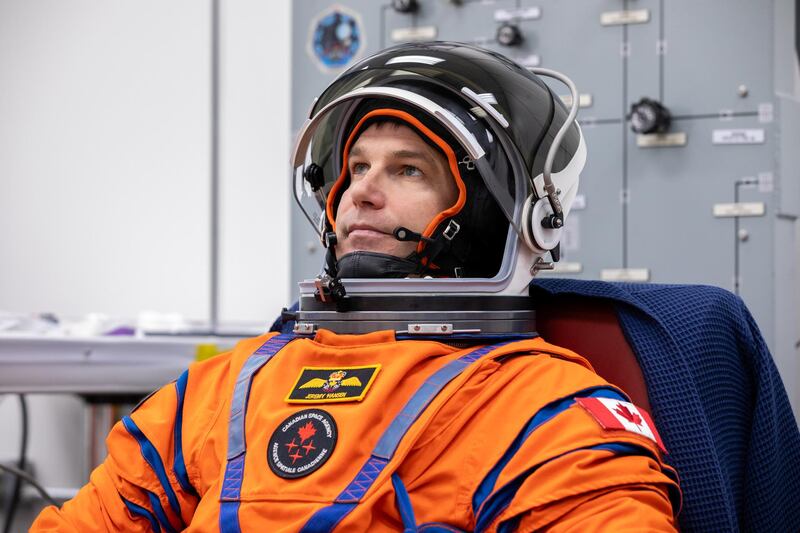
For decades, Canada has led when it comes to space robotics and satellite – leadership that helped, in part, to secure Hansen’s seat on the Artemis II mission.
NASA had intended to use the Canadarm3 to help build the Lunar Gateway, a space station orbiting the moon. While that program is on pause, the Canadian Space Agency said in a statement, “Canada continues discussions will NASA on this change and approach and will pursue collaboration with Canadian industry and international partners to determine the next steps.”
Insiders hope to see this type of investment not only renewed, but expanded.
Proponents of increased investment in the space sector say it could be one solution to Canada’s productivity crisis; labour growth in Canada has been a decades-long problem, and investing in space technology is seen by some as a way to help reverse that metric.
“That is how you push frontiers and the envelopes,” said MacDonald. “We have an incredible group of engineers and scientists, and we need to give them a hard problem and give them the resources to solve it.”
Clarification
This article has been updated to clarify the status of the Lunar Gateway program.

