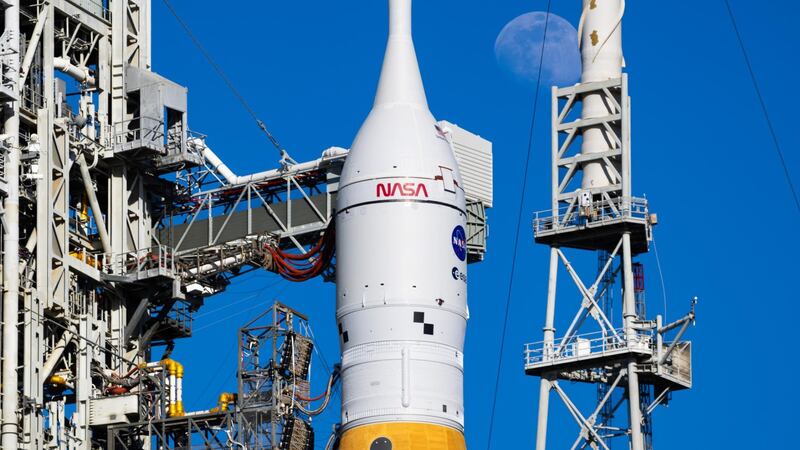
It’s been 53 years since humans last travelled to Earth’s closest neighbour, the moon. After decades of watching the moon from solid ground, the first crewed mission to our celestial neighbour in generations is officially underway.
Of the four-person crew aboard Artemis II, only one astronaut is non-American. When Artemis II lifts off, the mission will make history with the first non-American, London-born Canadian Space Agency astronaut Jeremy Hansen, to leave low-Earth orbit.
From what to expect over the 10-day journey to its connection to the Forest City, here’s what you need to know about the upcoming mission to the moon.
‘That’s one small step for man, one giant leap for mankind’
Dubbed the Apollo program, humanity’s first missions to the moon were the successor of Project Mercury and Project Gemini. Known as an era called the ‘Space Race,’ Apollo was a Cold War-era push to beat the Soviet Union to the moon after the Soviets successfully sent the first human, Yuri Gagarin, into space on April 12, 1961.
In a May 25, 1961, address to Congress, then President John F. Kennedy proposed the goal of landing humans on the moon and returning them safely to Earth before the end of the decade.
On July 20, 1969, Neil Armstrong made history as the first human to set foot on the moon.
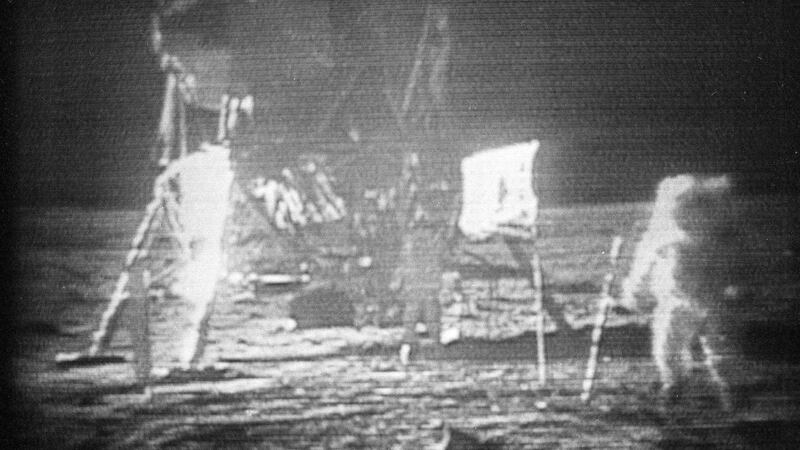
Since then, a total of 12 American astronauts have walked on its surface, comprising a total of 11 crewed missions, six of which landed on the lunar surface.
Due to narrowing budgets and a goal of instead focusing on low-Earth orbit exploration, including the Space Shuttle Program and creation of the International Space Station (ISS), the final mission that saw astronauts travel to the moon was Apollo 17 in December 1972.
That is, until now.
Artemis II
Why is it called the Artemis program?
In Greek mythology, Apollo was the god of the sun. But he had a twin sister named Artemis, goddess of hunting, wilderness, childbirth, animals and transitions.
“That last bit offers a bit more meaning — Artemis hopefully represents a transition from the era of developing our ability to live and work in space to an era where we can peacefully cooperate to explore and the moon and eventually Mars,” explained Jack Hostrawser, a PhD candidate at Western University.
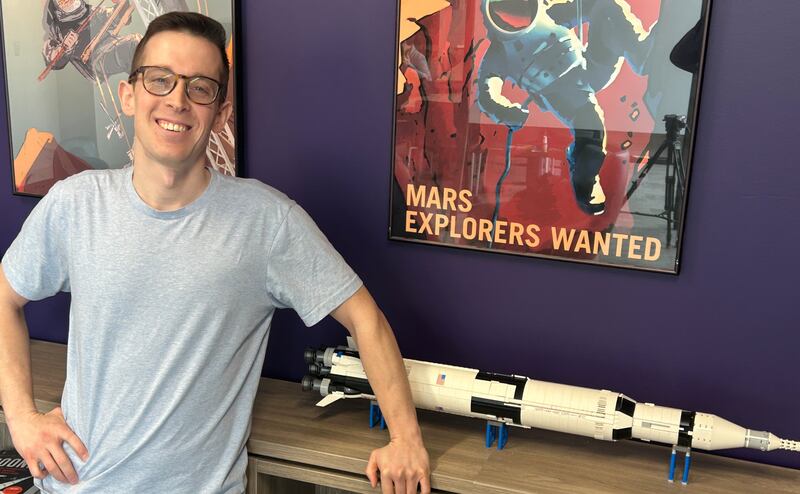
Hostrawser is an affiliate member of the Artemis III Geology Team, which is designing the science investigation for the first crewed lunar landing since Apollo 17. His focus is on studying rocks from Kamestastin crater in Labrador, similar to rocks found on the moon.
Artemis II builds on the success of the uncrewed Artemis I missions in 2022. NASA says it serves as a stepping stone to the Artemis III, IV and V missions, followed by future missions to Mars.
From liftoff to splashdown
With four astronauts aboard, Artemis II will be NASA’s first crewed mission aboard the 98-metre tall SLS Space Launch System (SLS) rocket and Orion capsule, nicknamed Integrity by the crew. The mission’s ultimate goal is to is to test the Orion spacecraft with humans on board in preparation for future missions.
While the astronauts will not set foot on the moon like its predecessor Apollo missions, one of the other objectives of Artemis II is a lunar flyby past the far side of the moon.
The 10-day mission will have the astronauts launch from Florida’s Kennedy Space Centre, fly two orbits of the Earth aboard Orion, and venture to and from the moon in a figure eight pattern before returning to Earth and splashing down in the Pacific Ocean off the coast of San Diego.
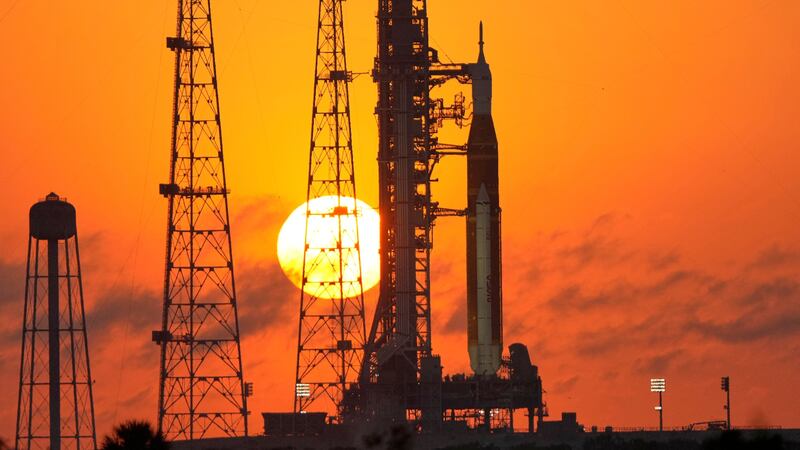
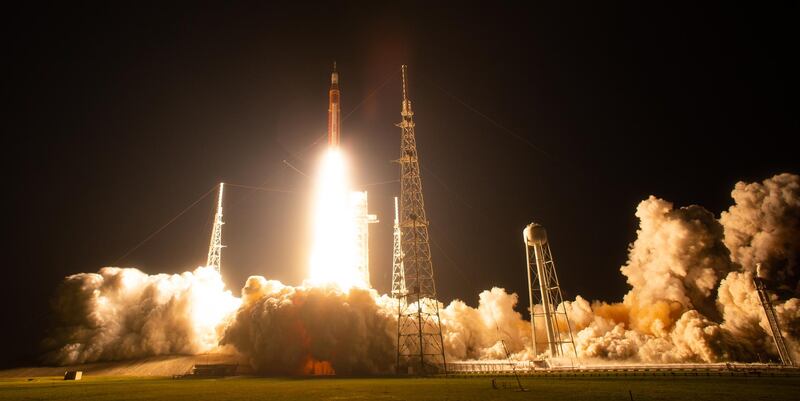
It will take eight minutes to reach outer space after launch, and each day of the 10-day journey will be packed with activities.
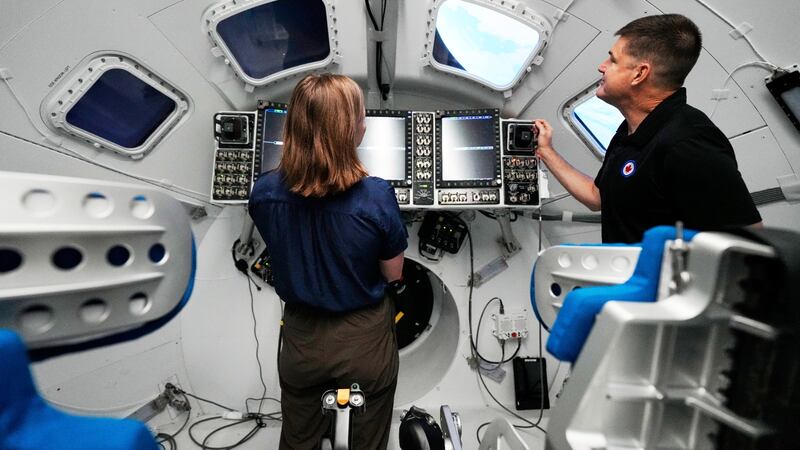
Once the crew is in orbit, an extensive series of tests will be conducted to confirm the ship is safe and ready while still close to Earth, including life support and guidance navigation systems. Orion will be their home for the duration of the mission, where the four astronauts will share just over nine cubic metres of living space, equivalent to two minivans.
Once ready, Orion will fire its engines during a move called a “translunar injection burn” to send the crew on a path toward the moon.
If all systems work as planned and the crew is cleared to move forward, it will take approximately four days to reach the moon, and one day to slingshot around it.
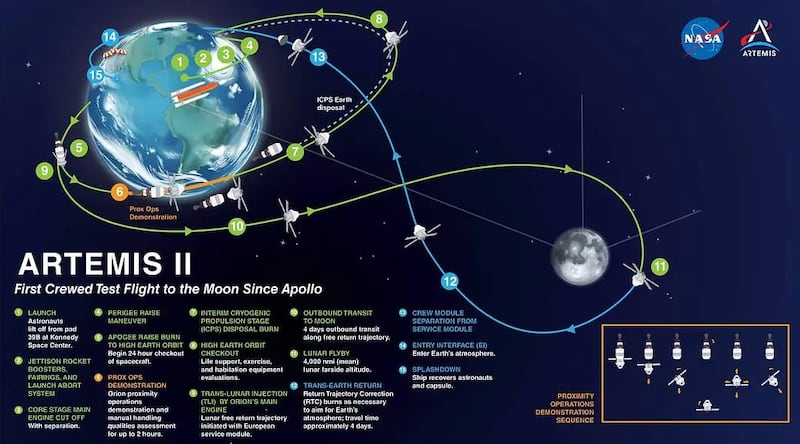
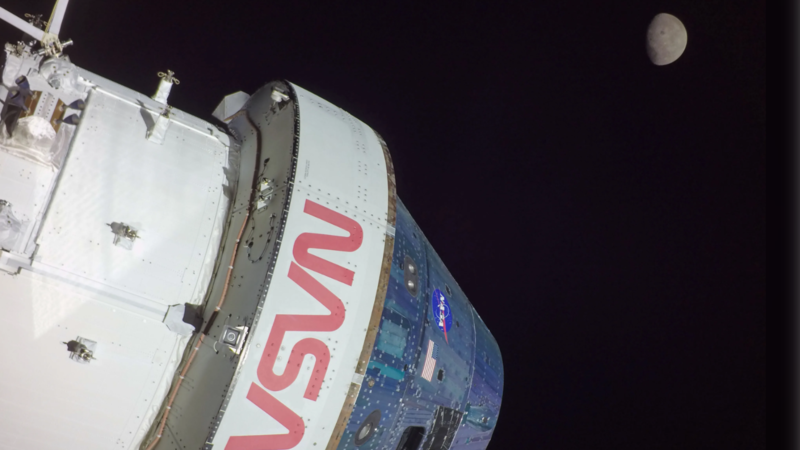
Travelling to the far side of the moon will be a pivotal moment for the mission, as it will allow the crew to observe the lunar surface, and take photos and notes.
“For about 45 minutes, behind the moon, the crew will have no contact with the Earth,” Hostrawser said.
Artemis II only has several days each month where a launch is possible, and that’s because when it comes to spaceflight, timing is everything, and trying to reach the moon is a cosmic game of cat and mouse.
According to Kumi Jinadasa, a senior engineer at the Canadian Space Agency (CSA)’s Space Exploration Division, launch windows are so narrow due to a complex dance involving the moon and Earth as both bodies are continuously on the move in orbit around each other and the sun. They need to be in certain positions that allow for Orion to have the perfect trajectory to travel to the moon.

“There’s a trans-lunar injection, a burn that’s going to be done to help propel Orion outside of Earth’s orbit, and then another burn is going to be done to propel Orion on its trajectory towards the moon and then back towards the Earth,” she explained.
The return trip back to Earth will be similar Hostrawser says, with Orion utilizing what’s called a “free return” trajectory. It is only possible when the moon and Earth are aligned correctly, and it allows a spacecraft to slingshot around the moon using its gravity and get sent directly back toward Earth, saving a “tremendous” amount of fuel.
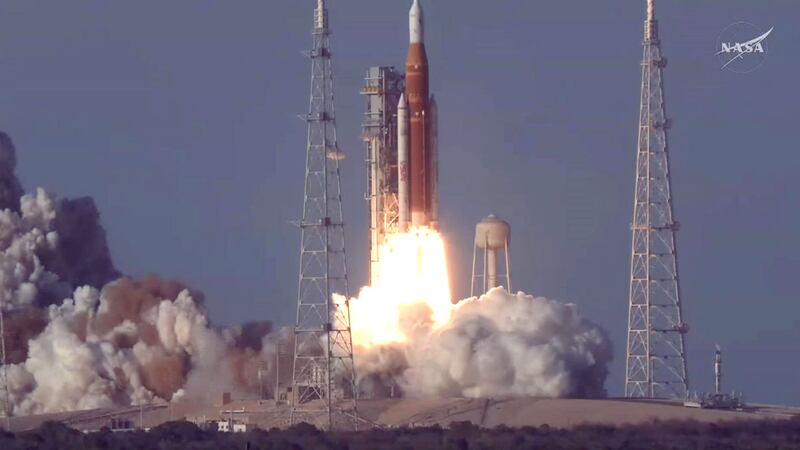
With cold weather delaying the wet dress rehearsal and subsequent fuel leakage issues during the simulation launch countdowns in February and March, Artemis II finally lifted off at approximately 6:35 p.m. on April 1.
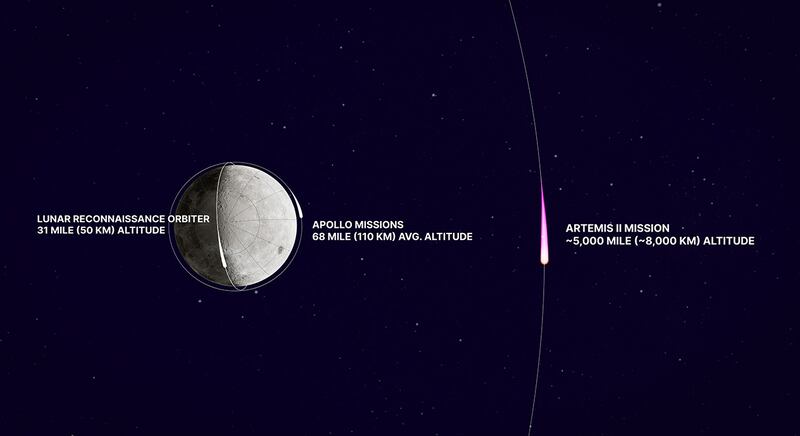
The mission will take Orion approximately 6,400 to 9,600 kilometres within the lunar surface and will see humans travel deeper into space than anyone has ever gone before.
From liftoff to splashdown, the journey will see the astronauts travel more than one million kilometres.
‘I’m going to be an astronaut’
Only U.S. astronauts have ever travelled to the moon. But one man, Col. Jeremy Hansen, is going to change that.
Born in London and having grown up in Ailsa Craig and Ingersoll, Hansen will make history as the first non-American – and therefore the first Canadian – to travel to the moon.
In an interview with CTV National News, Hansen’s parents, Nancy and Gary, say Hansen’s fascination with flight began at the age of five.
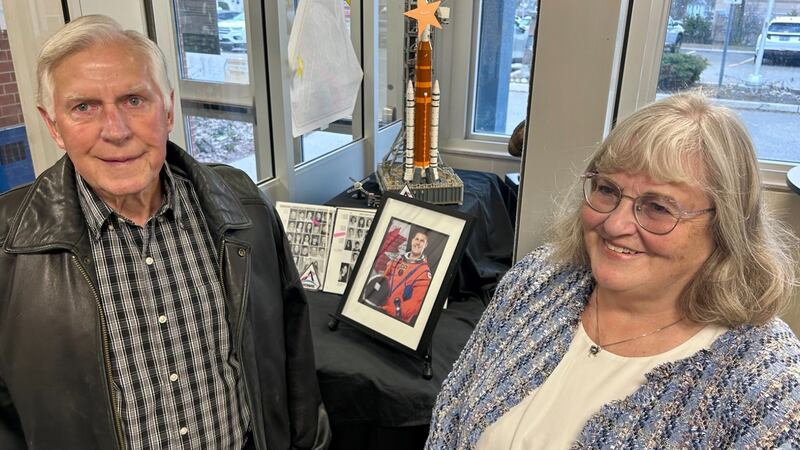
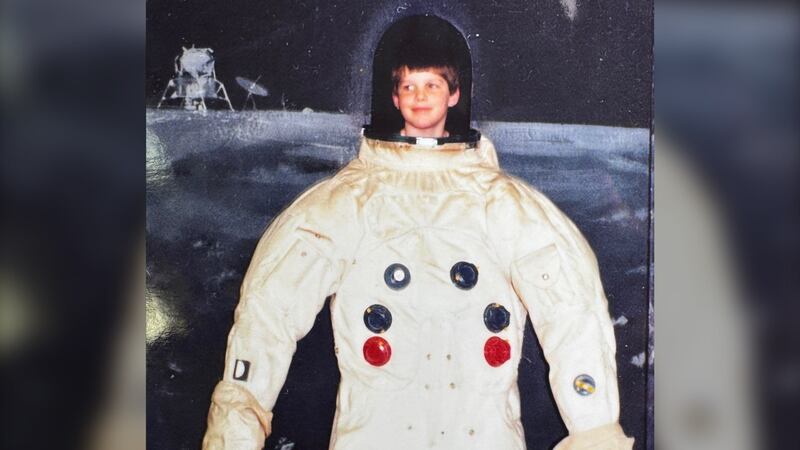
Inspired by his grandfather, who earned his pilot’s licence at 59, Jeremy looked up the word “airplane” in an encyclopedia. While in the “A” section, he came across a picture of Neil Armstrong on the moon and his path was set, his parents recalled.
“He came out that day and said, ‘I’m going to be an astronaut,’” Nancy said. “We didn’t think he would, but he kept up his interest in flying.”
“Then he went out that night and looked up at the moon and he was thinking ‘I could go up there,’” added Gary.
It’s a dream the 50-year-old Hansen never gave up on, joining the 614 Royal Canadian Air Cadet Squadron in London at the age of 12, earning his Air Cadet glider pilot wings at 16 and earning his private pilot licence and wings at 17, according to the Canadian Space Agency.
From 2004 to 2009 Hansen served as a CF-18 fighter pilot and captain in the Royal Canadian Air Force, including piloting and testing fighter jets in Alberta.
Hansen was selected as one of two recruits selected by the Canadian Space Agency through the third Canadian Astronaut Recruitment Campaign in 2009, and six years later became the first Canadian chosen to lead a NASA astronaut class, overseeing the training of astronaut candidates from Canada and the U.S.
Hansen was assigned to Artemis II as a mission specialist in 2023. The mission will mark his first venture into outer space.
Mere days away from launching on a rocket into the final frontier, Hansen is no nonsense regarding the perils of spaceflight.
“I have no guarantee of the outcome: you can die in space just like you can die here on Earth, but what I do believe is that we have been very smart about our approach,” he said in October 2025.
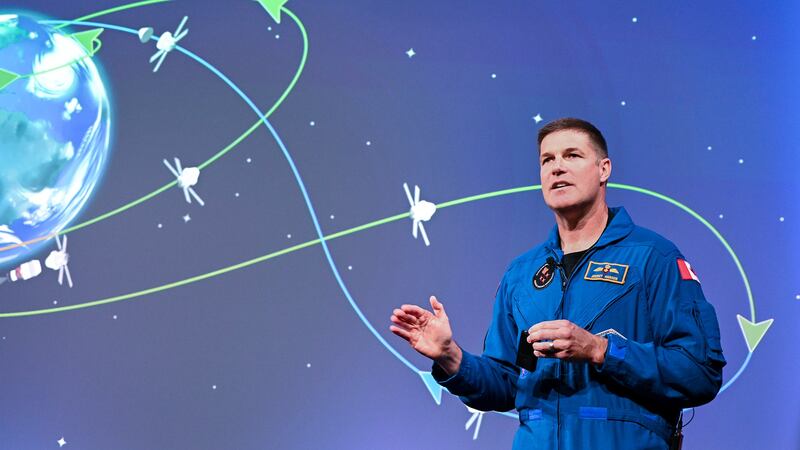
Hansen also holds a master’s degree in physics and a bachelor’s degree in space sciences.
Married with three children, Hansen will be carrying with him small pendants — half moons with the family birthstones, inscribed with “moon and back” — that belong to his wife and kids.
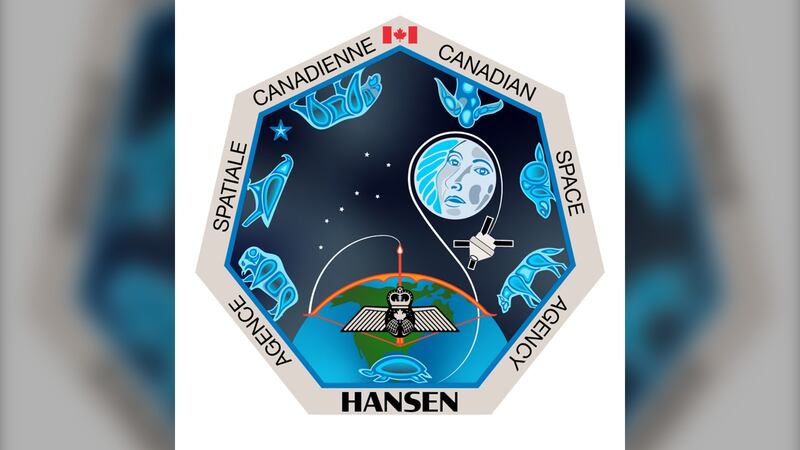
“The personal Canadian Space Agency mission patch of Jeremy Hansen bears a stylized bow and loosed arrow flying around the moon, a nod to the goddess [Artemis], who was often depicted as an archer,” said Hostrawser.
Jinadasa says she spoke to Hansen at CSA headquarters before he departed for Houston, Texas ahead of launch preparations, and says he made it clear the upcoming mission is “historic.”
‘He’s got it all’
In Jinadasa and Hostrawser’s opinions, there is no better person to journey to the moon than Hansen.
“He’s got it all. He’s got it all going on and on top of that he is one of the nicest, most humble people that you’ll ever meet. He’s really big on sharing his passion with others and I think that’s been seen as he’s visited across Canada from coast to coast to coast,” said Jinadasa.
“He brings a significant skillset and experience with high-stakes operations in highly complex machines,” added Hostrawser.
Jinadasa says crews are comprised in a way that compliment each other, and says Hansen is the type of person who can compliment others but can also be complimentary himself in any crew.
“If I had to fly around the moon with anybody that would be one person I would definitely choose,” she said.
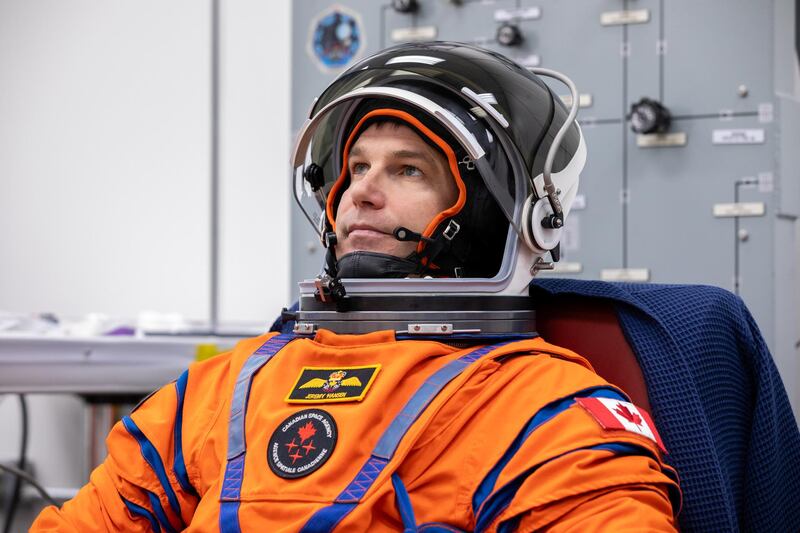
With Hansen is onboard as a mission specialist, in which he will be responsible for a range of tasks including systems monitoring and supporting the crew’s overall objectives, Jinadasa says his backup, Jenni Gibbons, is also Canadian, therefore ensuring Canada has a seat onboard Artemis II.
“This is due to our contribution and our reputation within the international community with all our international partners and specifically with NASA,” she said.
“You know for Canadians in fact that we should all feel very proud that we are the second country to be going around the moon,” she added. “Before with the Apollo program it was the NASA astronauts and he will be guiding the way for Canadians on this journey.”
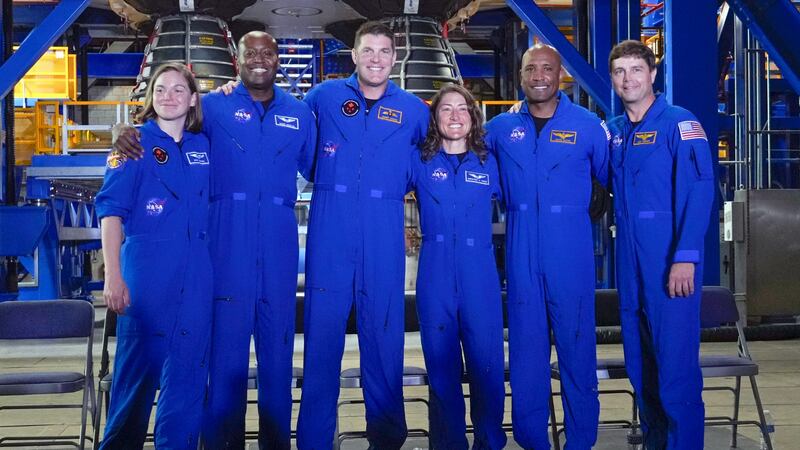
Joining Hansen aboard the mission are Commander Reid Wiseman, Pilot Victor Glover and Mission Specialist Christina Koch.
Why go back to the moon now?
“My personal feeling on the matter is that the real question is: what took so long?” Hostrawser asked.
“I think that’s a question that a lot of people globally are asking themselves,” added Jinadasa. “We were there. ‘Why are we going back? We did this already.’ And that’s right. We did do this already. And 50 years ago…we went to the moon to prove that we can do this, that humanity can reach the moon, that we could put boots on the moon, and this was something that we’re capable of doing.”
What we couldn’t do 50 years ago Jinadasa says was having a sustained human presence on the lunar surface or around the moon. After 50 years’ worth of technological advancements and a 25-year long presence in low-Earth orbit aboard the ISS, including more knowledge on human survival in such an environment, she says “we want to have that same kind of thing a little bit further.”
“We want to go further and explore, and the moon is that next stepping stone into further deep space exploration,” she said.
Calling it a “Golden age of exploration and discovery,” NASA says the success of the Artemis II mission will then lead to Artemis III in 2027 which will test out commercial landers in low Earth orbit, and ultimately the Artemis IV and Artemis V missions. In these latter missions, humans will once again land on the lunar surface with a focus on establishing a lasting presence on the moon with a lunar base.
“The Apollo missions only visited a few places, all on the near side, and the crews never went more than a few kilometres from their lander. Imagine aliens picking up some samples outside Winnipeg, Regina and Medicine Hat then saying, ‘Yep, we’ve explored the Earth — no need to go back!’” said Hostrawser.
“The moon is the Rosetta Stone of the solar system,” he explained. “There is no erosion or weathering there, and so it records a part of our shared geologic history that is lost on Earth.”
He’s particularly excited about Artemis II’s ability to give a “human perspective” on parts of the moon never seen before by Apollo astronauts and says he’s “hoping for surprises.”
Hostrawser says a focus on the big picture is needed, in that Artemis “is not just about cool moon rocks.” He says future missions there will provide a step-by-step guide on learning how to live in the solar system, pointing to how the ISS helped build the skills needed for sustained lunar exploration.
“Our time spent on the moon will prepare us to face the challenges of a much bigger leap, to Mars,” he said.
While the space program has long had its detractors who believe it’s a waste of money and that resources are better spent on Earth, Jinadasa says the research done up in space has a direct impact for those of us back on Earth.
Her experience as a mission manager in payloads, Jinadasa says life health science payloads get sent to the ISS, and subsequent research has been conducted into the adaptation of microgravity.
“So, microgravity, you can kind of relate that to somebody who is bedridden or is in a state of inactivity that could be due to a transition in care, that could be due to an illness or even for our aging population. And any study that we do that applies to astronauts and the effects of microgravity on astronauts has direct implications on those types of individuals that I mentioned on the ground,” she explained.
“Anything that you have in space, the Canadian Space Agency, we have our objectives that will reach Canadians on the ground,” she added. “It will touch your everyday, day-to-day lives.”
‘A Canadian headed to the moon? That’s normal’
A decades-long history of space contributions, from being the third nation to put a satellite into space to the development of the Canadarm on the ISS, Hostrawser believes Canada has been far too modest about our nation’s achievements.
“This mission underlines that we can dream bigger and go even further,” he said. “As a young Canadian, a lot of my interest in science and geology was spurred by images of space exploration. This mission will inspire a new generation of young Canadians.”
Hostrawser says he hopes Canada’s leaders can capitalize on the Artemis II mission to ensure future scientists, engineers, astronomers, and others can find meaningful opportunities at home and help build “more amazing Canadian missions and make more exciting discoveries.”
He points to the Apollo missions and says the half-century-old samples are still being studied today by students and scientists all over the world. For example, postdoctoral researcher at Western University Dr. Tara Hayden recently discovered that the moon’s interior contains much more water than previously thought.
“The samples that are returned by Artemis, from regions Apollo never visited, will yield another legacy of groundbreaking discoveries about the early history of moon, the Earth and the solar system itself,” Hostrawser explained. “Some of those discoveries will be made by our children, and our grandchildren.”

“I hope that the next generation will think, “A Canadian headed to the moon? That’s normal!” he said.
During an October 2025 visit to St. Jude Elementary School in Montreal, Hansen explained to a group of Grade 5 and 6 students that some risks in life are worth taking.
“But we also know there’s a risk,” Hansen explained. “And the thing that you should remember is that if you’re taking risks in your life, they have to be for a good reason, and we think this risk is for a good reason.”
“We think it’s pushing humanity forward and therefore we should take it,” he said.
During a recent conversation with Hansen, Jinadasa says he’s doing well amid the mission’s postponement to April and is taking time to review procedures adding, “He’s ready to go.”
“We’re hoping that this inspires all Canadians from coast to coast to coast,” she said.
With files from CTV News National’s John Vennavally-Rao and The Canadian Press