
Through unrelenting snowfall, about 150 New Brunswick farmers descended on the lawn of the province’s legislature Tuesday, to protest the government’s decision to privatize provincial veterinary services.
The service ensures farmers and livestock owners have access to a field veterinarian across the province, who is ready to respond to calls at commercial and horse and hobby farms. The field vet administers vaccines and test animals, halting any spread of disease, day or night.
N.B is one of the last in the country to provide the public service. Only Newfoundland and Labrador have a similar program– the rest of the country’s veterinarians are private.
While N.B. farmers and animal owners pay for each visit, it still costs the N.B. government about $4 million a year.
Facing a $1.4 billion deficit shortfall, Premier Susan Holt’s government has announced the service will be privatized over the next three years.
Farmers across the province are not happy.
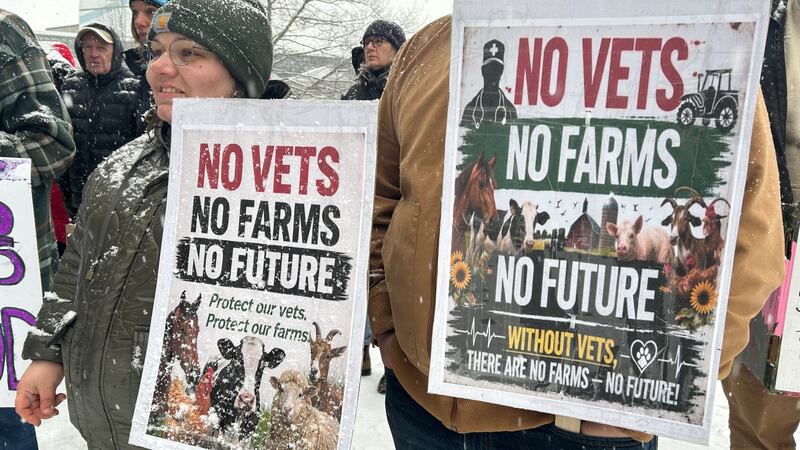
“Just the whole thing is frustrating. And, you know, it makes us very anxious too, because, you know, it’s not just about us as a farm,” said goat farmer Dani Comfort. “It’s about the food safety of the entire province.”
The cut also involves the phasing out of N.B.’s Provincial Veterinary Laboratory, where the surveying and monitoring of animals, disease and autopsies are studied.
A petition against the move has gathered over 31,000 signatures.

The author of that petition, Vaness Leclair, who operates a small horse farm, says she wasn’t sure if she should speak up. But seeing the support has encouraged her to be even louder.
“I’m just so proud of the entire farming community, the agriculture community in New Brunswick, stepping up to raise the most important message,” she said.
Agriculture Minister Pat Finnigan said less than a third of the calls these veterinarians receive are from commercial farms. The rest are hobby or horse farms.
He added that private veterinarians have already informed him of their interest to set up business in some areas of the province.
Concerns emerge about N.B. farms’ survival
President of the National Farmers Union in N.B., Alexis Légère said he’s worried about the future of some of those farms in light of this decision.
Between 2016 and 2021, there was an 18 per cent decline in farms in the province. Yet about 5,600 New Brunswickers call a farm home.
But net farm income in N.B. – the farmer’s profit - in 2024 was -1 per cent, and Légère said paying more for private vet services could be the last straw for some.
“It could be like the drop that makes it too much. And they will probably stop farming,” he said.
Légère is also concerned for farmers in the northern part of N.B., where there are fewer farms in the region.
Russell Kaye’s third-generation dairy farm is in the Bathurst area, a region with only eight farms, he said. He doesn’t believe it’s an attractive area for any vet to set-up and try to make a living.
“We can’t farm without them. Rural New Brunswick is going to suffer without our provincial vets,” said third-generation dairy farmer, Russell Kaye.
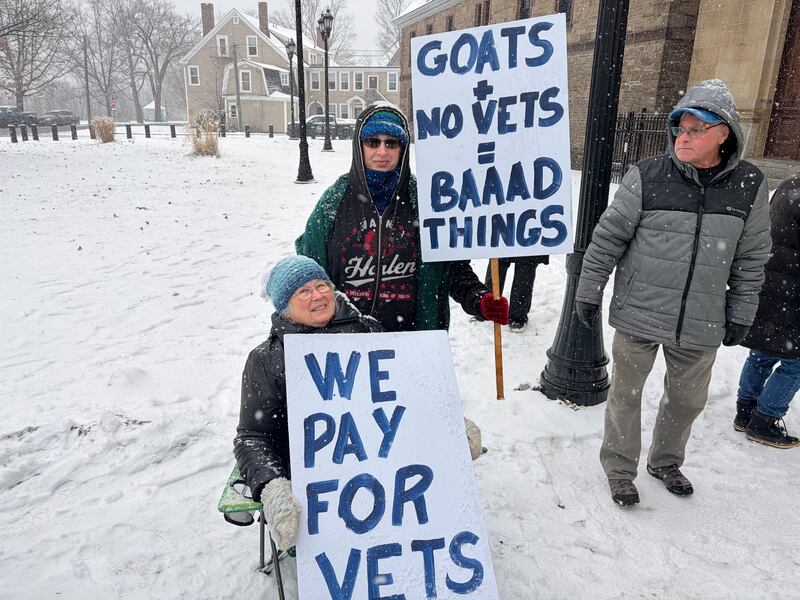
Kaye said they were forced to call the provincial vet office for an emergency caesarian section of a cow a month ago. It cost him about $350, but the cow and calf wouldn’t have lived without the vet’s help.
“Cows don’t wait. Basically, like something happens and someone’s got to be there for those animals,” he said.

