


Watch live coverage of the Artemis II launch on CTVNews.ca, the CTV News App and CTV News Channel. You can also subscribe and watch on the CTV News YouTube Channel.
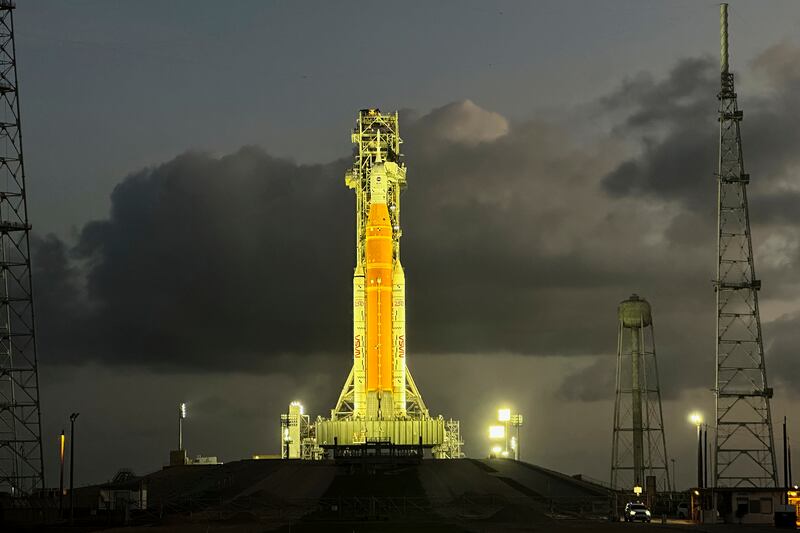
When Artemis II takes off from the Kennedy Space Center in Cape Canaveral, Fl., Col. Jeremy Hansen will make history as the first Canadian, and first non-American, to travel beyond Earth’s orbit to deep space.
“I feel a great sense of pride for Canada because I have seen the greatness we have in the country and the contributions we are capable of making,” Hansen said on Friday after the crew arrived in Florida.
- READ MORE: Canadians gathering at museums, libraries to watch launch
- READ MORE: How the family of Jeremy Hansen is preparing for his lunar mission
- READ MORE: Canadian astronaut says Artemis II launch delays are possible
Historic representation
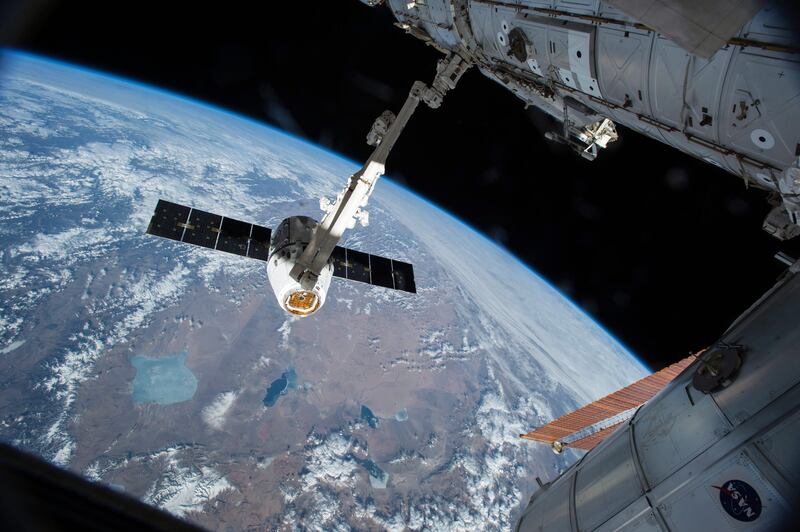
Canada has a long history of space exploration. The country was the third nation to design and build its own satellite (Alouette I) and is known for the Canadarm, the robotic arm that support U.S. shuttle missions for 30 years. Canada’s seat on Artemis II was secured, in part, by Canada’s commitment to the Artemis program and the Canadarm3 robotic arm. NASA had intended to use the Canadarm3 to help build the Lunar Gateway, a space station orbiting the moon, which has now been paused in favour of building a permanent moon base.
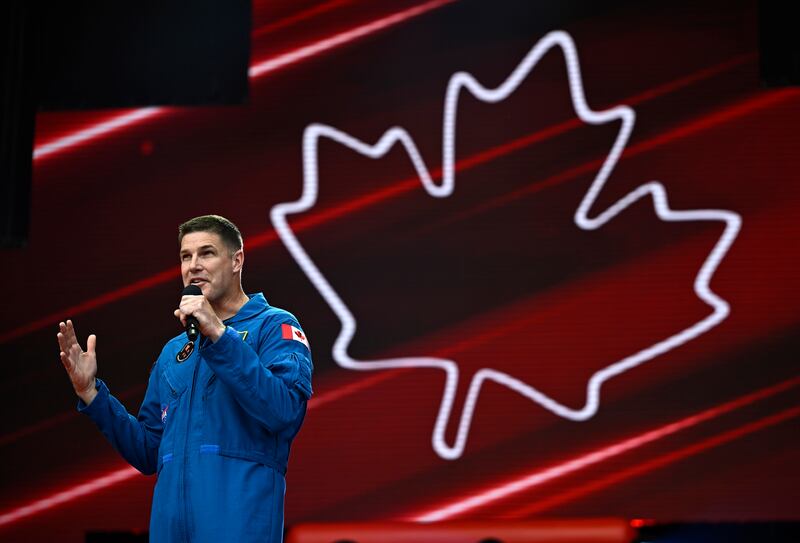
“It’s hugely exciting,” said astronaut Joshua Kutryk when asked what it means for a Canadian to be part of this mission. “There’s a lot of patriotism. I feel proud to wear the suit, but also to have the Canadian flag on my arm.”
Kutryk says it’s no coincidence that Canada was chosen to partner with NASA on the Artemis II mission.
“From the entire world, of all the people NASA partners with, the one country they invited to participate with them on this mission was Canada. And that’s significant. It’s not a coincidence.”
Technological leadership
Canada is recognized as a leader in space robotics, though there are concerns regarding long-term competitiveness. In 2019, the Liberal government released a new space strategy for Canada, committing nearly $2 billion to develop the Canadarm3 while also earmarking money for small and medium-sized businesses to create new technologies for use in lunar orbit.
“(Advanced robotics) is in huge demand and Canada is the best in the world,” said Lisa Campbell, president of the Canadian Space Agency. “Not only have we been doing it for the longest, we have the knowhow.”
Despite NASA pressing pause on the Lunar Gateway, Campbell says she’s optimistic there will not only be a need for Canadarm3 but also other expertise that Canada has to offer.
“I think we always have to promote our capabilities and our industrial capabilities,” she said. “I’m very confident with the number of missions that are planned for the moon and beyond that, agencies in countries like Canada who have both a deep space heritage but also all sorts of new modern capabilities, are going to have lots to offer.”
Campbell points to the millions of pieces of “space debris” orbiting the Earth and an opportunity for Canadian robotics to not only clean up Earth’s but salvage equipment.
“All sorts of debris and kit that’s worth billions of dollars,” she said. “How can we reuse it? All of that is robotics.”
Economic opportunity
According to the Canadian Space Agency, the current space sector contributes $3.2 billion to Canada’s GDP. But as the world becomes more reliant on space-enabled services like geo-locating, transmission of data and data storage that number is expected to climb. According to a report from RBC, the global space economy is poised to nearly triple to US$1.8 trillion by 2035.
“There’s this beginning of a new era for Canadian investments in space technology,” said Alexander MacDonald, NASA’s former chief economist and a Canadian. “We have some of the most well-trained individuals and engineers in the world. I think it’s going to become a new export area for the country.”
But what Canada spends on its space sector significantly lags behind its peers. Canada is last in public spending among 10 OECD Space Forum Members and is the only G7 country without launch capabilities.
Earlier this year, the Liberal government announced a $200-million investment in a Nova Scotia spaceport to enable sovereign satellite launches.
“The commitment to an independent orbital launch capability in Canada is an historic first,” MacDonald said, adding he hopes it’s just the start of increased investment.
“I think the opportunities that would result from that would be very significant, both for jobs, for education, for opportunities for talented Canadians to excel,” he said. “But we’ve got to choose to make that decision.”
MacDonald points to the guidance computer used by the Apollo program in the early 1960s as an example of space innovation that translates into economic opportunity. At that time, 75 per cent of the global demand for semiconductors came from rockets which is how the industry grew.
“That is how you push the frontiers and open the envelopes,” he said. “These big leaps are so important for a country economically.”
Sovereignty
Committing to independent launch capability is an important first for Canadian sovereignty, with space listed as one of the 10 pillars in Canada’s Defence Industrial Strategy which aims to build, launch and operate assets domestically rather than rely on foreign technology.
“There are tremendous opportunities … in space as we pursue several ongoing projects that represent billions of dollars of investment,” said Lt.-Gen. Jamie Speiser-Blanchet, commander of the Royal Canadian Air Force (RCAF). “Satellite communications, intelligence, surveillance and reconnaissance … are enhancing surveillance and domain awareness.”
With Canada committing to spend 5 per cent of its GDP on defence by 2035, proponents of investing in space technology argue there is both a security and economic benefit with dual purpose use of things like satellites, communication and climate change monitoring.
“We know that space is now the infrastructure that powers our daily lives,” said CSA president Campbell. “We all need it in a country like Canada even more.”
From a defence perspective, space is also critical as early warning missile detection systems rely on space-based assets. Protecting the vast Arctic also needs space capabilities given its size and sparse population.
Space diplomacy
More than 290 individuals from 26 countries have visited the International Space Station (ISS).
“Space has always been an international endeavour,” CSA president Lisa Campbell said. “It continues regardless of what’s happening here on Earth.”
As a middle power, Canada plays a role in space diplomacy with a focus on “international collaboration, peaceful exploration and setting sustainable norms,” according to the CSA website. Canada is also a member of the Artemis Accords, a set of principles on how countries intend to govern themselves on the moon, Mars and beyond.
With the United States unveiling ambitious plans for a Moon base and further exploration, Canada has a key role to play as a trusted ally and developer of key technology.
“Canada is leaning forward with robotic expertise for our ambitions on the lunar surface,” said NASA administrator Jared Isaacman, who points to international collaboration as key to NASA’s vision of a lunar economy.
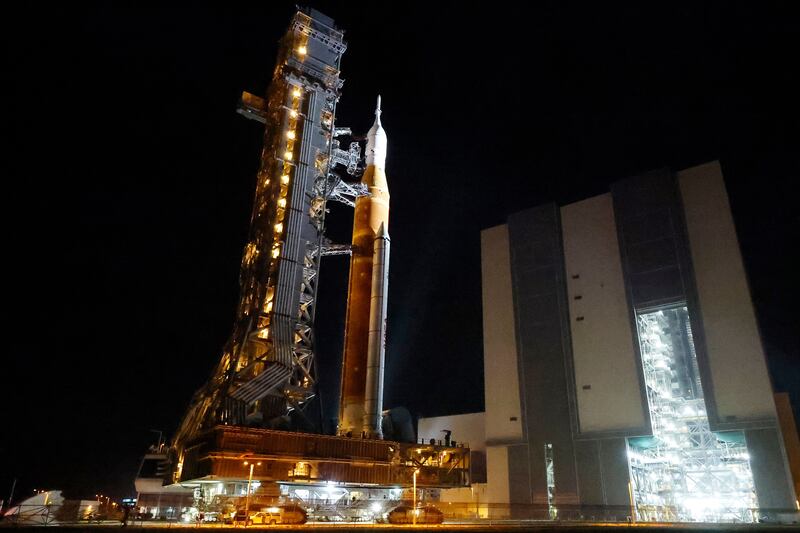
“We’re not doing it just for the flags and footprints in the rocks but to build the enduring presence,” Isaacman said. “To build the moon base, having astronauts go with great frequency. So someday you will have NASA astronauts standing on the surface of the moon with a lot of our international partners shoulder-to-shoulder with them.”
While not everyone is calling this Space Race 2.0, there is an intensifying push for space dominance driven in part by private aerospace firms and national agencies in U.S. and China. Among the goals are resource extraction, permanent infrastructure and eventual missions to Mars.
But in a world that is increasingly fractured, some see space as a place that forces international co-operation.
“In space there aren’t boundaries,” Campbell said. “We help one another. And the harsh environment of space forces us to help one another.”

