


Conservative Leader Pierre Poilievre is calling for federal gas taxes to be scrapped for the rest of the year, arguing the tax holiday would bring immediate relief to drivers facing rising fuel prices.
In a press release shared Thursday, the Opposition leader said the move would save a family of four an average of around $1,200 for the rest of the year.
“Canadians deserve affordable fuel and food,” said Poilievre. “Seniors should be able to enjoy a worry-free drive to see grandkids, parents should not stress about filling the minivan for hockey practice and workers should be able to fill their trucks stress-free.
“That is why Conservatives call for zero tax on gas the rest of the year,” he added.
Conservatives say the temporary tax cut would drop prices at the pump by 25 cents a litre.
Poilievre pointed to countries like Ireland, Spain and Australia, each of which have cut fuel taxes after prices spiked over the Middle East conflict between the U.S., Israel and Iran.
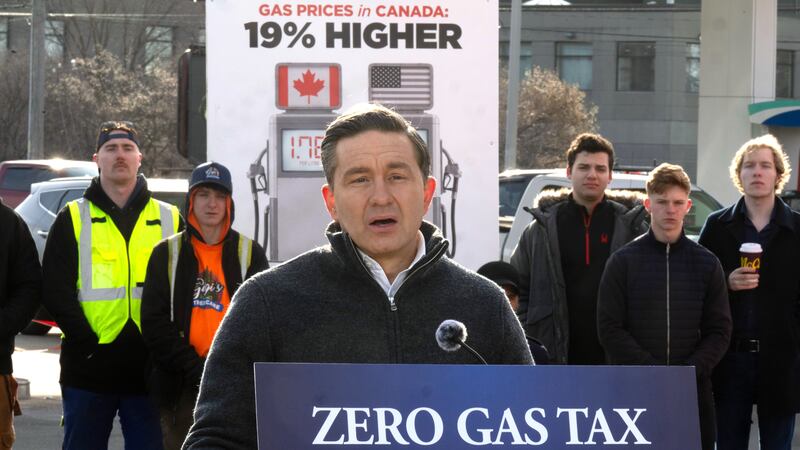
Poilievre said the plan would eliminate the fuel excise tax, the GST on fuel and the clean fuel charge. He argued lower fuel prices would also reduce the cost of food and other goods transported by truck.
According to the party, the tax cuts would cost the federal government $5.25 billion this year. They argue the plan would be paid for by cutting federal spending in other areas, including the gun buyback program and foreign aid, as well as cancelling the multibillion-dollar high-speed rail project between Toronto and Quebec City.
Speaking to reporters in Ottawa on Thursday morning, Poilievre was pressed about the financial feasibility of the plan.
Asked if he would consider any movement on gas taxes a success, Poilievre said “the lower the better.”
“The problem is that the government is too rich, and the people are too poor. It’s time to have the government pinch its pennies so that Canadians don’t have to,” he added.
On Tuesday, Prime Minister Mark Carney wouldn’t say if his government would consider cutting the federal gas tax.
“We’ll have a fiscal event in the spring with the spring update, and that would be the right time to fully answer that question,” Carney said.
In an interview with CTV’s Question Period airing Sunday, Transport Minister Steven MacKinnon called Poilievre’s proposal “an interesting idea” but said he has not been involved in any discussions related to a federal gas tax cut.
A spokesperson for Finance Minister François-Philippe Champagne, meanwhile, told CTV News the “government is closely monitoring the surge in oil prices.”
“We are continually assessing measures and policies to support Canadians in this volatile period, while looking at ways to immediately alleviate urgent downstream price shocks and make life more affordable,” press secretary John Fragos said in a statement.
“In response to global price increases, the government is focused on what Canada can control. We are moving ahead to improve energy stability and lower costs while participating in collective action to help address market disruptions stemming from the war, including the government’s support of the International Energy Agency’s release of oil reserves,” the statement goes on to say.
With files from CTV News’ Stephanie Ha

