A chunky knit sweater with Manitoba history woven into its design has become the breakout star of a Hollywood blockbuster.
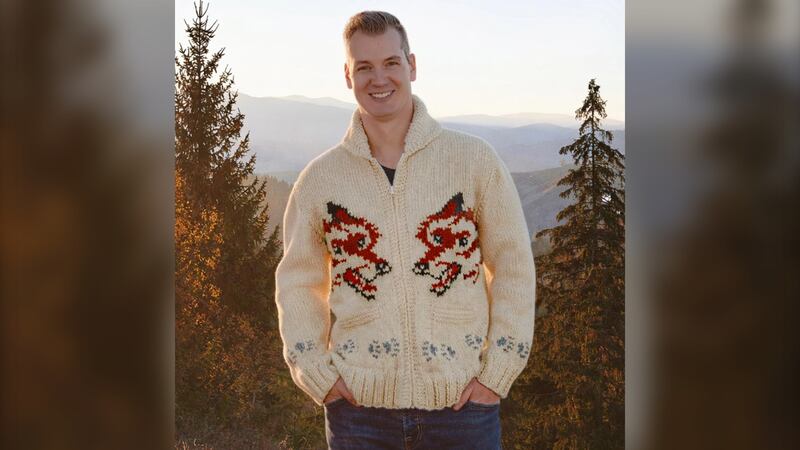
In “Project Hail Mary,” actor Ryan Gosling’s character Dr. Ryland Grace is seen sporting a thick wool cardigan with a pair of foxes on each breast and tracks of grey paw prints circling the cuffs and hem.
Turns out, the sweater was made from a design by Mary Maxim, a craft and needlework mail-order business that has been in operation for over 70 years.
“They originally contacted me prior to shooting, asking for permission to use the sweater in the movie,” Mitch McPhedrain, president and owner of Mary Maxim, told CTV Your Morning’s Anne-Marie Mediwake last week.
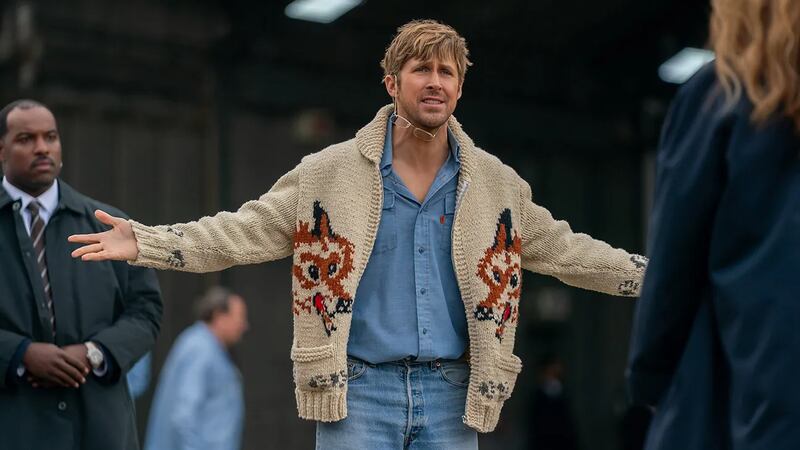
The original pattern had a pair of wolves. Gosling suggested they be swapped for friendlier-looking foxes. It’s an animal perhaps more in keeping with his cheeky character — a disgraced scientist turned officer on an earth-saving interstellar mission.
McPhedrain was happy to oblige.
The movie went on to gross $300 million to date at the box office and the curling sweater went on to become a scene-stealer.
Unsurprisingly, the pattern’s initial stock sold out online, though Ryan Gosling cosplayers will be happy to hear it has since been restocked.
“I’m super thrilled. The response has been incredible. It’s just an incredible opportunity,” McPhedrain explained.
From the Prairies to the silver screen
Though the company is now headquartered out of Port Huron, Michigan, Manitoba is deeply sewn into each knitting pattern and the brand’s enduring legacy.
The company started as a wool mill in the 1930s by Willard and Olive McPhedrain in Sifton, Man.
It was originally named Sifton Products. They spun yarn ranges for decades before switching gears in the ‘50s to become a graft-style sweater pattern store under the name the company bears today.
The inspiration behind the new moniker came from Mary Makzymczhuk Roberts, the McPhedrain’s Dauphin-born housekeeper.
She was an incredible knitter and pattern maker. One day, Willard asked her to recreate a child’s knit sweater he bought at a trade show in Edmonton, Alta.
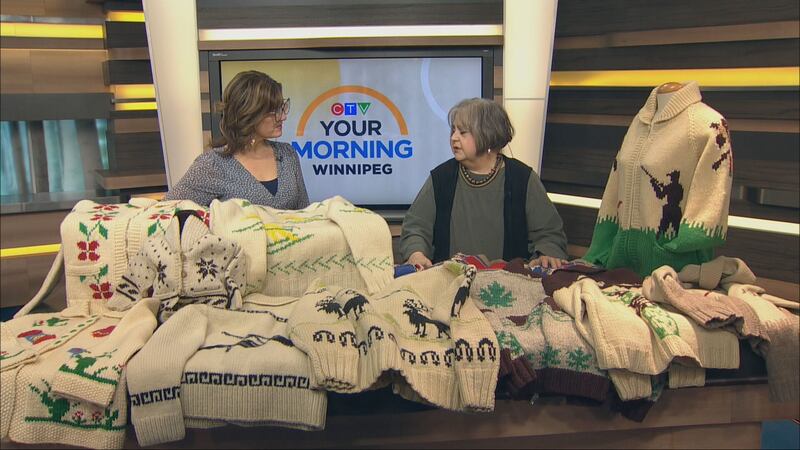
“She said ‘sure,’ so she took out her graph paper and zoom, zoom, zoom, she made a copy pattern on paper and then she knitted it up,” explained Linda Lazarowich, a curator of historic textiles and clothing.
With that, the new business was born.
This isn’t the first time its sweaters have become a sensation, either. Its signature knit curling sweaters were a massive trend in the ‘40s and ‘50s, Lazarowich explained.
“It was what they call now slow fashion because each one of the little sweaters has hundreds of stitches. The big ones have thousands,” she said.
“Each stitch was done by the mother because she loved her family and she wanted them warm.”
Fast forward to today, when fast fashion is in vogue, and Mary Maxim’s thoughtful, meticulous designs have blasted off into the viral fashion stratosphere thanks to its appearance in the box office-topping flick.
“It’s just unreal. I’m just so thankful that this movie was able to bring these designs back,” McPhedrain said.
With files from CTV’s Anne-Marie Mediwake and Rachel Lagacé

