A gopher infestation hitting Saskatchewan and Alberta has cost farmers millions of dollars in damage, according to the federal government.
This week, Ottawa stepped in to address the issue by authorizing the temporary use of strychnine – a highly toxic pesticide that was banned by Health Canada in 2024 – for farmers in certain areas of both Alberta and Saskatchewan.
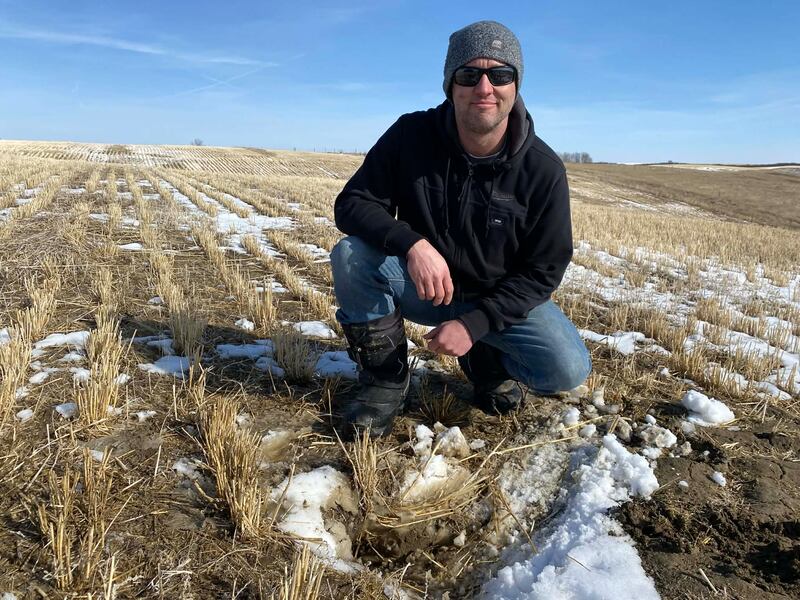
Darren Gosling’s farms near Mossbank, Sask., about 150 km southwest of Regina weren’t authorized to use strychnine, although he says gophers have been a major problem on his farm for years.
“I don’t know where the gophers stop. I think they’re everywhere,” Gosling told CTV News.
Richardson Ground Squirrels, commonly known as gophers, will dig holes in fields, eat seeds planted in the ground and decimate crops, especially canola and pulses. The impact is much worse during dry years.
“It’s another burden that we just don’t need,” said Gosling, who had to make an insurance claim due to gopher damage in 2024.
Gosling uses traps, bait and other pesticides to help control the rampant gopher population. He estimates he’s already spent $7,500 on alternative bait last year, and another $10,000 on wages for his employees to bait the traps and manage the rodents.

“I’m more concerned about the time it takes to do this,” he said.
The costs work out to be around an extra $2.50 per acre added to his overall cost of production.
Gosling would much rather use strychnine to target the gophers. He says it’s a cheaper, more effective approach than the bait he’s currently using.
“It’s really the only effective control that has a lasting effect,” Gosling said.
The areas chosen for strychnine use are deemed the biggest problem areas based on Saskatchewan crop insurance claims.
Jeremy Welter, vice-president of the Agricultural Producers Association of Saskatchewan and farms in the west-central part of the province, says he’s hopeful the governments will consider expanding the usage to farmers across the province.
“As a whole, I would say gophers are one of the biggest pest issues we deal with,” Welter told CTV News.
In his specific area, there are pockets of land that face the issue, including some of the fields he farms with his dad.
“Over the last five years, I would say we’ve definitely seen an increase in (gopher) holes and an increase in the size of the holes,” Welter said.
Nearly three years ago, Welter put in an insurance claim for 140 acres of canola that he had seeded. Gophers had dug up the seeds and eaten them. Nothing ever sprouted.
“The entire field was a write off, and crop insurance had to pay us to reseed it, specifically because we don’t have access to some really cost-effective tools (strychnine) in our toolbox to deal with a nuisance pest,” he said.
‘Plenty of other alternatives’
Although cheap and effective, strychnine is “super toxic” and too often leads to secondary poisonings in pets, livestock and predators, ecotoxicologist Christy Morrisey told CTV News.
“Milligrams will kill a horse,” she said.
“This is a hazardous substance that, despite having label warnings, is still causing mortality of non-target organisms.”
Morrissey, a biology professor at the University of Saskatchewan, called strychnine “overkill” for its use as a pesticide.
She says there is a very good reason that the chemical is banned in several other countries, and believes Canada is taking a step backwards by reversing its ban.
“There are plenty of other alternatives,” she said, including zinc phosphide. “It’s not nearly as environmentally harmful. There are still some risks because all these things are risky.”
The Saskatchewan Wildlife Federation has also developed a program that sends volunteers to shoot gophers on farmers’ property.
Morrissey advises farmers to use other traps or safer pesticides and to put them out early in the season, when the adult gophers haven’t reproduced yet and food is still scarce.

