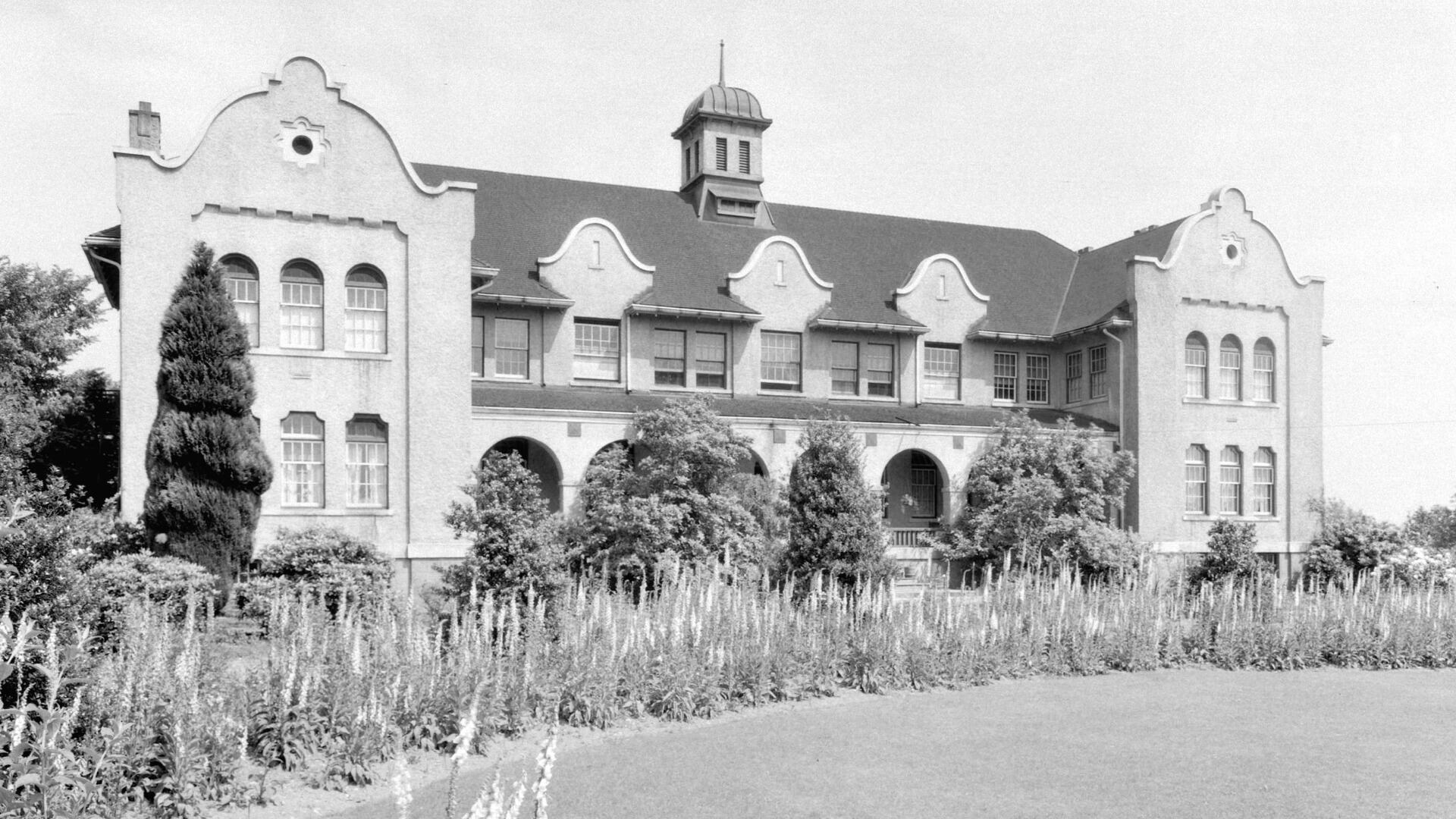
A class action alleging widespread physical, sexual and mental abuse of girls incarcerated at an institution described as a “house of horror” has been certified by the B.C. Supreme Court.
The school, originally called the Industrial School for Girls and later the Willingdon School for Girls, operated from 1914 to 1973, and the lawsuit was filed by two surviving attendees against the provincial and federal governments as well as a male doctor who worked at the school when the plaintiffs were confined there.
Forced sterilization, genital examination without consent, and prolonged periods of solitary confinement are among some of the abuses alleged. For Indigenous girls, who accounted for a disproportionate number of detainees, the allegations include forced cultural assimilation.
“What they describe would be a blend the worst elements of a residential school along with what essentially amounts to a child’s prison,” the plaintiffs’ lawyer Patrick Dudding, told CTV News, describing the allegations of systemic physical and sexual abuse as “horrific.”
The certification of the class action marks a significant step forward for the litigation, Dudding said.
“These girls—now all old women, and all with horrific scars that will never heal—this gets them closer to justice,” he said.
None of the claims have been tested in court.
The school
Justice Veronica Jackson’s decision certifying the class action explained the federal Juvenile Delinquents’ Act of 1908 allowed for minors to be committed to so-called industrial schools in order that they be “subjected to such wise care, treatment and control as will tend to check their evil tendencies and to strengthen their better instincts.”
The B.C. school primarily saw girls committed for offences that included “incorrigibility” and “sexual immorality,” according to Jackson’s decision, which noted the latter included the “crime of homosexuality.” Girls could also be committed to the school for being intoxicated off reserve, an offence that by definition was only committed by Indigenous girls.
“Some of the girls were detained at the school because they were considered to be ‘unmanageable,’” the judge wrote.
Regardless of why a girl was sent to the school, Dudding said the conditions were alleged to have been tantamount to “punishment more severe than we would think is acceptable for hardened adult criminals.”
The claim
The lawsuit alleges abuse was perpetrated by employees, including teachers and medical staff, and claims it began immediately upon detention.
“Each girl received a complete physical examination, which included a genital examination, and was kept in ‘quarantine’ for 14 days in one of five solitary confinement cells, commonly referred to as ‘the hole,’” Jackson’s decision said, summarizing some of the allegations in the statement of claim.
In addition to the alleged use of solitary confinement as discipline, the lawsuit claims the day-to-day operations were prison-like.
“There were prison-style haircuts, uniforms, work detail, and meals were eaten in silence under rigid surveillance. The school had secure ‘cell chambers’ made by repurposing ‘cages’ from a nearby prison farm. The school was described, in internal documentation, as a ‘house of horror,’” Jackson’s decision continued.
“Indigenous girls were overrepresented at the school, many displaced from communities far away from Vancouver, and that the school’s curriculum aimed to deliberately extinguish the cultural identifies of Indigenous girls,” the decision also said.
Despite barbed wire encircling the grounds of the school, escapes or attempts at escape were rampant, according to the claim, which said 77 out of 132 girls tried to break out in 1956. If a girl did escape and was found, she was subjected to a forced genital examination upon her return, the lawsuit claims.
The forced sterilization of girls was alleged to have been done in accordance with provincial legislation in place from 1933 to 1973.
The Sexual Sterilization Act allowed for inmates, including women confined in hospitals for the “insane” and girls in industrial schools to be sterilized with institutional authorization—with a caveat that consent was required but only if the woman or girl was “capable” of providing it. Sterilization was authorized in cases where “the inmate would be likely to produce children who by reason of inheritance would have a tendency to serious mental disease or mental deficiency,” according to the 1933 legislation.
The decision
The provincial and federal governments, as well as the individual doctor, applied to have the claims against them struck in their entirety.
“The defendants acknowledge the seriousness of the plaintiffs’ allegations. However, they all argue the plaintiffs’ applications should be dismissed,” Jackson’s decision said.
Some claims against each of the defendants were allowed to proceed while others were not, the judge decided.
Still, Dudding said the decision as a whole was a “resounding success,” with significant credit due to the tenacity and bravery of the plaintiffs for bringing it forward.
Claims against Canada for breach of fiduciary duty and misfeasance in public office were allowed. Additional claims of breach of constitutional duties and Aboriginal rights for Indigenous class members were approved against both Canada and the province.
Claims against the individual doctor, who worked at the school when the plaintiffs attended in the 1960s, included battery and negligence.

