A B.C. couple who claimed their neighbours’ trees were a safety hazard, damaged their property and created “a continuous nuisance” has failed a claim for $4,500 for “future deck repairs or replacement” at the civil resolution tribunal.
JL and WL also asked the tribunal to order their neighbours, AS and CS, to cut down the trees, but that request was dismissed in the decision issued Thursday because the CRT does not have the jurisdiction to do so.
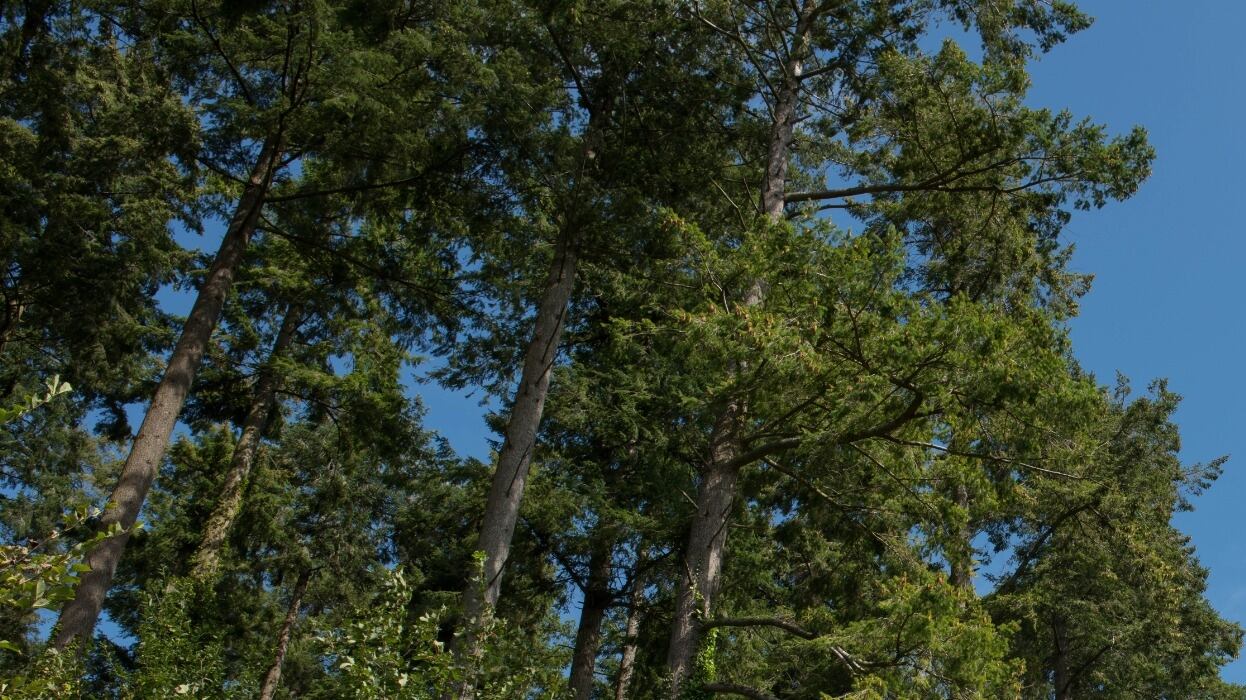
The respondents have six Douglas firs and one acacia tree on their property, and they range from 16 to 25 metres tall, according to the decision.
The applicants told the tribunal they have lived in their home for about 45 years, and that they rebuilt their deck in 2005 but will need to replace it again due to debris from the trees.
“(JL and WL) say branches extend over their property, and that needles, cones, and sap fall onto their deck and roof so that they are constantly covered with debris and the gutters need to be cleaned three times each week due to needles,” the decision reads.
“They say snow-laden branches have fallen onto their property, which they have to dispose of at their own expense. They say they are not able to eat on their deck because of constantly falling debris, and cannot care for their friend’s pets for fear of falling branches.”
The neighbours said they bought their home in 2020, and the wooded yard was one of the reasons they chose the property.
“They agree that some debris probably lands on the (other couple’s) deck and yard from the trees, but note there are many large trees around (JL and WL’s) property. They say there is no evidence showing the debris comes primarily from their trees, or that the debris has increased over time,” the decision reads.
Tribunal member Deanna Rivers found the applicants did not prove the trees pose a safety hazard, explaining that while the couple said snow-covered branches have fallen during extreme weather, they did not provide an example of any incident in the 45 years they lived there where branches fell in normal conditions.
She also referenced a professional arborist’s report, which noted the trees are healthy and structurally sound.
Rivers was also not convinced that the trees damaged (the couple’s) property, saying the photos they provided do not show visible damage to their deck, such as tearing, staining or deterioration.
While the tribunal member accepted some debris falls on to the deck, she said the evidence doesn’t show the volume or nature of the debris is “unusual or excessive.”
“(JL and WL) expanded their deck in 2005, bringing it within three metres of the property line. A larger deck closer to trees reasonably attracts more debris. There is no evidence showing conditions have worsened as the trees matured, or decreased due to the pruning,” she wrote.
Rivers found the trees and their debris amount to an inconvenience, rather than an unreasonable interference with their property.
“While (JL and WL) say they avoid eating or entertaining on the deck because of falling debris, there is no evidence the debris is constant or unavoidable, or that it prevents the use of the deck. There is also no evidence of how often (they) need to clean the deck, or that they cannot use another way to reduce the debris on their table, such as using an umbrella,” she wrote.
Having found the neighbours did not prove the trees constitute a nuisance, as defined by law, she dismissed their claims.

