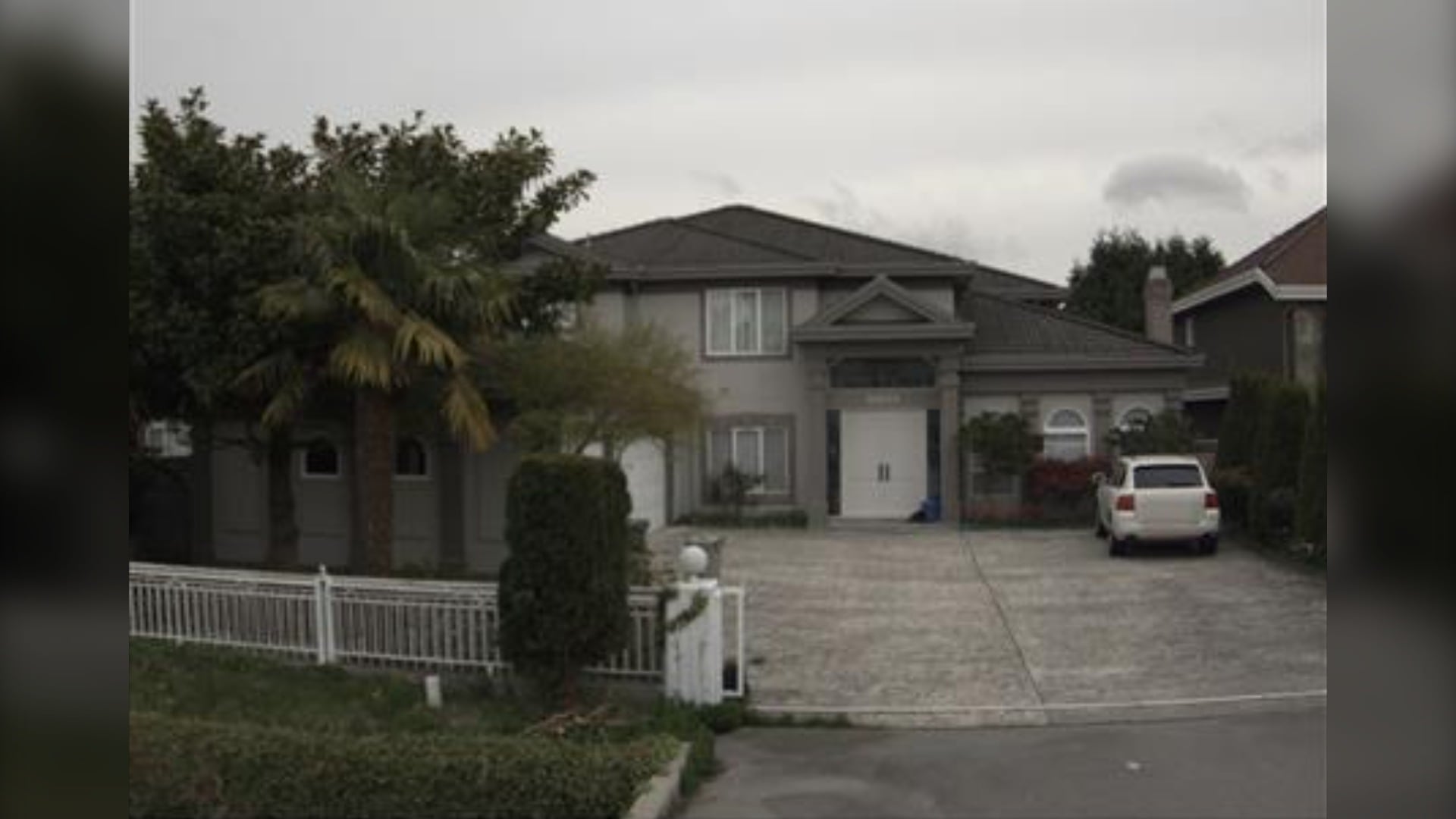
A $2.65-million home sale that fell apart in June 2022, leaving both buyer and seller accusing the other party of breaching the contract, has been resolved in B.C. Supreme Court.
At the heart of the dispute was a flood at the five-bedroom, five-bathroom home on Eperson Road in Richmond, which plaintiff Katherine Cheung had agreed to purchase in April 2022.
Seller Hui Xue Lin died before the court proceedings could be resolved, but her daughter Tiffany Chen—who served as Lin’s real estate agent during the transaction—continued the case as the defendant.
The flood occurred just a week before Cheung was due to take possession of the home. She declined to do so, arguing that the flood had caused substantial damage to the property, rendering it no longer in the same condition as it was when she had toured it months earlier.
Chen argued that the damage caused by the flood was not significant enough to amount to a fundamental breach of the contract, and that the clause requiring the property to be in the same condition on possession day as it was on the day the buyer viewed it was not a material term of the contract.
Cheung sued to get her $132,500 deposit back, while Chen counterclaimed, arguing that it was Cheung who had breached the contract by failing to complete the purchase.
In a decision issued last week, B.C. Supreme Court Justice Jacqueline D. Hughes sided with the buyer, ordering the return of the deposit and dismissing the counterclaim.
‘Like a wet sauna’
According to the decision, Cheung’s parents lived close to the property and became aware that it was for sale when Chen listed it in early April 2022.
“At the time, the plaintiff was a university student who, with her parents’ help, was looking to purchase a residential property to live in,” the decision reads.
Cheung’s father toured the property, which was vacant at the time, and consulted with his wife and daughter before putting together an offer.
Lin accepted the offer, which was “subject-free” and above the listing price, and the parties entered a contract of purchase and sale.
The contract followed the “standard form” for B.C. residential real estate sales, according to the decision. It included the following clause:
“The property and all included items will be in substantially the same condition at the possession date as when viewed by the buyer on April 9, 2022.”
According to the decision, Cheung’s father discovered the flood while meeting with the family’s real estate agent “at a neighbouring property.”
“Following their meeting, they walked over to the property,” the decision reads. “Mr. Cheung looked through the front window and noticed that the wood flooring appeared to be heaved, warped, and wet.”
There was some discrepancy over when Chen learned of the flooding. Cheung’s father told the court he discovered it on June 6 and notified Chen’s assistant. Chen told the court she was not informed of the issue until June 8.
Regardless of when the flood was discovered, the parties attended the home on June 8, accompanied by a plumber and a building inspector.
Cheung’s father told the court they encountered a building that was “extremely hot and humid” and “like a wet sauna,” with “evidence of ongoing and active water ingress” throughout the main floor.
The decision quotes from his testimony describing the flood damage at length.
“The wood floors on the bottom of the house were all saturated and warped, as were the bottom few inches of all the cabinets and drywall,” he said, according to the decision.
“There was a hot tub far from the kitchen. It was all heaved up out of its enclosure and had taken tiles up with it. I looked around the exterior of the property, and (the building inspector) pointed out that there was water running out from under the house along the foundation, and that the backyard grass was so full of water that it had stopped soaking in and had saturated the yard.”
Those present took photos of the flooding, which were shared with the court. The building inspector shut off the water, the boiler and several circuit breakers that kept tripping, and Chen called a restoration company to conduct emergency remediation beginning that day, according to the decision.
Who breached the contract?
Two days later, on June 10, 2022, Cheung’s lawyer contacted the lawyer for Chen and Lin to say that the buyers would not be proceeding with their purchase and to request the return of the deposit.
“The plaintiff took the position that the property had been rendered unsuitable for human habitation by the flood, was not presently in substantially the same condition as when viewed, and would not be in the necessary condition for some time given the nature and scope of the damage and required remediation,” the decision reads.
The sellers’ lawyer replied on June 13, taking the position that the buyers were required, under the contract, to complete their purchase.
The possession date came and went without Cheung taking possession of the home, and the buyer heard again from the sellers’ lawyer suggesting a new completion date.
“Your client’s position that she was entitled to repudiate the contract is obviously without merit,” reads a portion of the correspondence reproduced in Hughes’ decision.
“Minor cosmetic damage caused by a flood does not come close to being a material term allowing your client to fail to complete, and there is no clause in the contract that your client can point to that can be fairly construed as a material term in that regard.”
Chen eventually sold the property to a different buyer in October 2022 for $2.165 million, nearly $500,000 less than Cheung had agreed to pay.
The question of who breached the contract came down largely to the judge’s determination of how severe the damage to the property was.
The defendant acknowledged that the home was not in the same condition as it had been when Cheung’s father viewed it, but argued that enough repairs had been done by the time of the possession date that the remaining damage was “merely cosmetic” and not a fundamental breach of her obligations under the contract.
“The defendant says that other than the “merely cosmetic” remaining work, the plaintiff would have received substantially what she bargained for on the possession date notwithstanding the flood,” Hughes’ decision reads.
“I disagree. The plaintiff contracted to purchase a residential property without any known history of water damage that she could move into and live in. What the defendant was in a position to convey on the possession date was a residential property that had suffered water damage and was undergoing remediation following a significant flood event, which had not yet been fully investigated or remediated.”
The judge ruled that the condition of the property was a “fundamental breach” of the contract and that Cheung was entitled to terminate it as a result.
Hughes further ruled that even if she was wrong in her assessment of whether the flood was a fundamental breach, the condition clause constituted a “material term” of the agreement, further entitling Cheung to terminate it.
The judge ordered Chen to return Cheung’s deposit, plus accumulated interest, and to pay the plaintiff’s court costs. The decision does not specify the exact amount of money owed to Cheung.
RELATED STORIES:
- Shuttered B.C. girls school described as ‘house of horror’ at centre of class action lawsuit
- B.C. Court of Appeal overturns life sentences imposed on teen murderers who stabbed victim 42 times
- Fraudsters nearly sold a B.C. resort condo they didn’t own for $580K, court hears
- B.C. court orders former mayor to pay back $814K he misappropriated from the family business
- Fraudster who owes B.C. regulator $36.7 million loses appeal of order to forfeit his retirement funds

