Days after passing Bill C-12, federal immigration officials have begun sending out letters to thousands of asylum seekers in Canada, warning them they may not qualify for a hearing in front of the Immigration and Refugee Board (IRB).
Bill C-12, The Strengthening Canada’s Immigration System and Borders Act, became law on March 26, and applies retroactively. The law stipulates that refugees who entered Canada after June 24, 2020, must make an asylum claim within one year of entering the country.
There are currently more than 300,000 refugee claimants waiting for a hearing, and the sweeping reforms are meant to fight fraud and reduce the backlog. Immigration, Refugees and Citizenship Canada (IRCC) estimates the new law could remove 30,000 people from the waitlist.
Refugee claimants in limbo
Refugee advocates say the new filing deadlines have put the lives of vulnerable people like Mohammed Al Hindi in limbo.
Al Hindi, 38, a Palestinian refugee, received a warning notice of his potential ineligibility, one week after the law took effect.
The letter shown to CTV News states his claim for refugee protection “may be ineligible to be referred to the Refugee Protection of the Immigration Refugee Board of Canada.”
The IRCC requested Al Hindi provide additional information within 21 days.
Further down in the letter, the IRCC officer warns that if the claim is deemed ineligible, Al Hindi “will face removal from Canada.”
Al Hindi, his wife and three children were granted special visas under a temporary program created by the federal government, to help Palestinian relatives of Canadians who were fleeing the Hamas-Israel war.
They settled in London, Ont., last May and Al Hindi made a refugee claim later that year in August 2025. But that wasn’t the first time Al Hindi was in Canada. He visited Toronto two years earlier to save his sister Ghadir’s life. She had kidney failure, and doctors determined that Al Hindi was the only viable donor.
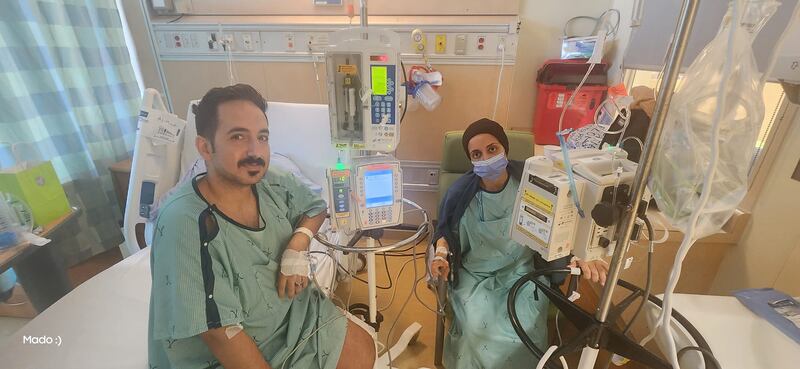
IRCC is counting Aug. 9, 2023, as his date of arrival, which exceeds the new deadline of one year for applications that was just entrenched in law.
“Why punish (me)? It’s not logical to get a refusal letter from the government because I was here for a humanitarian act,” said Al Hindi from his apartment in southern Ontario.
Tragic timing
His lawyer, Marianne Lithwick says Al Hindi didn’t file a claim during his first visit because he needed to return to Gaza to support his wife and three children, as well as his elderly parents.
“He wasn’t thinking I need to make a refugee claim. The main point of his trip was to donate a kidney to his sister - then he returns to Gaza and war breaks out,” Lithwick explains.
“He needs Canada’s protection (now) but under the new law - he’s not eligible for it.”
Following his sister’s surgery, Al Hindi returned to Gaza, just days before Hamas attacked Israel on Oct. 7, 2023, triggering a war that would last 15 months before a ceasefire was declared.
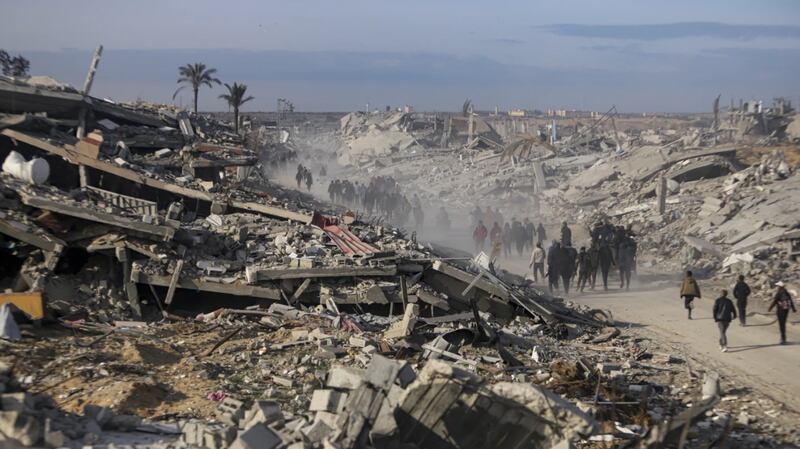
According to his refugee claim, Al Hindi and his family were displaced seven times. Persistent bombing pushed his family from their home in Gaza City southward toward the Rafah border crossing with Egypt. Not fully recovered from his surgery, Al Hindi said he had to ask friends to help him carry his three-month-old son, as the young family fled. He felt guilty he was unable to reassure his wife, who suffered from panic attacks.
“I cannot carry my son. Cannot carry my daughters. It’s hard - you just run and run. You can’t imagine, just explosions everywhere.”
After six months in a war zone, Al Hindi says he borrowed money to pay US$17,000 in fees to Egyptian travel brokers in order to cross over the Rafah border to safety.
Meanwhile his sister Ghadir, a Canadian citizen, applied for visas for the family to come to Canada, which the federal government approved in 2025.
Stability found then upended
Since finding a home in London, Al Hindi has found work as a financial administrator for an Islamic charity. His two daughters have started school and his wife has found part-time work. The stability provided him comfort, but with the IRCC letter, he finds himself thrust into limbo again.
“We want a new life - not for us but for our children. We need to let them grow in a good life,” Al Hindi said, as he waited for his older daughters to return home from school.
With only one kidney, he also worries about losing health benefits. The refugee protection identity document issued to him when he arrived the second time in Canada, states that his access to the Interim Federal Health Program “can be cancelled without notice if the individual’s immigration status changes.”
Then there are concerns about deportation. He doesn’t just fear the Israel Defence Forces, he has also been terrorized by Hamas. When Al Hindi lived in Gaza, he was detained and beaten by Palestinian police after he reported that Hamas was operating out of the building next to his home.
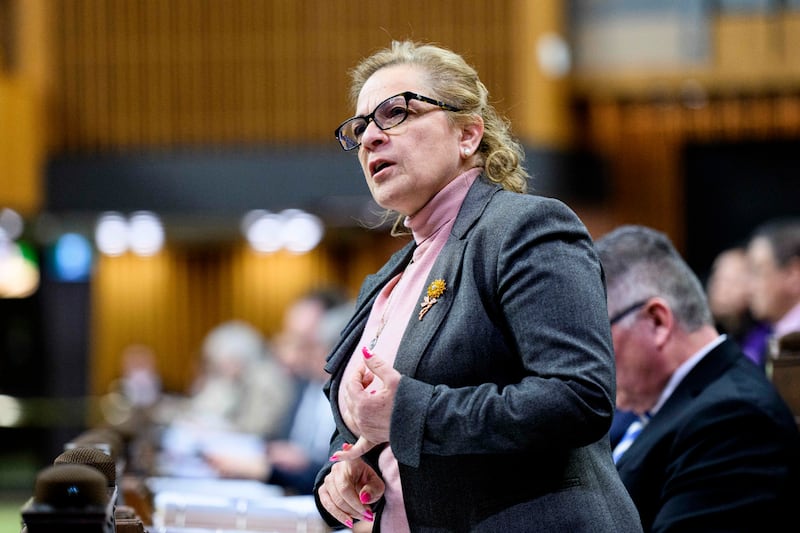
Immigration Minister Lena Diab says that the government has non-removal orders on people from certain countries to ensure refugees such as Al Hindi will not be sent back to dangerous circumstances.
“People will not be made to go back to a country where wars and conflicts are going on. But there are other processes going on,” said Diab in an interview with CTV News on Tuesday in Halifax.
Asylum seekers IRCC deems ineligible won’t get an oral hearing before the IRB. Instead, their fate will be determined by an analysis of the documentation they submit.
With tens of thousands of people facing the loss of their status and the risk of deportation, Lithwick says immigration lawyers are looking at how the new law complies with the Canadian Charter and international law, which could lead to a flood of legal challenges in federal court.

