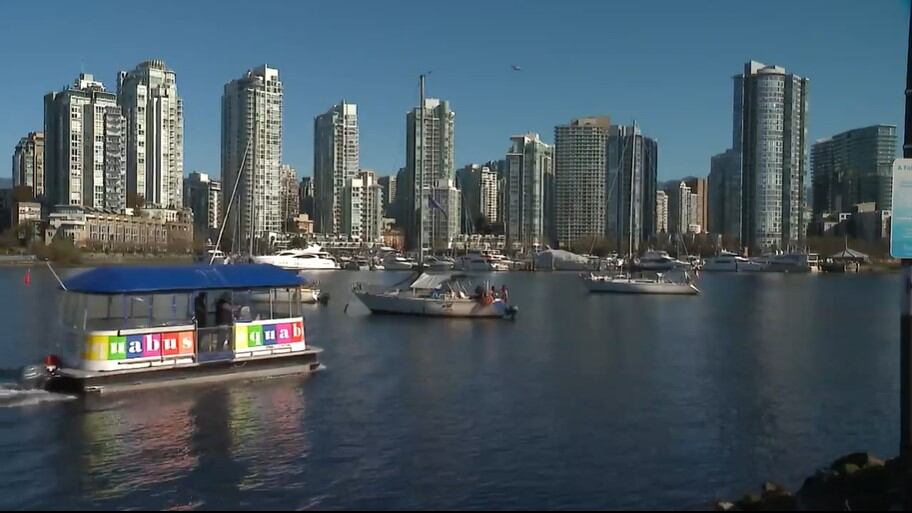
VANCOUVER – New research out of the University of British Columbia suggests summer is not only getting hotter but also significantly longer, and it’s happening faster than previously thought.
In some parts of the world, the study found summer-like temperatures are extending the season by as much as 50 days over the past three decades. The pace of change has also been accelerating since the 1990s.
For co-author Ted Scott, a PhD student in UBC’s Department of Geography, the research started out as a hunch.
“I sort of began with the sense that summers feel different than they did when I was a kid,” Scott said. “This is my perception. Can we actually look at the data and see if this is true?”
Scott and his team crunched temperature data from 1990 to 2023, looking for the number of days each year that meet typical peak summer warmth.
They defined summer based on when temperatures meet historical norms for the warmest quarter of the year, rather than sticking to the calendar definition.
Scott’s perception was confirmed.
“We know summers are getting hotter, but they’re also starting sooner and ending later,” he said.
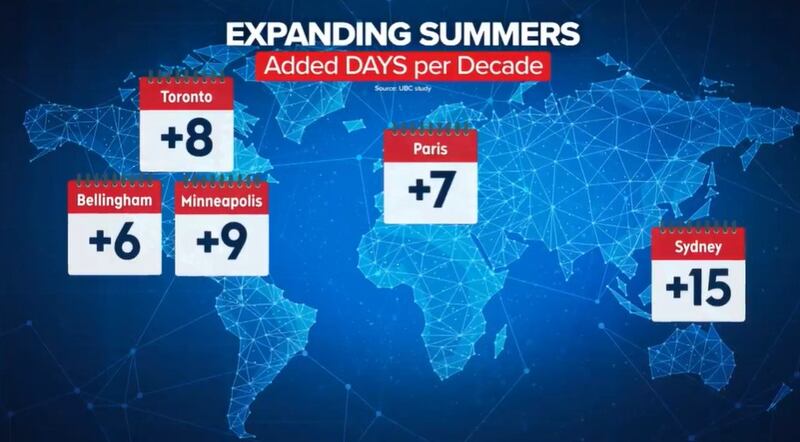
The research found summers between the tropics and polar regions are lengthening on average by about six days per decade, up from roughly four days per decade reported in previous studies.
In some cities, the shift is even more pronounced. In Sydney, Australia, summer has expanded by about 15 days per decade, according to the study, while Toronto is experiencing growth of roughly eight days per decade. In Bellingham, Wash., just south of Vancouver, summer is lengthening by about six days each decade.
The study also found seasonal transitions are becoming more abrupt, with shorter spring and autumn “shoulder seasons.” Instead of gradual warming, summer-like temperatures are arriving more suddenly.
“That shift can be disruptive,” Scott said.
The changing climate was already on the minds of students CTV News spoke to this week on the UBC campus.
“I’m really concerned,” Talha Zubir said. “It’s a little worrying to see the state we’re in if we don’t take any action right now,” added Brooke Taylor.
Researchers say now is the time to adapt to the new patterns that are contributing to everything from more wildfires to greater energy demand for cooling off. Intense early heat could also alter planting schedules and speed up snowmelt which increases the risk of spring flooding.

