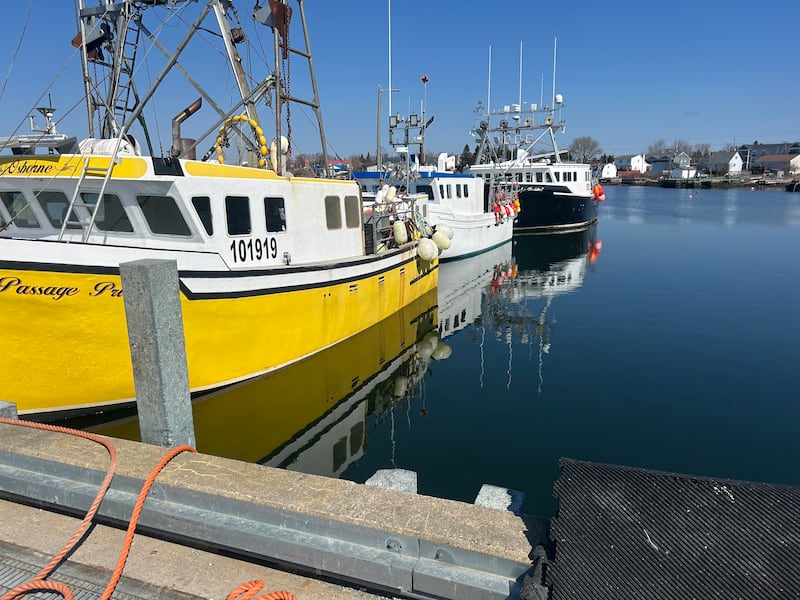
Lobster season is underway off Nova Scotia’s eastern shore.
This week fisherman Jamie Osborne laid 250 traps, but he is already worried that the water temperature in the North Atlantic is too low for good fishing.
“The catch is not very good,” said Osborne. “Everybody will tell you the same thing.”
A bad catch will often result in low supply which will usually lead to an increase in the price of lobster. This week, it has sold as high as $16 dollars a pound.
But there are other issues casting a dark cloud over the lobster industry.
The war with Iran continues to drive up gas and diesel prices, which has led to fuel surcharges on many products in North America, including seafood.
“Different companies are now charging more to haul food around the country,” said Dalhousie University professor and food distribution expert, Sylvain Charlebois. “It is beyond problematic.”
Tangier Lobster Company managing director, Stewart Lamont said newly added fuel surcharges are a troublesome reality, adding to the overall cost of transportation.
“It has had an initial impact of higher freight rates by the range of 25 to 30 per cent,” said Lamont, who added that the lobster industry in Canada was hoping for smooth sailing after the removal of the 25 per cent Chinese tariffs on March 1, but the financial landscape has now arguably worsened.
“Trucking, transportation, packaging and there is very little that hasn’t been negatively impacted in the last month to six weeks.”
Those added fees could drive up prices even higher.
Lobster is Nova Scotia’s top seafood export, exceeding $1.3 billion in recent years. For those who work in the industry, when it comes to covering fuel surcharge-induced expenses, the challenge is finding the right price without charging too much and risk turning off customers.
“We’ve had prices in recent years which were not acceptable to the harvesting sector and we’ve had pricing recently, which hasn’t been acceptable to our clients,” said Lamont. “The goal is to always find the sweet spot.”
Charlebois said there are aspects of the lobster industry that make it difficult to predict future trends, mainly because lobster is a specialty item and he believes people around the world will still likely pay a lot to get it.
“The problems are the cost for harvesters,” said Charlebois, who is worried those who work at sea and catch lobster will take the biggest financial hit because of the high cost of fuel.

