MONTAGUE - Some Prince Edward Island exporters are turning to Asia for new sales as tariff threats and trade disruption with the U.S. push Canadian companies toward other markets.
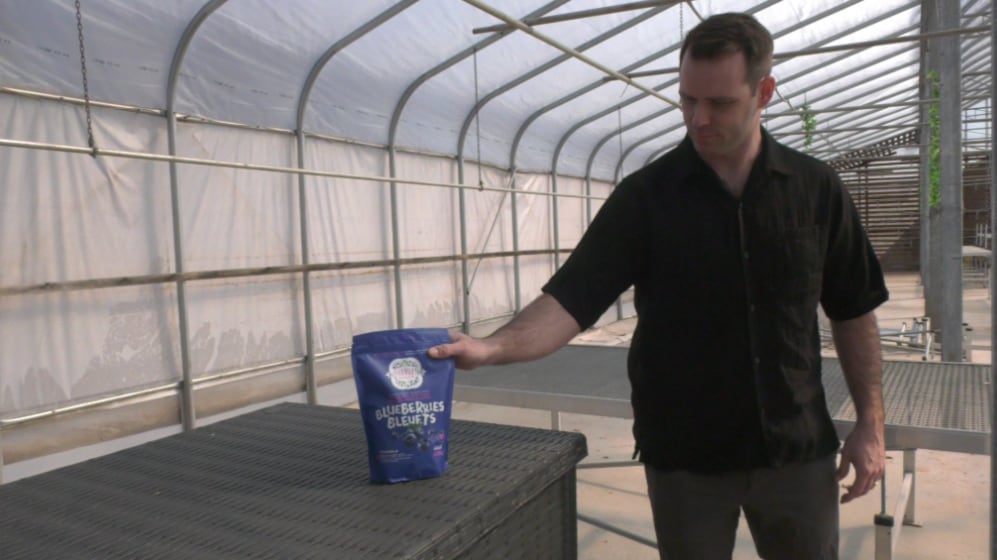
For Nabuurs Gardens in Montague, that effort is showing up on store shelves. Island-grown wild blueberries are now sold in several countries across the continent says president and co-owner Terry Nabuurs. He adds that while trade with the U.S. remains important, recent instability means businesses can’t rely on that market alone.
“We need to protect ourselves and make sure that we look elsewhere to areas of the world that are wanting our products,” Nabuurs said. “We’re doing our small part to try to diversify.”
Innovation P.E.I., the province’s lead economic development agency, has made trade missions part of that push. Through its Export Enhancement and Diversification Fund it can also cover up to 60 per cent of eligible travel-related expenses, including economy airfare, accommodations and meals.
Nabuurs took part in last September’s multi-sector mission to South Korea and Japan. Though he missed the first leg in Seoul, his company invested in marketing materials that were distributed to a contingent that attended. When he later went to Tokyo for FOODEX Japan, the largest food and beverage show in Asia, that earlier exposure had already started to pay off with companies stopping by his booth.
“They said they got our contact info from the previous mission,” he said. “We were able to do some business with companies in South Korea.”
From fruit to fish, other Island exporters say trade missions are helping break down barriers by putting the right people in the right rooms.
At True North Seafood, director of global supply Brett Cooke said that can be critical in markets where businesses often need multiple partners to get a program off the ground. His company has been eyeing Asia for about a decade but has recently ramped up work to get its smoked salmon and pre-made burgers, both produced in Charlottetown, into stores there.
“It’s a condensed way, but it does allow you to make the contacts and then for the few months following, get those programs set up,” Cooke said.
The first few orders are moving into South Korea in the next few weeks.
Cooke said True North Seafood has long benefited from trade with U.S. partners, with major markets in Boston, New York and Philadelphia only hours away. But as trade conditions have shifted, the business has branched out, looking for countries that value Canadian products.
“It’s not just everywhere that you can set up shop. Countries like [South] Korea, Japan and even in China, the Canadian provenance does hold sway,” he said, adding Canada has a reputation for high standards in how food is produced and regulated. “There’s a certain level of trust there that a food product going into that market is going to be good for them, good for the environment.”
Back at the garden centre, Nabuurs said he also saw that interest first-hand. For his business, the overarching goal is to bring more value back home.
“If we’re selling elsewhere we’re bringing economic activity to our local economy that didn’t exist before,” he said. “That’s the exciting thing for us… we’re just getting started, but we can learn from other companies that have done the same thing.”

