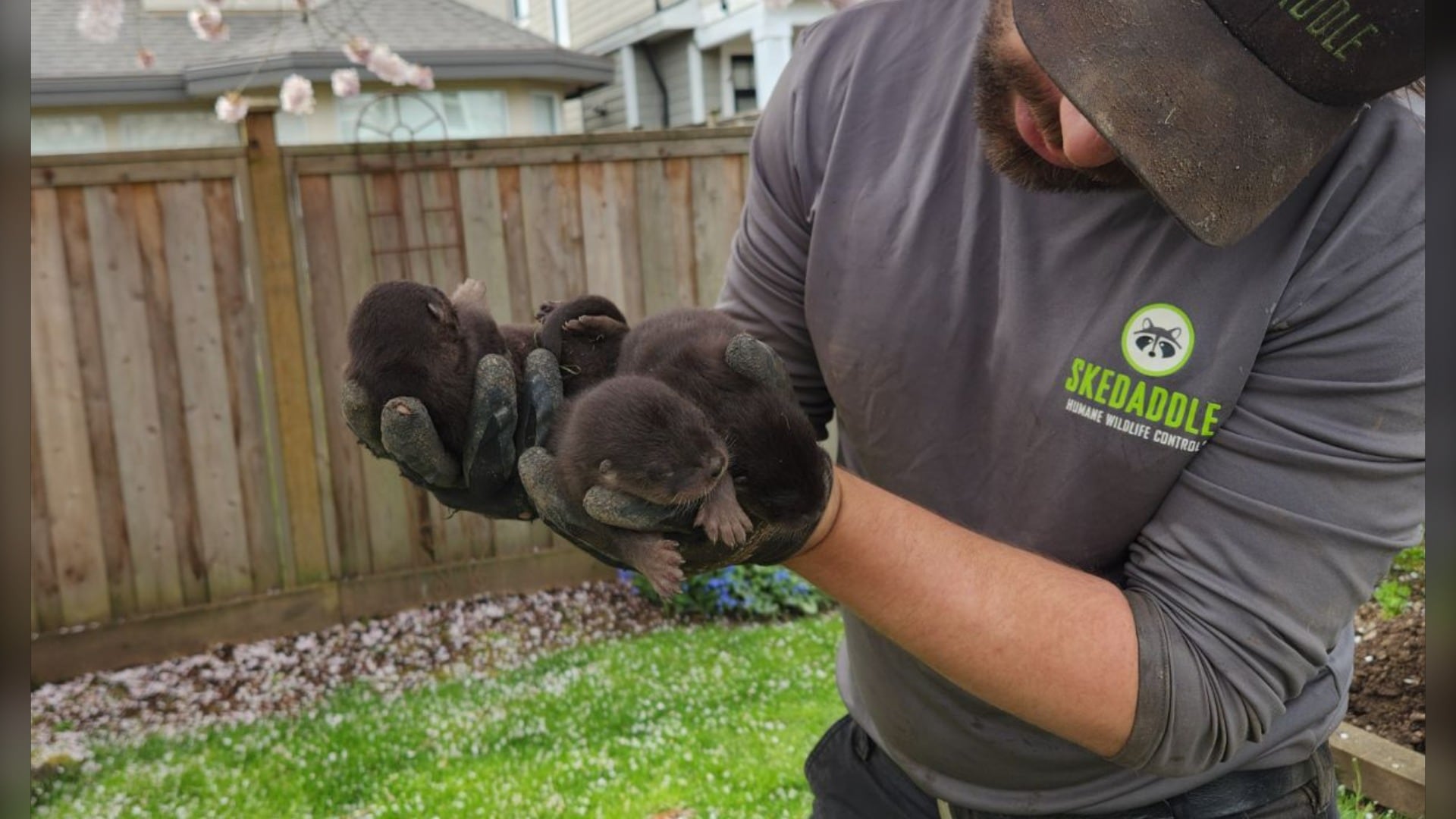
In one of the cuter calls he’s ever dealt with, Alex Ritz removed a trio of baby river otters from a den underneath a shed in Richmond earlier this month.
It was the first time Ritz, who owns a Skedaddle Humane Wildlife Control franchise in Coquitlam, had dealt with a call for otter removal, and it’s an experience he’ll never forget.
“As a wildlife technician, that’s kind of one of the draws to the job is being able to have those experiences and see baby animals,” Ritz told CTV News.
“It’s a very exciting experience, especially when it’s one of the more rare animals like otters.”
0 of 9
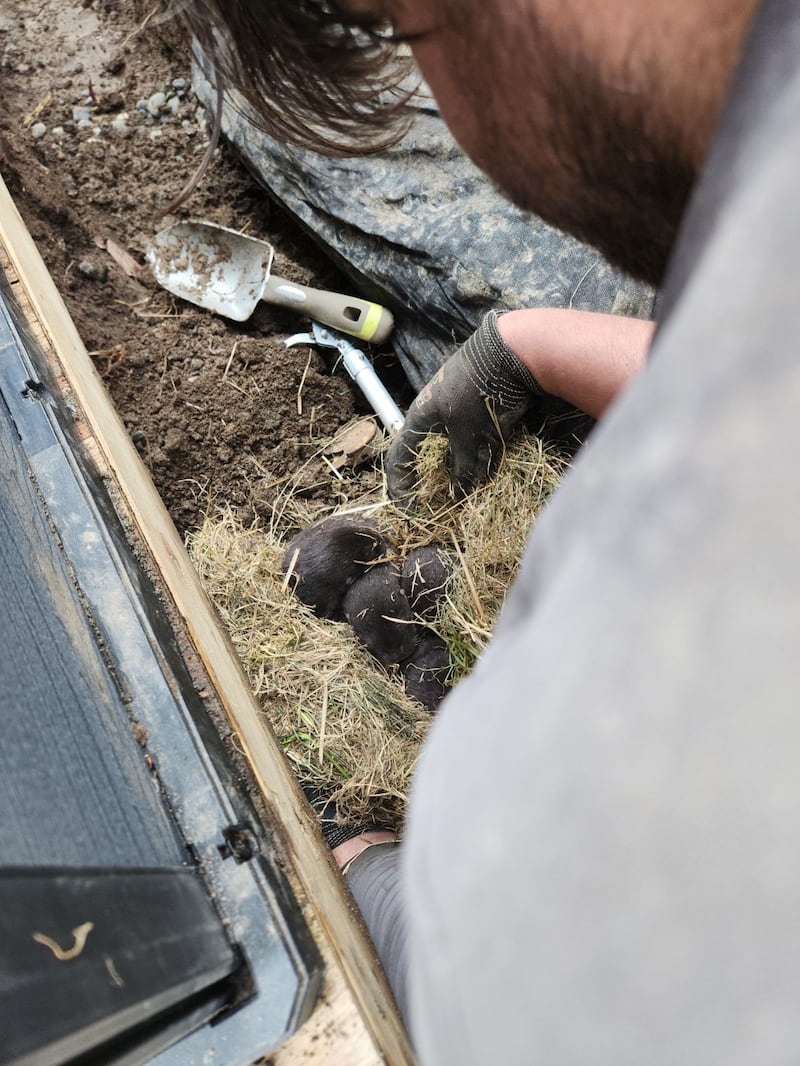
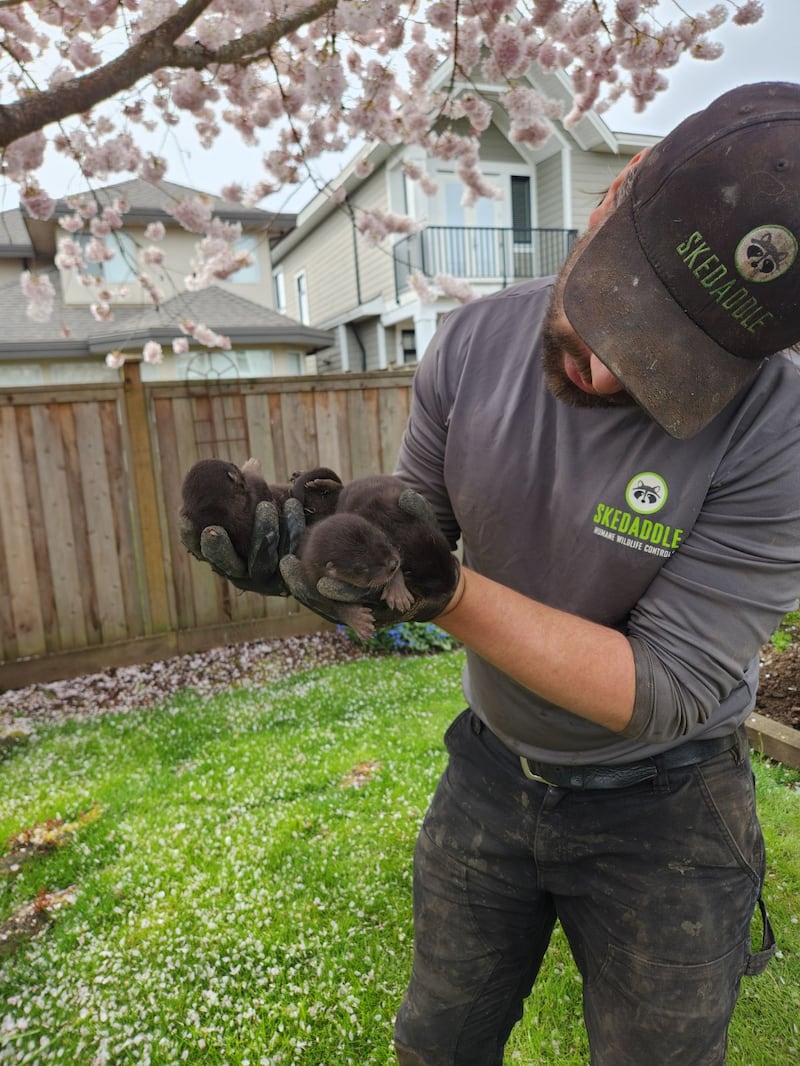
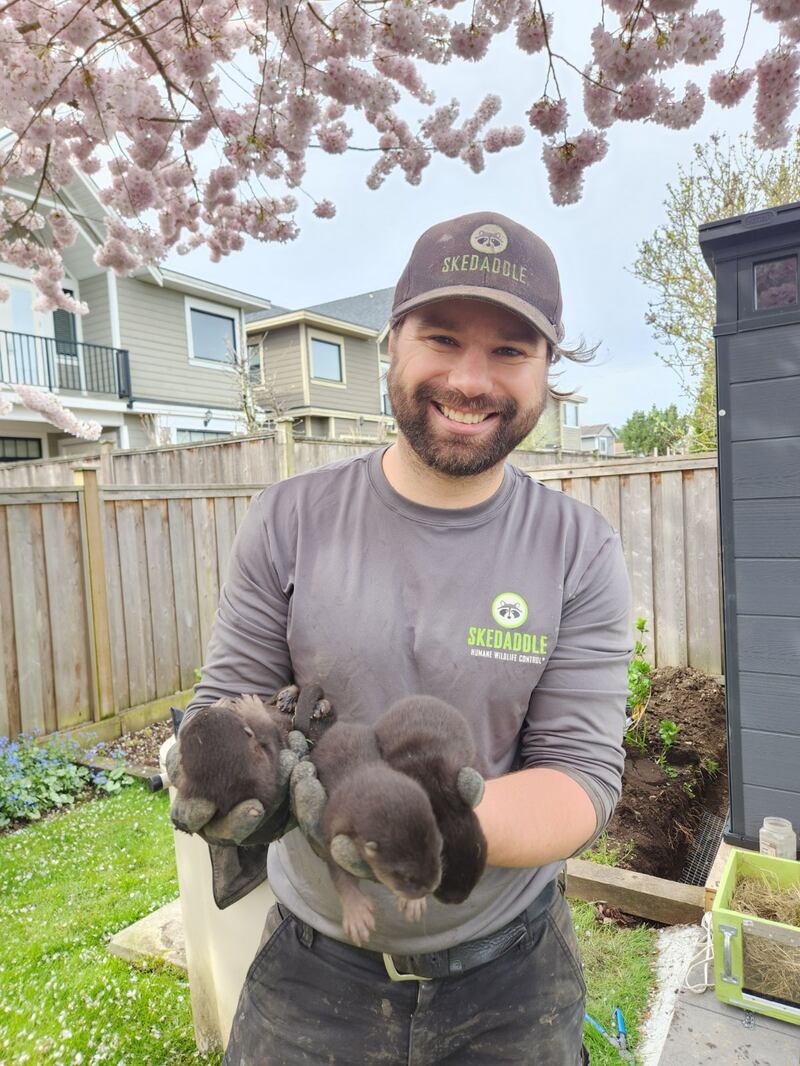
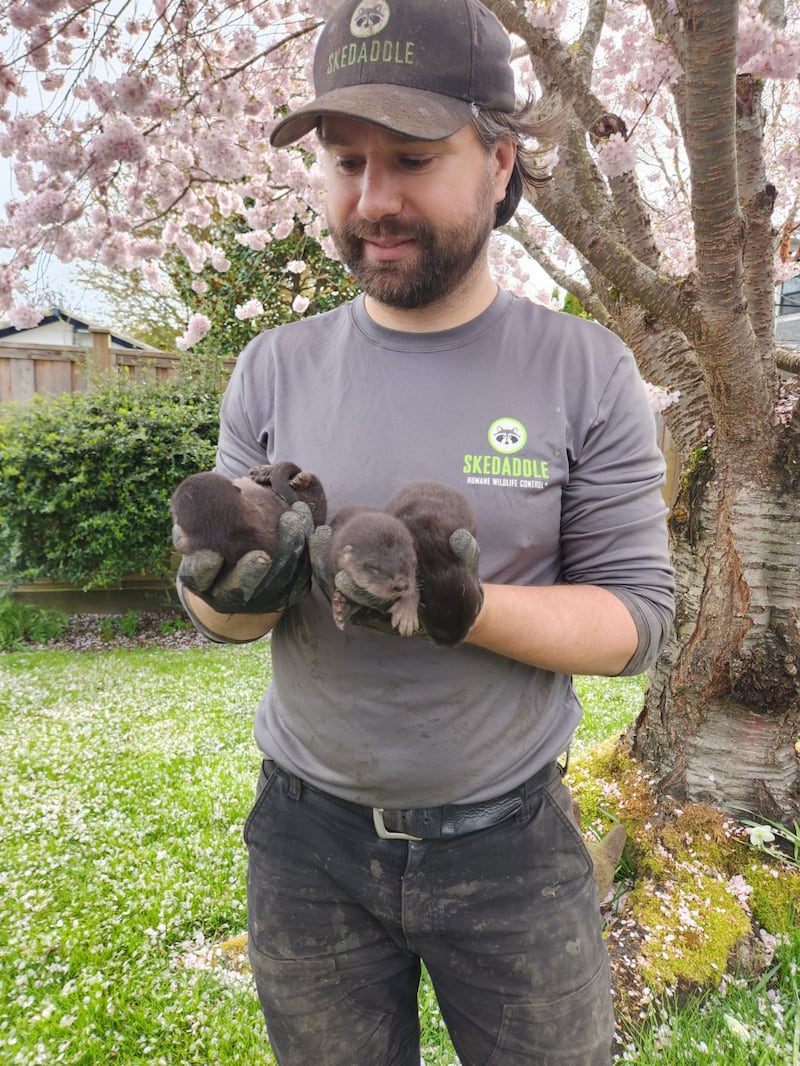
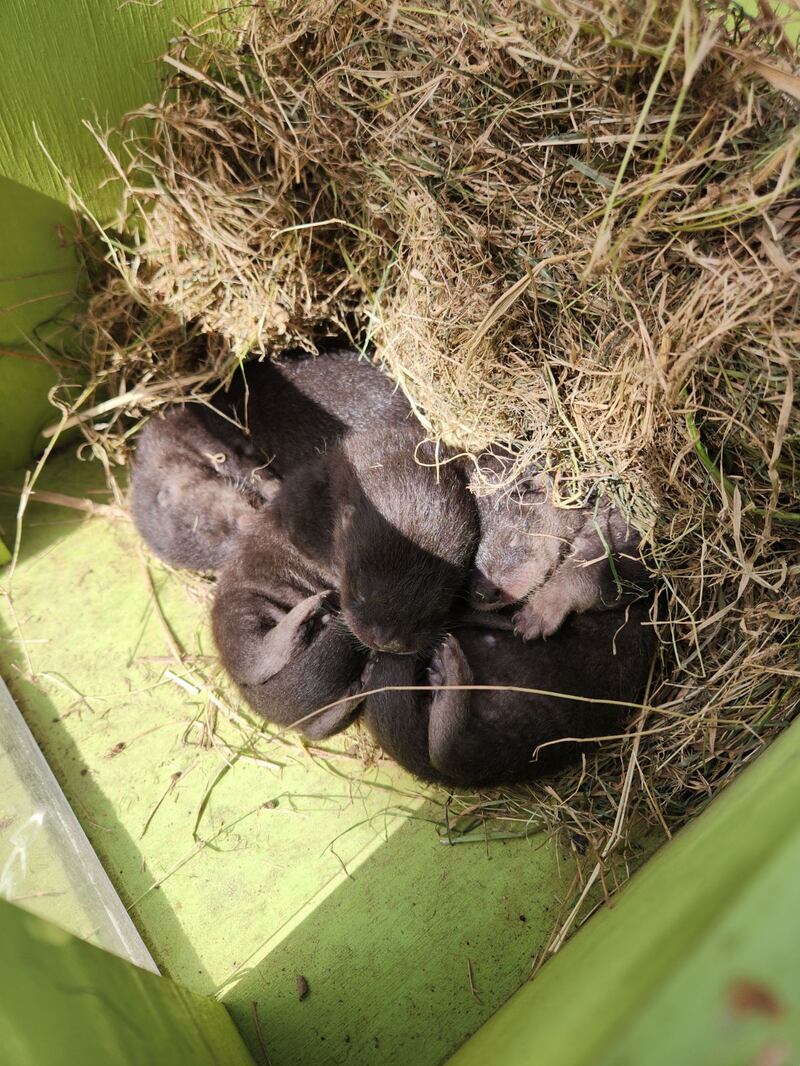
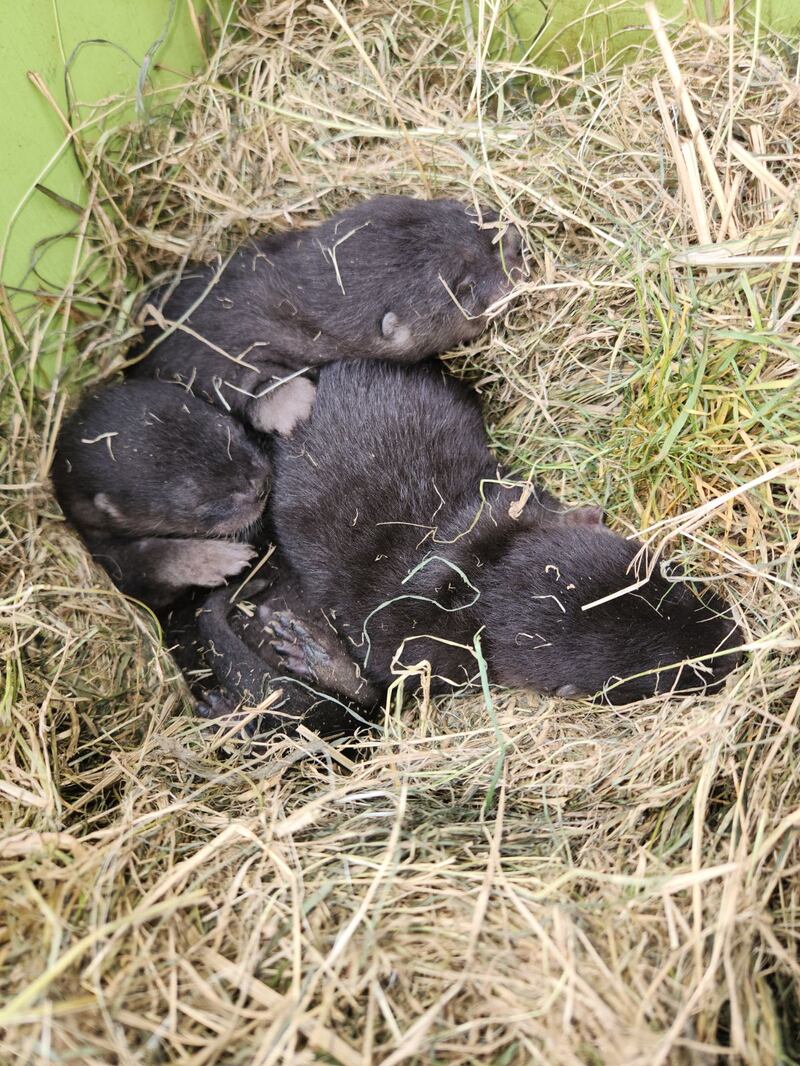
The three pups, estimated to be about three weeks old, were hard to spot.
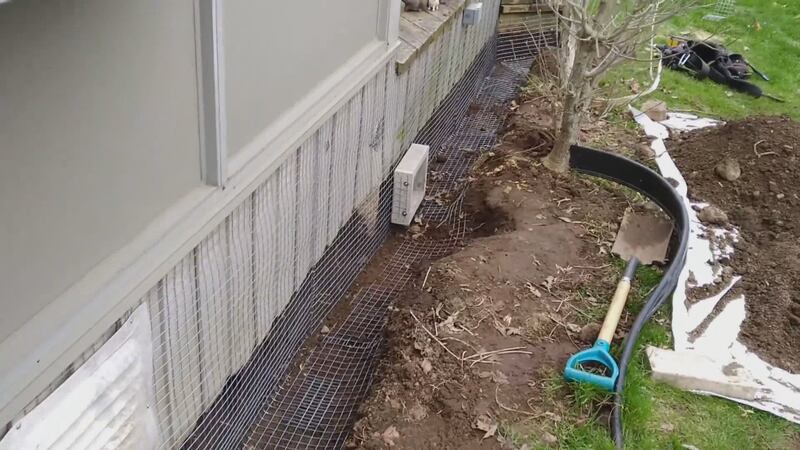
Ritz said his company received a call from a homeowner in Richmond, who reported seeing an otter repeatedly digging underneath their shed. The initial response technician could hear the animal moving around underneath the shed’s floor, but Ritz and his team were unsure whether babies were present even as they began setting up exclusion infrastructure to keep the otter out.
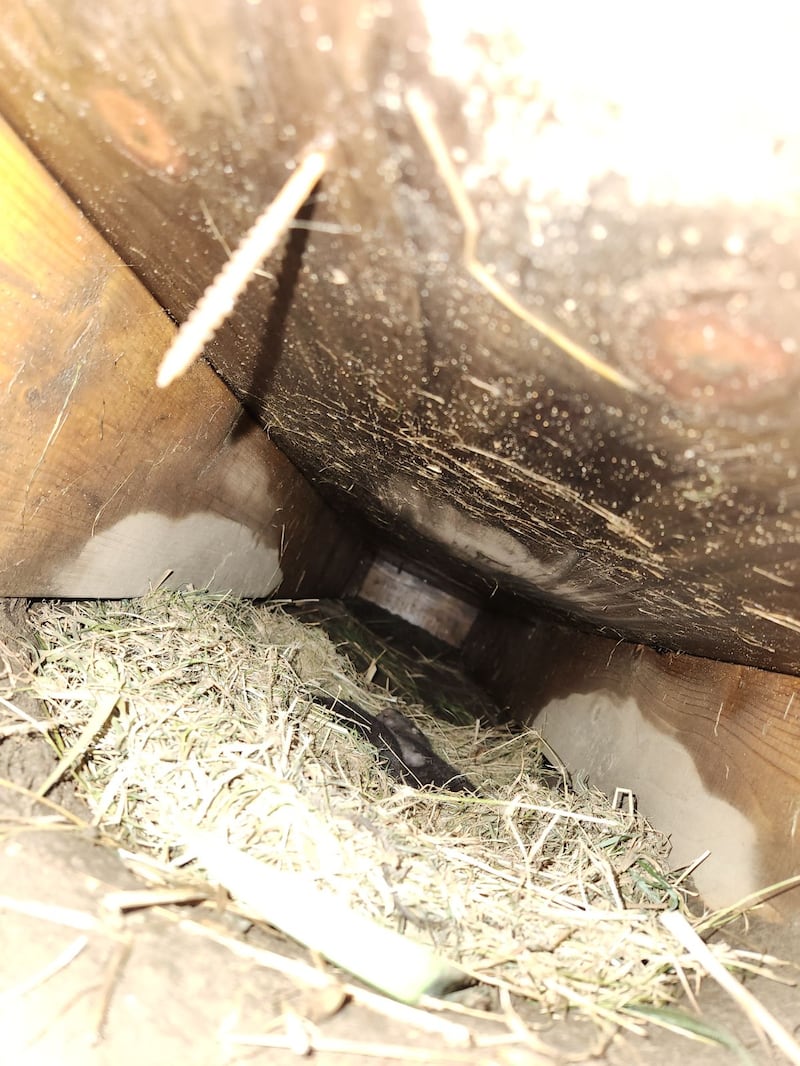
“I didn’t see anything until we were at the very end of the other side of the shed,” Ritz said, noting that the team had been keeping an eye out for signs of pups as they dug a trench along the perimeter of the shed and installed wire screens to keep animals out.
“I took a picture and I noticed that the underside of the shed was damper than in other areas, so that kind of had a light bulb go off in my head.”
He reached his hand into the space under the shed and felt around, pulling out nesting material and, eventually, the three baby otters.
Ritz relocated the pups to a heated box next to the den entrance their mother had dug, so that she could retrieve them.
“We use this method because relocating the animals is not great for them,” Ritz said. “It also is not something you would ever want to do with a mother and baby animals.”
Animals generally scout multiple potential den locations before giving birth, he explained, so blocking the mother’s access to the space under the shed and leaving her babies outside allows her to choose her next home.
“If we kick them out of one spot, they will have backup sites,” he said.
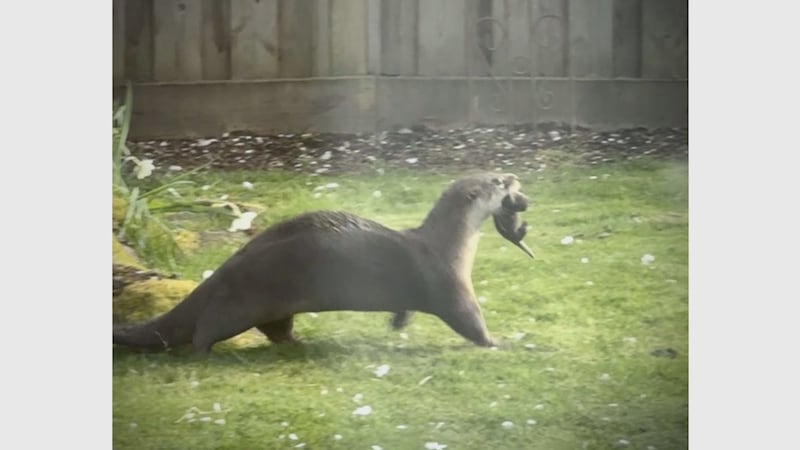
Sure enough, Ritz got a text message from the homeowner later that night, which included a photo of the mother otter carrying one of her pups away.
In a news release, Skedaddle didn’t share the exact location where the mother otter had made her nest, but said the property was “within reach of interconnected waterways, shoreline habitat and green space” near the village of Steveston and the mouth of the Fraser River.
“While the surrounding neighbourhood is fully developed, features like nearby water and low human disturbance can create pockets of suitable habitat,” the release reads. “In this case, the space beneath the shed offered the kind of shelter otters seek along riverbanks: protected, hidden, and close to food.”
Ritz said otters are not a common pest animal, and some homeowners might be inclined to leave a den on their property alone, rather than seeking its removal.
Otters can cause property damage, however, and an animal protecting its young can be aggressive and dangerous, particularly to children and pets.
“Otters could be raising their young for up to 16 weeks, so that could be a lengthy period of time that they’re underneath there,” Ritz said.
As for whether this was the cutest job he’d ever been called to take on, Ritz was torn.
“I have to say, baby skunks are probably the softest animals I’ve ever touched,” he said. “But I do love otters. If it’s not the top, it’s kind of neck and neck with the top.”
RELATED STORIES:

