CHARLOTTETOWN — P.E.I. has tabled its 2026-2027 budget with the largest planned deficit in the province’s history, while forecasting the current year’s shortfall will be even higher.
The budget calls for a consolidated deficit of just under $410 million, reflecting the pressures P.E.I. is facing and what Finance Minister Jill Burridge described as a “deliberate choice” to support Islanders.
It includes $269 million in new spending, bringing total expenditures to $3.8 billion. Revenues are expected to reach about $3.4 billion, representing economic growth, but not enough to offset the cost of today’s needs.
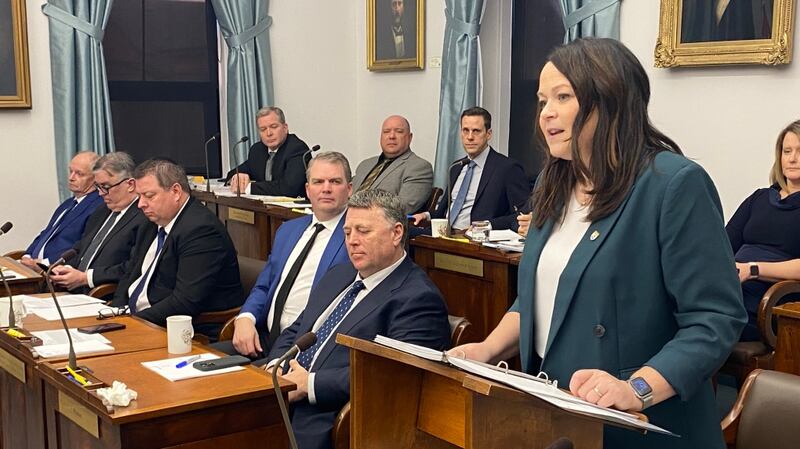
“These pressures did not emerge overnight. And they will not be resolved overnight,” Burridge said in her budget address on Tuesday afternoon.
The document also shows how sharply the province’s finances deteriorated over the past year. The 2025-2026 deficit is now forecast at about $449 million, well above the $183.9 million shortfall budgeted last spring.
That widening gap quickly drew criticism from opposition parties.
“Obviously it does indeed show poor leadership. We need to get this under control,” said P.E.I. Liberal Leader Robert Mitchell. “The government doesn’t have a money problem, it has a spending problem.”
Burridge framed the fiscal plan as a response to the reality of rising costs, pointing to investments in five key areas: affordability, the economy, health care, education, and communities and land.
One of the new affordability measures is the Island Essentials Benefit, meant to help cover everyday costs such as groceries, gas and utilities. Starting in July 2026, it will build on the current Sales Tax Credit by increasing annual amounts to up to $310 for single Islanders and $365 for couples.
Households with income of up to $95,000 will qualify for the full benefit, paid quarterly, while those earning up to $114,000 will receive at least $175. The program will be administered by the Canada Revenue Agency.
The budget also introduces a new tax bracket for income over $200,000. Personal and corporate income taxes account for 27 per cent of the province’s total revenue, and the change is expected to generate $4.4 million of that.
At the same time, the province is cutting spending in some areas, with the transportation, infrastructure and energy department seeing the biggest reduction. P.E.I.’s Energy Rebate, which gives households 10 per cent back on the first block of residential electricity, will be slashed.
The government is also pausing its free heat pump program and another solar rebate program, both of which have played a part in reducing carbon emissions.
The climate-related cuts raised concerns from the Greens.
“The government has signaled a real direction change here. Climate change, sustainability, mitigation and adaptation measures have fallen off the wayside,” said P.E.I. Green Leader Matt MacFarlane.
Burridge said the average amount Islanders receive through that rebate is about $175 a year, and argued some of that money has instead been redirected into the new Island Essentials Benefit, which she said will leave more money in people’s pockets overall.
Other cuts include the Tariff and Trade Contingency Fund that appeared in last year’s budget, as well as a pause on the Community Housing Expansion Program.

Health and Wellness remains by far the largest spending area, accounting for 37 per cent of the total budget. Spending in that department is set to rise by $175 million, to about $1.41 billion.
Burridge said that reflects the province’s commitment to improving access to care and supporting providers, including $57.8 million for primary health care and nearly $31 million for recruitment and retention across the system.
Asked how much of the record deficit reflects temporary pressures versus higher baseline spending, Burridge said much of the added cost will carry into the next few years, though the government plans to rein in costs and move back toward balance over three years.
“Islanders right now need steady. They don’t need shock,” Burridge said. “We’ve done a lot of work in this budget to protect the affordability piece.”

