


Today is the first day Prime Minister Mark Carney will be heading to Parliament Hill with his newly minted majority government, and he says he has no plans to call an election or shuffle his cabinet anytime soon.
Winning all three seats that were up for grabs in Monday’s byelections, the federal Liberals are entering a new era.
“We do have a parliamentary majority now, and that is the product in the last 24 hours of strong support, increasing support for those deputies, the Liberal candidates in those three ridings,” Carney told reporters on Parliament Hill Tuesday. “So, not considering calling an election. I think, very clearly Canadians want government to govern.”
With a majority government, the Liberals could hold onto power until 2029 and the end of the parliamentary session without the risk of being toppled by the opposition, because the numbers are on their side during votes of confidence in the House.
What will this new majority mean for federal political dynamics, the timing of the next federal election, and passing policy?
Here’s what you need to know.
Liberals now hold 174 seats
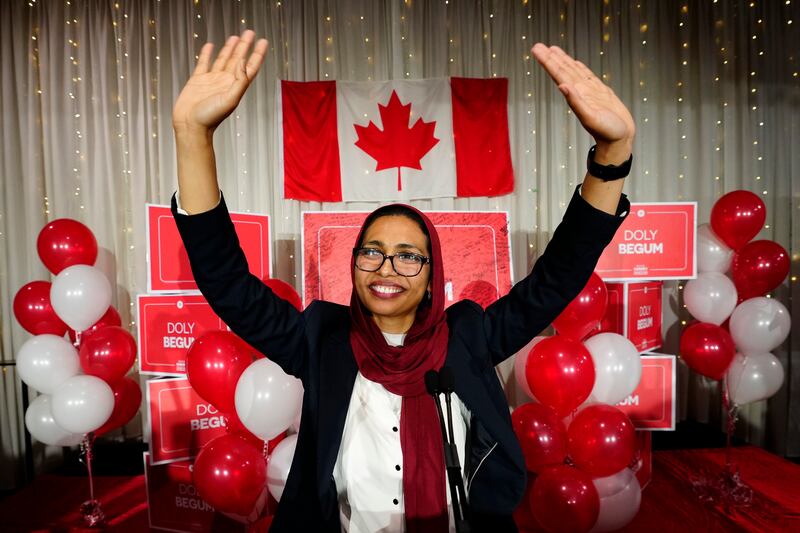
The Liberals on Monday handily held onto the two Toronto-area ridings of University—Rosedale and Scarborough Southwest, and picked up the hotly contested Terrebonne, Que., after last year’s election result was invalidated by the Supreme Court.
Monday’s results put the Liberals at 174 seats. The Conservatives have 140 seats, the Bloc Quebecois 22, the NDP six, and the Greens one.
Now, while the Liberals have secured a majority, it’s still slim, and could still fluctuate as Parliament carries on.
In a post to social media Monday night, Conservative Leader Pierre Poilievre wrote that the Liberals “did not win a majority government through a general election or today’s byelections.”
“Instead, it was won through backroom deals with politicians who betrayed the people who voted for them,” Poilievre also said, referencing the slate of MPs who have crossed the floor to the Liberals since November, and adding he will “continue to fight” for Canadians in Parliament.

Two sitting Liberal MPs could potentially call it quits before the session is over: Jonathan Wilkinson has been offered a diplomatic post in Europe but hasn’t said whether he’ll take it, and there have been reports Nate Erskine-Smith is considering a bid for the Ontario Liberal leadership.
There is also still rampant speculation that additional opposition floor-crossers — beyond the five that have already flipped — are waiting in the wings to join the Liberals.
Political implications for all parties
Scott Reid — a CTV News political analyst and former communications director to prime minister Paul Martin — said Liberals’ win at the ballot box, instead of through another floor-crosser, adds “legitimacy” to their hold on power.
“I think they’ll feel that at a political level, (they’ll) at least have a lot less to defend,” Reid said, adding that the key for Carney going forward, will be to focus on the issue that won him a majority, which is the economy, jobs, growth, and the ongoing trade war with the United States.
CTV News political analyst and former Conservative cabinet minister James Moore said the expectations of the government will change “dramatically” now that the Liberals have a majority.
He said there are “no excuses” but to deliver on a promised agenda.
“Now we’ve got minority-Parliament brain shifting to majority-government brain, (it) creates a whole different dynamic in how you govern and how you build coalitions and advance things, build public consensus and meet that expectations game of having a majority,” Moore said.
On Tuesday, Carney said he accepts Canadians’ support at the ballot box “with humility,” and signalled his government is focused on what’s ahead, announcing it’s set to temporarily suspend the federal fuel excise tax on gas and diesel starting next week.
Then, after scoring an electoral hat trick Monday night, Carney on Tuesday hit the ice with the capital’s PWHL team, the Ottawa Charge, taking part in practice alongside Finnish President Alexander Stubb.
The change from a minority to majority Parliament will also have knock-on implications for the opposition leaders, according to political strategists.
The Conservatives saw significant drops in support in all three ridings Monday night. In Terrebonne, they received about 18 per cent support in last year’s general election, compared to about three per cent Monday night.
In Scarborough Southwest, support for the Conservatives dropped from 30 per cent last April, to 18 per cent on Monday.
In University-Rosedale, support dropped from 24 per cent last spring, to 12 per cent Monday, with the Conservative candidate dropping into the third-place spot behind the NDP.
“One thing that we do know about these byelections is that they are a report card on the party organizations,” said Nanos Research founder and chief data scientist Nik Nanos in an interview with CTV News Tuesday. “For the Conservatives, they were not able to deliver their vote, they were not able to mobilize their vote, and not able to bring their vote out.”
“And it speaks to, in those three ridings at least, the weakness that the Conservatives have right now,” Nanos added.
Shakir Chambers, who previously worked in former Conservative prime minister Stephen Harper’s office, said that Poilievre is also now facing a more challenging Parliament.
“I think, moving forward in this majority, he still has to hold the government to account, but he has to find a way to shift that tone just slightly,” Chambers said.
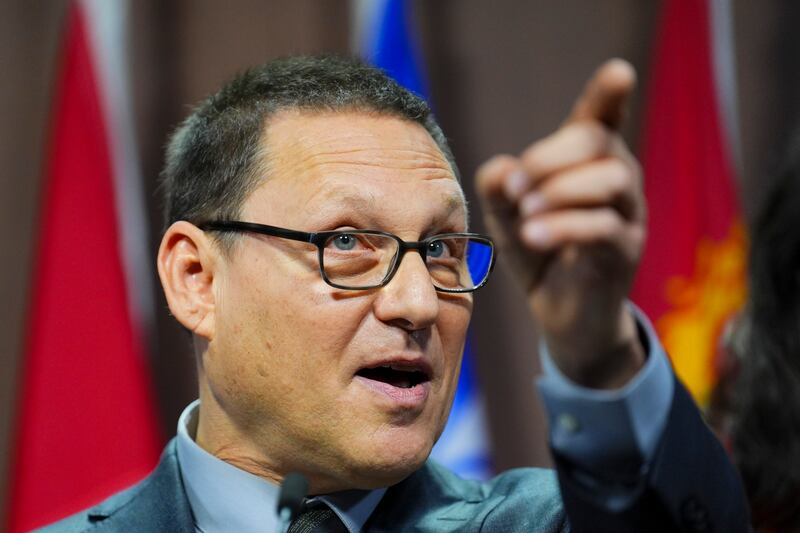
Kathleen Monk, an NDP strategist and director of communications to the late Jack Layton, said the calculation for new NDP Leader Avi Lewis is different than it is for Poilievre, as he doesn’t have a seat in the House and only became leader two weeks ago.
“There’s actually a window of opportunity for the new leader in Avi Lewis, to actually make a name for himself and pick away at Carney’s left flank,” said Monk, adding that the prime minister has been “too busy vacuuming up the middle and trying to occupy that centre ground, to take in progressive conservatives and radical right-wing conservatives into the Liberal house.”
Impacts on Parliament
The shift from a minority to majority government could also impact the way Parliament functions going forward. With 174 seats, the Liberals could update the Standing Orders to take control of parliamentary committees, paving the way for them to move legislation more quickly. But, that’s likely to cause friction with the opposition parties.
“Once you can control committees, you can control the passage of legislation through the House of Commons, you can bring in time limitations on debate, you can execute against your agenda,” Reid said.
Asked whether he has any plans to shuffle his cabinet now that he’s secured a majority, Carney on Tuesday said he does not, adding that his current ministers are all “very capable.”
He also said — when asked which measures he hopes to advance that he couldn’t before — that there were “a variety of issues” that took longer to move through Parliament than he would have liked.
“I say this as someone who’s testified to committees in front of the Canadian Parliament, in front of the U.K. Parliament for decades, there is a difference between real testimony, real substance, getting to issues, debating aspects of law, advancing, that’s the job of parliamentarians, and showboating, we’re going to have less of that,” Carney said. “We’re going to have more substance.”
The prime minister did not specify, however, which measures or legislation he’s hoping to move through Parliament more quickly.
Moore said with fewer than eight sitting weeks left until the House rises for the summer, there’s a “tight legislative timeline to get some things done.”
But, he added, the majority should give the government “some breathing room” and the ability to better plan the legislative agenda through to the end of the year. That will be critical, he said, ahead of what is likely to be an acrimonious review of the Canada-U.S.-Mexico Agreement this summer.
Speaking to reporters on Parliament Hill Tuesday, Blanchet said he’s in good spirits and proud of the Bloc’s performance in Terrebonne.
He said he and his caucus are “very excited” to be returning to the House with “propositions, with ideas, with solutions, with a vision for Quebec.”
Nanos said Monday night’s result was likely “pretty bittersweet” for the Bloc, because while they lost a longtime stronghold riding, they did increase their level of support compared to last year’s general election.
He said it’s likely Blanchet could be “looking over his shoulder,” worried about Carney making further gains in Quebec.

