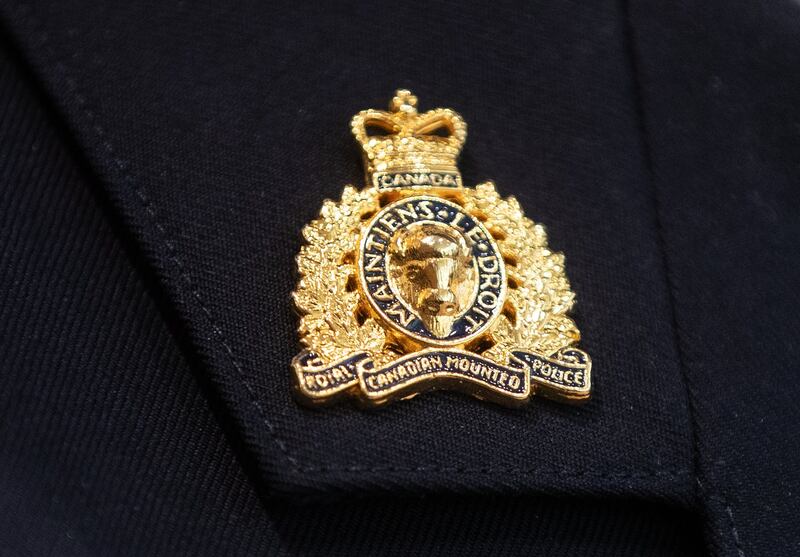
The Royal Canadian Mounted Police in British Columbia is testing an artificial intelligence tool designed to help officers write reports, but experts warn the technology could introduce errors with serious consequences in the justice system.
“Currently, the B.C. RCMP is piloting Draft One which has AI capabilities that generates draft reports based on audio contained in body worn video,” the RCMP said in a March 17 news release.
The pilot project ran from August 2025 to January 2026 across eight B.C. detachments, with 380 potential users. About 800 reports were written with the assistance of the tool, according to the force.
The use of artificial intelligence in policing is also outlined in the RCMP’s 2026–27 departmental plan, which says the force is preparing to adopt AI “to streamline and improve service delivery,” including reviewing tools that can create draft reports from body-worn camera transcripts.
In a statement emailed to CTVNews.ca, the RCMP said the tool remains under review and emphasized that officers are required to check reports before they are finalized.
In an interview with CTV News Your Morning on Tuesday, Christopher Schneider, a sociology professor at the Manitoba-based Brandon University, said AI systems are known to make mistakes across industries, and policing is no exception.
“First and foremost, as we all very well know, AI is imperfect,” he said. “While the officer is supposed to look at the report and correct these errors, we have seen all types of instances where errors go to print anyway.”
Schneider pointed to a recent example in the United States where an AI-generated police report included an obvious error, incorrectly transcribing audio in a way that changed the meaning of the interaction.
“Earlier this year in Utah … Draft One … wrote into the report, the police officer had turned into a frog … and we later learned this happened because ‘The Princess and the Frog’ was playing in the background during the interaction,” he explained.
He also said the technology may struggle to accurately interpret tone, context or ambiguous language in real-world interactions.
“If a suspect says something like, ‘yeah’, ‘OK’, ‘right’, in the ways that people often talk when they’re interacting with people, will the artificial intelligence use this as admission to guilt? We don’t know,” Schneider said.
He said another concern is the lack of transparency once a report is finalized, noting it may not be clear which parts were written by AI and which were written by an officer, an issue he says could have implications in court.

