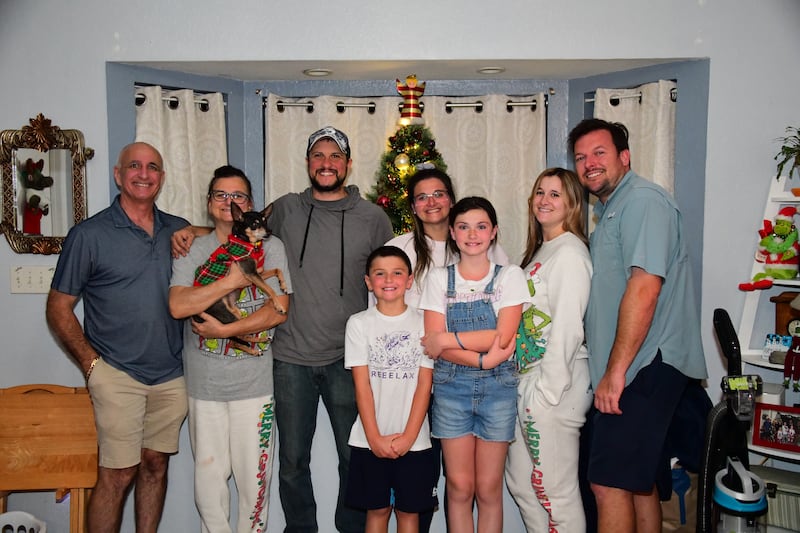
OTTAWA -- Douglas Dixon is a Canadian with a green card who has lived in the United States for more than two decades.
The 61-year-old man moved from Montreal in 2005 to raise his family on Florida’s Gulf Coast. He’s now a grandfather.
During the COVID-19 pandemic, he was forced to shutter his smoothie shop in Port Charlotte, Fla. During that time, Dixon says he fell behind more than US$30,000 in unpaid taxes. In 2022, he pleaded “no contest” to tax evasion and agreed to a monthly repayment plan. Over the past three years, Dixon says he has paid back two-thirds of the amount but still owes the U.S. government approximately $12,000.
Before his arrest, he was delivering food for DoorDash.
Arrest at probation office
In an interview from a detention centre near Clewiston, Fla., the second facility where he was detained, Dixon told CTV News he was arrested by U.S. Immigration and Customs Enforcement (ICE) while checking in with his probation officer on Feb. 10.
Dixon says his probation officer asked him to come in for a meeting, a week earlier than scheduled. He was ushered in before the office opened for the day. That’s when he was confronted by half a dozen ICE officers who pushed him up against a wall, then handcuffed and shackled him.
“I was dumbfounded,” he said. “I thought I was just going to a regular appointment.”
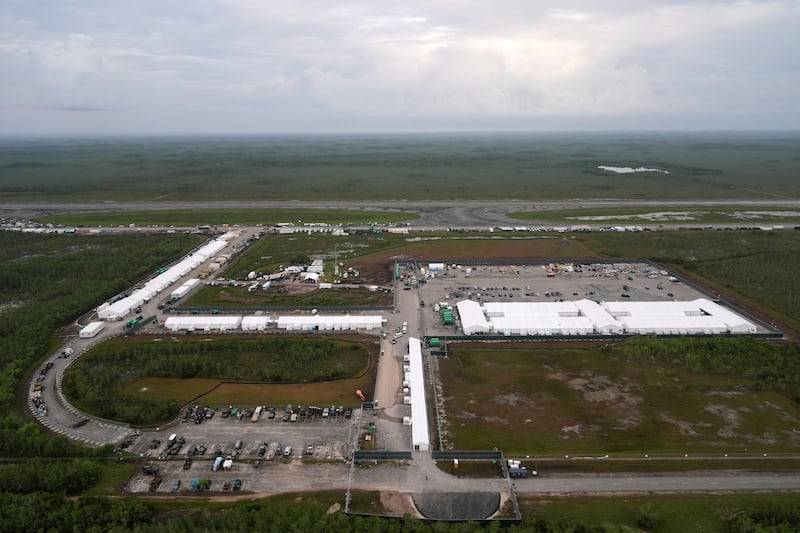
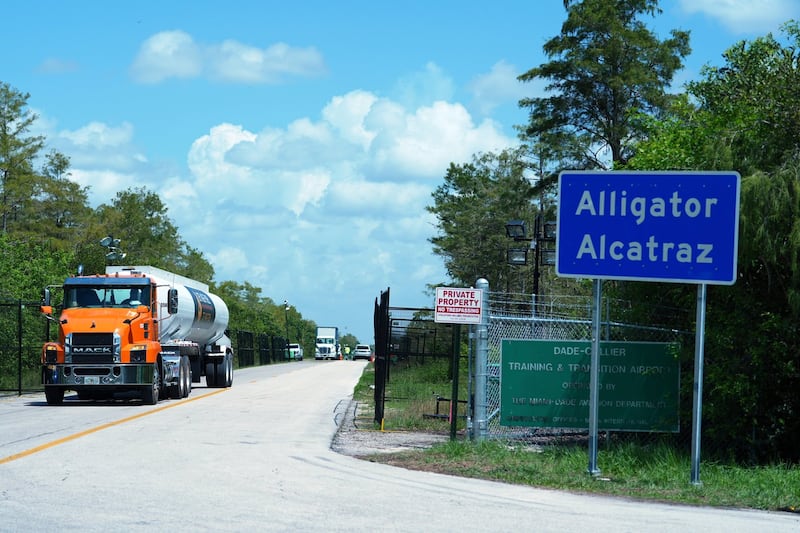
Dixon and 17 other people were rounded up at the probation office. Before he was taken to the facility in the Florida Everglades dubbed “Alligator Alcatraz,” Dixon was able to call his daughter, who was at work.
“The line was staticky, but I heard, ‘It’s Dad, I’ve been detained by ICE,” said Amy Bazley from her home in Naples, Fla. “It’s difficult to hear those words, because you don’t think it’s going to happen to someone you love.”
Bazley said she fought for composure and jotted down her dad’s “alien,” or immigration, number so she could track him through the detention process.
Locked in a cage
Human rights groups like Amnesty International and U.S. Democratic lawmakers have called Alligator Alcatraz, a facility designed to house more than 3,000 people, a “concentration camp.” Immigrants are suing both the U.S. Department of Homeland Security and ICE alleging abuse, while environmental groups are appealing to the U.S. federal court to shut down the facility.
Dixon is one of two Canadians CTV News has confirmed who have been detained at Alligator Alcatraz.
“They’re treating people like animals. Alligator Alcatraz is like (Nazi) Germany in 1939, updated with 2026 rules,” Dixon said in one of half a dozen phone calls he made to CTV News.
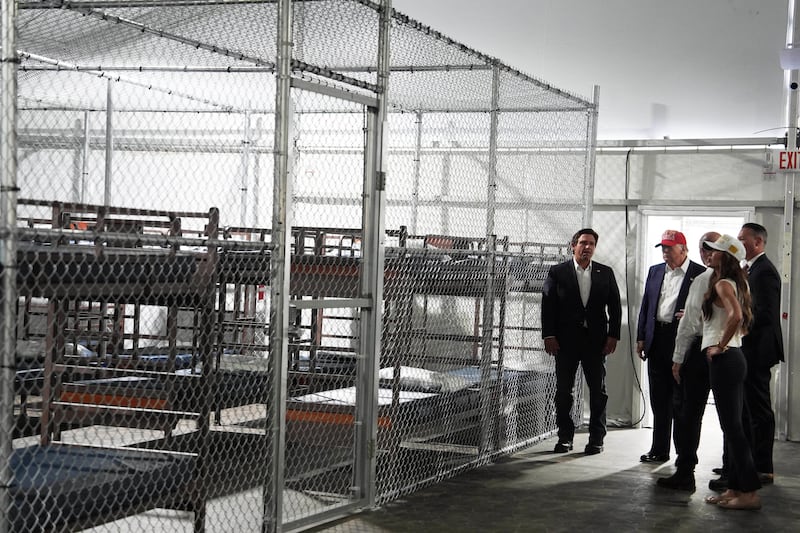
When he arrived at Alligator Alcatraz, Dixon says he and the other detainees were searched while handcuffed and shackled, then ordered to remove their clothes. They were given one set of underwear, a pair of flip flops and an orange jumpsuit.
Detainees were fingerprinted and assigned colour-coded bracelets. His bracelet was yellow, which meant he would get a hearing and stood a chance of not being deported.
He was then locked in a communal cell behind metal fencing that housed 16 bunkbeds for 32 men. What Dixon calls a “cage” had two urinals on the edge of the cell and a toilet in the centre. He says the smell of urine permeated the entire space and that the guards could see into the toilets.
‘Not one dangerous person’
Dixon says the majority of people he saw inside Alligator Alcatraz were of Latin descent, mainly from Cuba and Venezuela.
Before it opened last summer, U.S. President Donald Trump said the facility would house “some of the most menacing migrants, some of the most vicious people on the planet.” But that’s not what Dixon experienced.
“There was not one dangerous person in there,” he said. “These people all have families. Everyone is pulling for everyone else. They were working and were in there for nonsense reasons.”
Dixon said the men in his pod were arrested because they “didn’t have complete paperwork or did not renew their [driver’s] licences,” and were rounded up by ICE at the licence bureau.
Claims of inhumane conditions
During his time there, Dixon said he didn’t see any violence and only heard detainees yell at guards who mocked them. He did see his cellmates cluster together to read the Bible and pray.
Detainees were given three meals a day: Breakfast would consist of canned fruit and toast or oatmeal; lunch was often a bologna sandwich, while shredded chicken or ground beef with peas and carrots would be served for dinner.
Dixon says he was allowed to shower three days after he arrived and was given one hour of yard time every four days. He says he longed to see the blue sky, but all he saw was the white plastic tarp that covered the astroturf yard.
The Canadian man says he was unable to sleep while at Alligator Alcatraz because of the noise and disruption. While the showers were scalding hot, Dixon says the facility was freezing cold. The high-powered generators required to cool the facility were loud. And during the overnight shifts, guards would turn the lights on every four hours to do a head count in the cells.
After nine days, Dixon was informed that he was being transferred to a smaller facility near Clewiston, Fla.
Just before his transfer, Dixon says he started to feel sick. After he was moved to the Glades County Detention Center in Moore Haven, Fla., he was diagnosed with a urinary tract infection and given medication antibiotics.

Bond denied
His hopes of staying in the U.S. were dashed at the end of March during his final immigration hearing. His lawyer presented letters from 14 friends on his hockey team who vouched for his character.
Copies of the letters provided to CTV News describe Dixon as “generous and loveable” and as “someone who would give you the shirt off their back.” But it’s not clear if the judge even read the letters.
The online hearing was over in minutes. The judge ordered Dixon to be deported to Canada and banned him from returning for life.
According to publicly available data from U.S. Customs and Border Protection, 32 Canadians have been among the more than 71,400 migrants deported since Oct. 1.
Under American immigration law, defrauding the government of more than $10,000 in revenue is considered “an aggravated felony.”
On Wednesday, Dixon will be transported to Miami International Airport by ICE officers. He won’t get the chance to say goodbye to any family members.
Dixon’s wife, Jo Ann Collison, says she’s worried about her husband’s anxiety.
“His mind is deteriorating. He’s terrified of flying. He hasn’t flown anywhere,” said Collison, tearing up during a Zoom interview. “He won’t be able to see his grandkids and that will be very hard.”
Collison says she needs to pack up their life in Florida before she returns to Montreal to be with her husband.
“I can’t go with him now. What if for some reason ICE doesn’t let me back in?”
After 65 days in detention, Dixon will board an American Airlines flight to Toronto on Wednesday. After 21 years of living in the United States, he will be barred from returning.
Correction
A previous version of this story said Dixon was transferred to a facility in Clewiston, Fla. The facility is near Clewiston. The number of migrants deported since Oct. 1 has also been corrected from 74,000 to 71,400.

