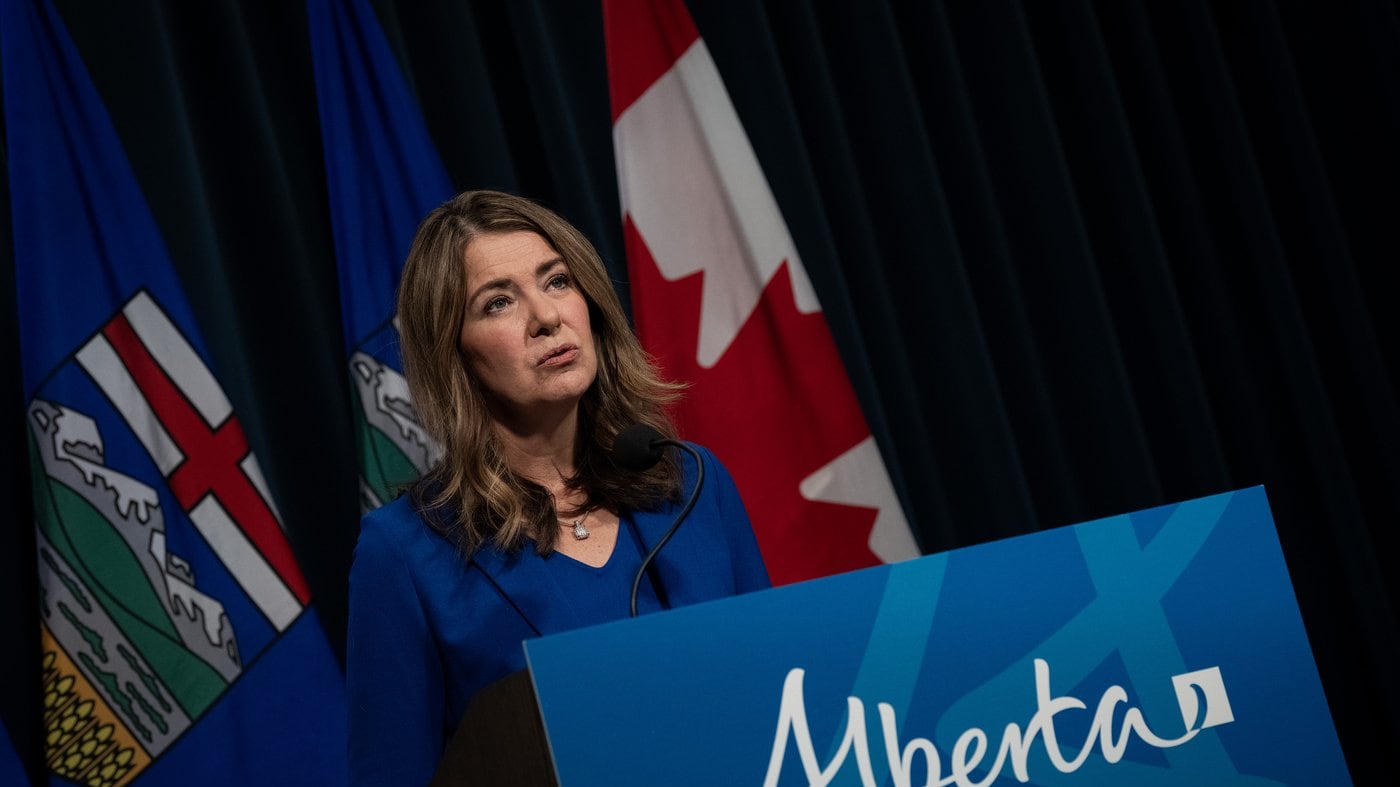
EDMONTON — Alberta’s governing United Conservatives are looking to take another run at redrawing provincial riding boundaries – a move the Opposition NDP calls a cynical backdoor scheme to rig the October 2027 general election.
“Why is the premier doing this? Why is she so afraid?” Opposition NDP Leader Naheed Nenshi said to Premier Danielle Smith in chamber debate Thursday.
Nenshi accused Smith of being so desperate to cling to power that she’d stoop to gerrymandering -- a process of designing boundaries around voting patterns to benefit one party over another.
“This government has been clear from the start that they only care about power. They don’t care about ethical government,” Nenshi said.
Other political experts were equally upset.
There is a reason that we do not have MLAs decide on electoral boundaries. Tossing out the Electoral Boundaries Commission and replacing it with a UCP-dominated committee is not just a bad idea. It is really bad for democracy. Ask the US, ask Hungary. This is not normal!
— Duane Bratt🇨🇦 (@DuaneBratt) April 16, 2026
Later Thursday, Smith’s caucus was set to introduce a motion in the house to revisit a recent bipartisan panel recommendation on the new boundaries. The motion, if passed, would see a new panel of legislature members — a majority from Smith’s caucus — oversee revisions crafted by a second bipartisan panel.
Last month, the first panel report was delivered to the legislature, but it was a document riven with internal conflict.
In it, the UCP-appointed members on the panel disagreed with the recommendations of the majority. The UCP members urged the legislature accept what panel chair Dallas Miller labeled a dangerous and radical redrawing of boundary lines.
The UCP members on the panel recommended merging some urban and rural ridings, which the majority said was an indefensible suggestion that favoured the rural-dominant UCP at the ballot box.
As a compromise, Miller, a judge, has suggested the legislature could revisit the process with an eye to boosting the number of ridings to 91 from the current 87. The panel had originally been told it could only two more seats, bringing the total 89, but Miller said going to 91 would allow for rural ridings to be maintained.
Smith told the house Thursday that going to 91 is what they plan to do, and that is why they are revisiting the entire process.
She said it’s a way to make sure rural voters have an equal voice in the democratic process. She said she was surprised the NDP would turn their backs on those outside the cities “when they know that this (new) report would make it better for rural Alberta.”
If the motion passes, the new committee of MLAs and the second bipartisan panel would have until the fall to report back.
This report by The Canadian Press was first published April 16, 2026.
Jack Farrell and Lisa Johnson, The Canadian Press

