ST. JOHN’S - The pile of folded, crumpled receipts on Gary French’s kitchen table tells an expensive global story.
It’s a story of the world brought home, as economic uncertainty and soaring oil prices due to unrest in the Middle East, take a heavier toll on the retiree’s budget.
Those tolls are brought to the front door by heating oil bills. French’s last furnace fill-up, on Good Friday, rung up at $1.90 per litre. That supply will last about six weeks with a cost of over $1000.
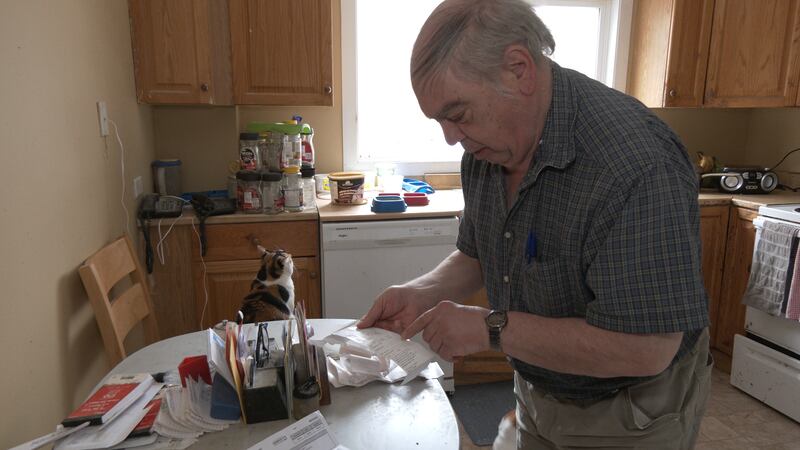
It’s the highest he can remember in his 30 years of living at his house in St. John’s, N.L.
“I was kind of wishing it was a dream,” he said. “Its such a shock knowing that I got to pay $1000 just to keep the house warm.”
Climbing oil prices have delivered big hits to household budgets — particularly in Atlantic Canada, where oil heating is much more common.
“You can’t do anything about it, really,” French said. “You got to pay it.”
Prices climbed about 60 per cent in Newfoundland and Labrador between Jan. 1, to April 1, due to the war between Iran, Israel and the United States.
It’s turned retirees like French into eager news consumers, watching the headlines for any sign of détente — and possibly, some relief back home.
“Canada doesn’t have anything to do with this, but it does affect us,” he said.
The oil market has become so volatile, regulators in Newfoundland and Labrador have begun setting maximum prices everyday, breaking from a traditional weekly pricing scheme.
Prices surged past $2.00 per litre across the province on March 31. On Wednesday, they fell back down to about $1.75 per litre.
Oil-powered furnaces are much more common in Atlantic Canada than elsewhere in the country, giving that region much more volatility in their heating bills.
Natural Resources Canada estimated in 2020, that a quarter of households in Atlantic Canada relied on furnace oil to heat their homes. Across the country, it’s just seven per cent.
Both federal and provincial governments have offered incentive programs for households to ditch oil heat and move to electric, but in most cases those upgrades still require up-front investment.
Mohammed AbdAllah, who runs the non-profit, Connections for Seniors in St. John’s, says that’s preventing some seniors from making the shift.
“The prices are very high right now… to shift from oil to electric,” AbdAllah said. He called on the provincial government in Newfoundland and Labrador to do more to ease cost of living concerns. He suggested offering expanded loans or grants for electric conversions, or even easing the paperwork burdens for the $500 oil heating rebate that is currently being offered.
“Sometimes [heat] is more expensive than the mortgage itself or the rent,” he said. “Which is unbelievable.”

