MONCTON, N.B.- A new report by a New Brunswick-based economist, sounds the alarm on the province’s future if nothing is done to replace its aging population.
David Campbell found 20 per cent of the workforce is slated to retire within the next 10 years, with health care, construction and retail taking the biggest hit.
“This is a community survival issue. We have communities that within 10 years, across New Brunswick, across Atlantic Canada, where 50 per cent of the population are going to be over the age of 65,” he said.
Campbell said the median age In Bathurst N.B., used to be 23. Now it’s 53.
A focus on population growth is critical to ensure that in ten, 20, 30 or 40 years, “If you go to Bathurst, there’s actually people living in Bathurst,” Campbell said.
He released his findings in a report titled “Help Wanted.”
Today, more people in the province are dying each year than are being born. Newfoundland and Labrador and Nova Scotia are experiencing the same phenomenon.
According to Campbell, for every 100 deaths, 72 babies are born on average in N.B.
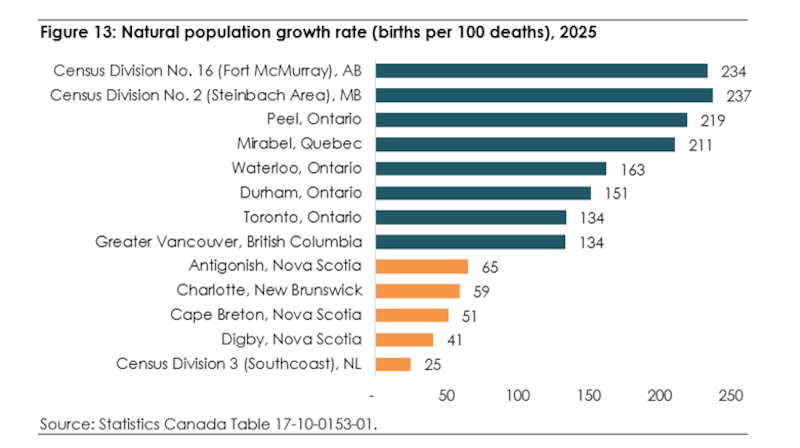
The rate is even lower in some rural parts of Atlantic Canada, like the south coast of N.L., where the rate is 25 births per 100 deaths.
Campbell said immigration must be part of the solution.
“And what that means from a federal perspective is, we need to have flexibility,” he said. “There may be parts of the country where you need a higher level of immigration or lower level, depending on what’s happening on the ground, what the needs are on the ground in those communities.”
Help wanted in health-care construction
The number of jobs that will need to be filled over the next decade fall into two categories, according to the Public Policy Forum report.
People will need to replace positions left empty by retirements, while also filling new positions created by growth and demand.
The health-care sector will need to fill 30,100 replacement and growth positions by 2035, the report projects.
Construction comes in second, needing 16,300 positions filled, followed by retail at 13,100.
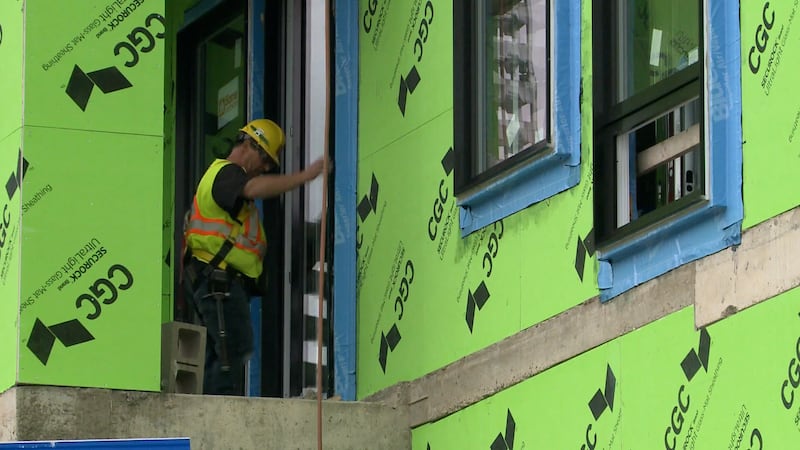
Tom McGinn, executive director of the N.B. Roadbuilders and Heavy Construction Association, tells CTV News they’re already having trouble finding workers in construction.
This comes as demand increases for new homes, roads and bridges, due to installments of funding from Ottawa.
“It’s not to a point now where it’s a crisis. But five, 10 years, you know, if something doesn’t change, it will become a serious, serious issue,” McGinn said.
He said the association has been working to attract more young people graduating from high school by informing them that the trades are a worthy and valued profession.
“You can make good money,” he said.
Claudia Simmonds said in some cases, those who work in the trades can make more then physicians – and she doesn’t believe everyone knows that.
The CEO of the Canadian Home Builders’ Association N.B. is extremely concerned that the lack of workers in the sector is affecting the safety and stability of some homes and buildings.
“It’s adding to an already very healthy, what we call an ‘underground economy’ in this province, where people... are seeing this as an opportunity to make some money. They have some skills, maybe they’re formally trained or they’re not, but they’re building what we call ‘on the side’ or ‘in the underground,’” she said.
Simmonds said some of the work hasn’t met the national building code and offered a reminder that anyone swinging a hammer for pay, must be licensed.
“It’s complicated, it’s layered, and there’s really no solution in sight because it takes at least two years to build the journeyman,” she said.
Retirees returning to the workforce
Some organizations are encouraging retirees to return to the workforce by pairing them with a suitable job.
Agencies like Working NB have found success in addressing short-term labour needs, by finding retirees to fill flexible seasonal or part-time roles.
Barry Martin retired at 61 from his job in sales. A few years later, he said it was his wife that told him he needed to “go and do something.”
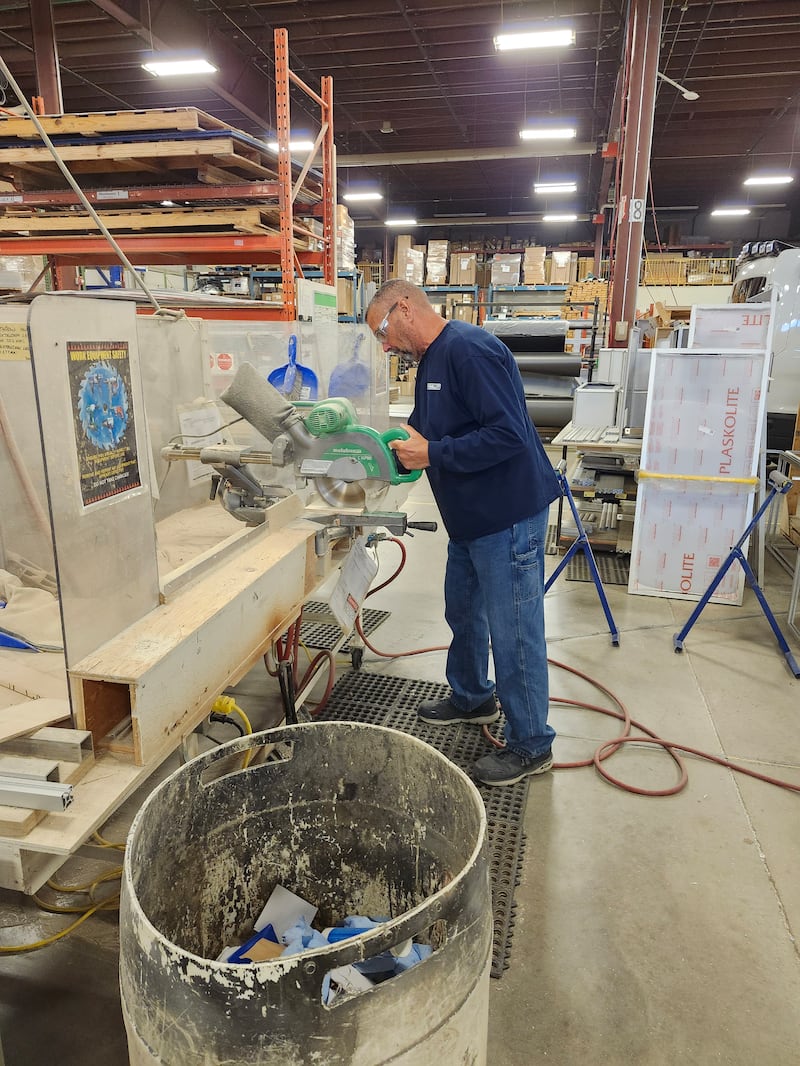
Now at 66, the retiree has returned to the workforce, at a manufacturing business that builds ambulances. He said it’s been gratifying in more ways than one.
“They need me more than I need them, which is incredible for an employer to say that, but they need people. They need people that are willing to learn. They’re willing to pick up a trade and just show up,” he said.
But it’s also good for his own health, he said – both socially and physically.
A new report by Statistics Canada, published April 9, found that one in 10 retired individual, aged 55 and older, were working in 2023 – higher among men than women. That’s an increase from seven per cent in 2019.

