Canadian artist Hicham Takache spends most of his time these days in a small hotel room in Sidon, Lebanon, displaced for more than 40 days. His home in Nabatieh is only a 30-minute drive away — but for him, it might as well be unreachable, since he believes it’s too dangerous to risk staying in a city that’s been bombarded by Israeli airstrikes.
But the pull to take that chance and go back to his city grows stronger each day, not just because of the appeal of going back home — but because of what’s inside his house: his paintings.
“Some of them are award-winning and have come first place in worldwide competitions,” said Takache in a Zoom interview with CTV News Saturday from his Sidon hotel room. “I pray they have survived, they’re the biggest treasures in my life.”
Among them: a painting of Niagara Falls, a red horse and a colour cityscape of Mecca.
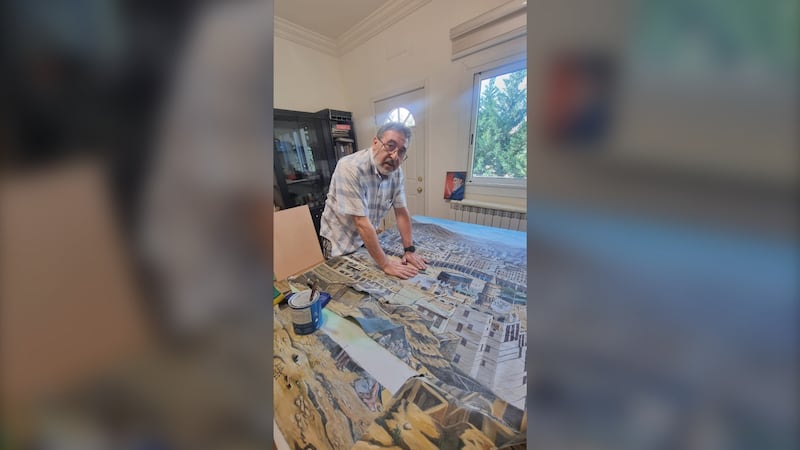
Those dozens of paintings are his life’s work, but they’re also his outlet for grief, sorrow and pain — as someone who is navigating a deadly war in his own backyard.
“It helps me deal with my grief,” he said. “I’m not the type of person who can show a lot of feeling, but those emotions flow through my brush, through the colours.”
Takache has already had to deal with the loss and damage of his life’s work once before — in October 2024, an airstrike destroyed his home at the time.
“I was devastated (to see) most of my paintings damaged or destroyed completely,” said Takache. “I had 117 paintings in the house and 28 of them (were lost without a trace). Some of them are saved, but the majority are damaged.”
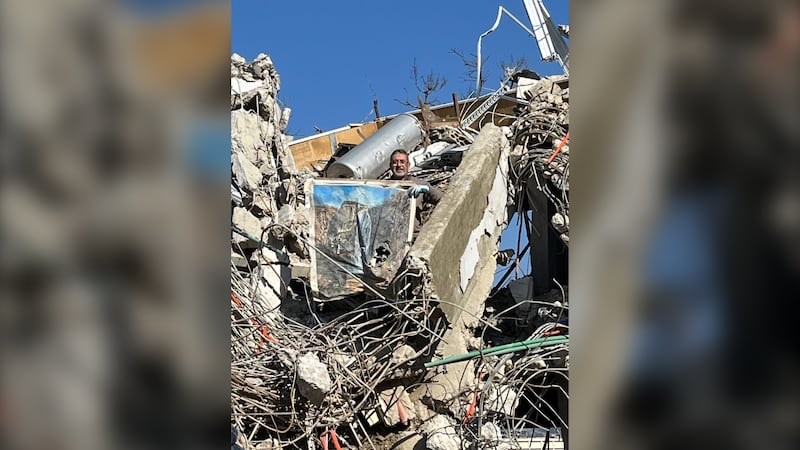
For the past year and four months, he has been restoring any paintings that were still salvageable. He began the meticulous and painstaking work of fixing tears with specialized adhesives and carefully colour-matching to blend them.
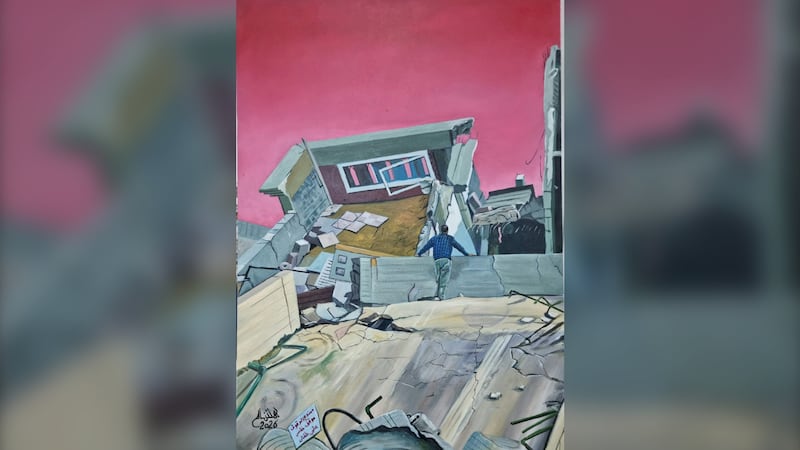
But in that time, he’s also been creating new paintings. His most recent and one of his proudest pieces of work: a recreation of a picture of him standing in front of the ruins of his old home that was destroyed more than a year ago.
“When I see that painting, I feel like I’m not broken,” Takache told CTV News. “They broke my house, they destroyed my paintings. But I’m still standing, I’m not defeated, I’m resilient. I am strong and I am truly strong. This is how I feel.”
All of those priceless pieces now sit inside his new home with the possibility that, at any moment, the violence of war could rip his hard work to shreds.
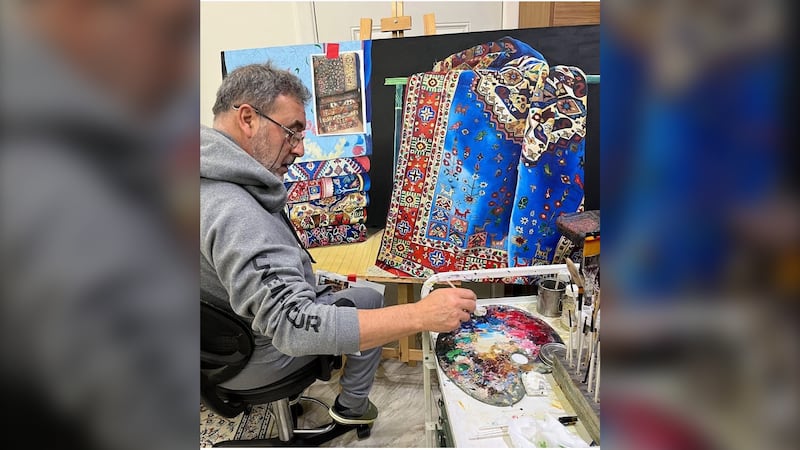
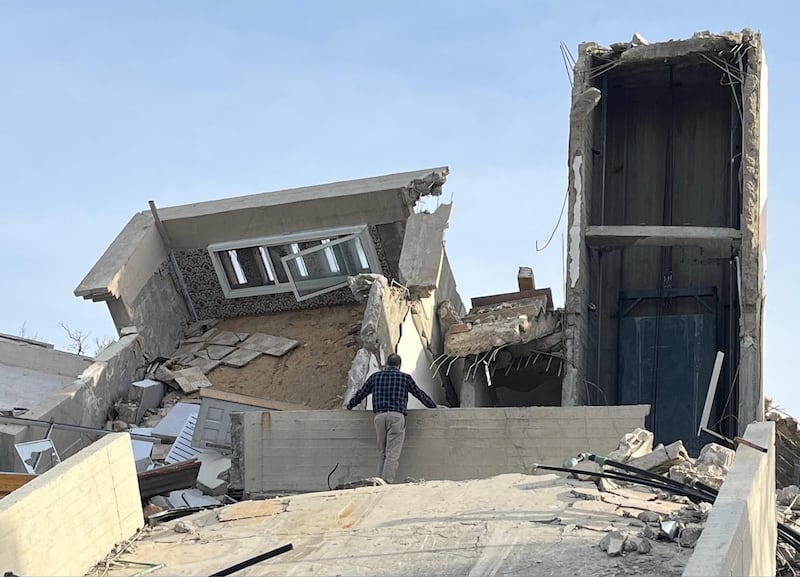
Since he and his family were recently evacuated, the painter and computer engineer briefly drove back to Nabatieh, only to find his families’ homes destroyed and two of his cousins dead.
“My parents’ home is destroyed, my sister’s home is destroyed, my parents-in-law’s home is gone — and my two cousins are dead. They were staying in their home because not everyone could afford to rent a place outside," Takache said.
“It was almost midnight when that home was bombarded. Four people were killed there and they weren’t young. They were people who were my age.”
Now, without his tools and paints, the anxiety is creeping back in. He is now hoping he can access his paintbrushes once again as tools to process the death and destruction that comes with war — hoping to turn the emotional pain into pride.
“The connection between us and that land is so solid that no matter how much blood we lose there, we’re coming back,” Takache said.
“Israel’s plans to remove us from that land will never be succeeded — even if we have to pay the price from our blood, our children’s blood, our homes, our villages, our cities."

