Inside a second-storey room at the Highland Baptist Church — a small structure that serves as a place of worship for several cultural communities of the Christian faith — just over a dozen members of Kitchener, Ont.’s Sudanese population sing at the top of their lungs.
Their hope is that their voices, accompanied by tambourines, an electric guitar and a piano, will be carried halfway across the world, where their family members are struggling to survive in what the World Health Organization (WHO) has called the world’s largest humanitarian crisis — with a civil war marking its third anniversary on Wednesday.
“They feel frustrated and they are really sad because they still have people back home and sometimes they can see their own cities destroyed,” said Rev. Gaafar Bashir in an interview with CTV News Sunday. “They can see their own houses destroyed.”
In the small room full of music and prayer, it’s hard to miss Montasir Nasir-Waren playing riffs on his electric guitar.
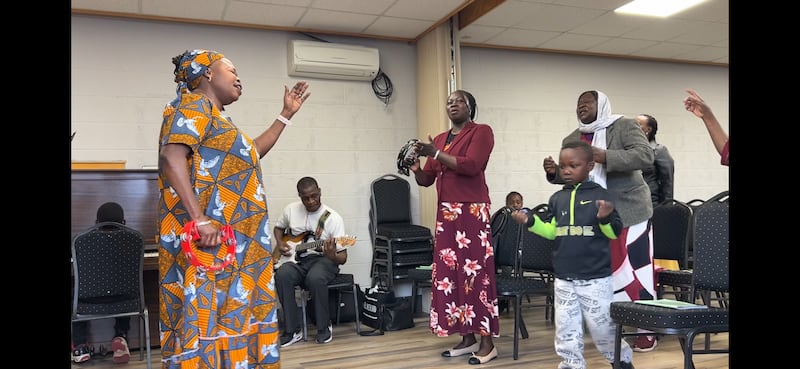
The newcomer to Canada arrived as a refugee in 2023 -- after he says he and his family’s lives were threatened -- as a result of his decades-long work reporting human rights violations in Sudan with his organization, Nubsud Human Rights Monitors Organization (NHRMO).
“My apartment was broken into by unknown people -- and it was really very terrible. My wife and my daughter, they were at very high risk and I’ve been trying to keep them almost invisible so that nobody knows where they are,” said Nasir-Waren, adding he was able to bring his wife and daughter with him to Canada.
“To be a human rights defender or activist is (to be) the first enemy to the Khartoum regime.”
Sudan war in its fourth year
Filmmaker Mamoun Hassan, born in Madani, Sudan, visited the country earlier this year with the Sudanese American Physicians Association (SAPA) to document some of the atrocities taking place.
What he witnessed was unimaginable.
“Seeing the fact that these refugees, these people have been displaced because of a war — and I could have been literally one of them — has honestly silenced me for weeks after I actually returned,” said Hassan.
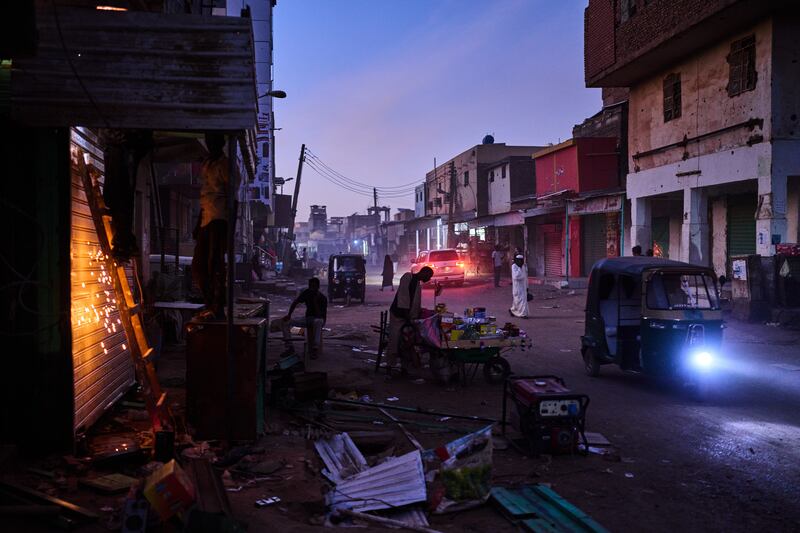
“People are dying of just things that shouldn’t kill anybody. Very basic diseases that should not be killing people. Cholera, malaria and things like that, which is just a complete byproduct of just (a) lack of political will to get things fixed.”
Sudan marked its third year of civil war on Wednesday, having evolved from a localized power struggle in Khartoum into the world’s largest humanitarian and displacement crisis, after negotiations broke down between two factions of the country’s military government, the Sudanese Armed Forces (SAF) and the paramilitary Rapid Support Forces.
According to the United Nations’ latest figures, an estimated 14 million people are displaced and more than 21 million are facing starvation. The death toll is nearly impossible to estimate, with rapidly changing figures and difficult-to-access regions, but conservative estimates are roughly 50,000 with many projecting it closer to 400,000 people killed.
Waiting for more humanitarian aid
Sudanese-Canadians and human rights groups are calling for an easier immigration pathway, drawing attention to Canada accepting roughly 300,000 Ukrainians since the beginning of the war with Russia.
“That is the right thing to do. People are going through a war. We need to get them out of there,” said Hassan. “But Sudanese families have been waiting for years, and I don’t think that’s policy either. It’s just a moral decision that Canada has made and they’re willing to live with it.”
For Rev. Bashir of the Sudanese Community Church, he’s waiting anxiously to bring his family to safety in Canada — or even to neighbouring countries where they can be saved from the violence and starvation.
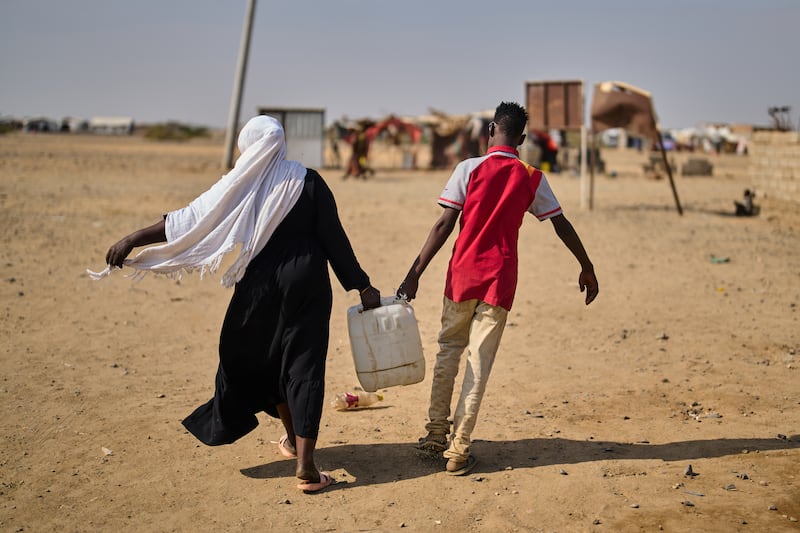
“I’m so worried about who I’ve left behind,” said Rev. Bashir. “I try my best to take them out from Sudan to South Sudan -- and to bring them even a little bit of peace, I’m not even able to do that.”
While members of Canada’s Sudanese community in Kitchener pray for peace and more international aid and attention, they’re grateful for their new home, which has provided a reprieve from the constant threat of death, violence and hunger.
“I want to say thank you Canada, and thank you Canadians ... for giving us shelter and a place where we can call home,” said Nasir-Waren. “We’ve been like rats being chased away from anywhere we decided to go -- and at least now we can catch our breath.”
Global Affairs Canada did not respond to a request for comment in time for publication but has touted being a leading humanitarian donor, recently pledging $120 million in humanitarian assistance on the day of the third anniversary of the civil war.

