


With several parts of the city hit by flooding, a state of emergency has been declared in Greater Sudbury, Ont., Mayor Paul Lefebvre announced at a news conference Tuesday.
Rising temperatures combined with the record late-season snowfall in the area have created flooding in several parts of the region, including Sudbury.
“We’re still in the throes of historic flooding,” Lefebvre said.
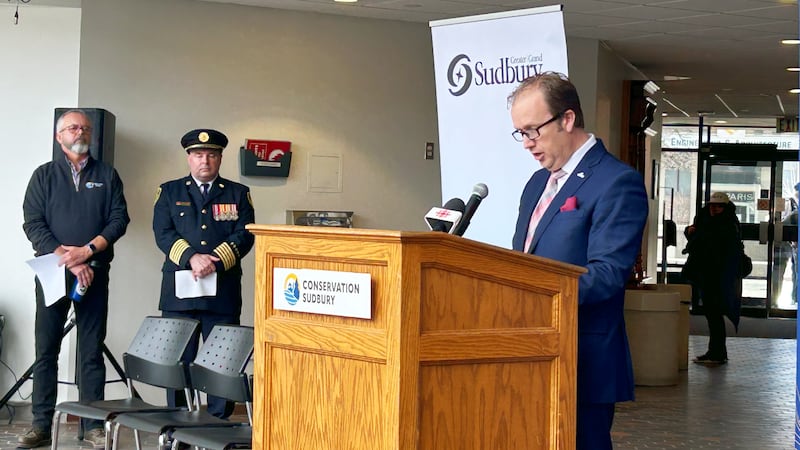
“From what we heard from Conservation Sudbury, there’s still more flooding to arrive (at) levels that we’ve never seen before. So declaring a state of emergency gives the tools to the team to address this and make sure to support the evacuees.”
The declaration gives the city tools to address whatever comes, he added, including evacuating areas should the situation reach a crisis point.
“I think given that what we’re seeing and what we’re predicting, and I think it’s important that we put the measures in place,” Lefebvre added.
“We’re hoping we don’t get to that point.”
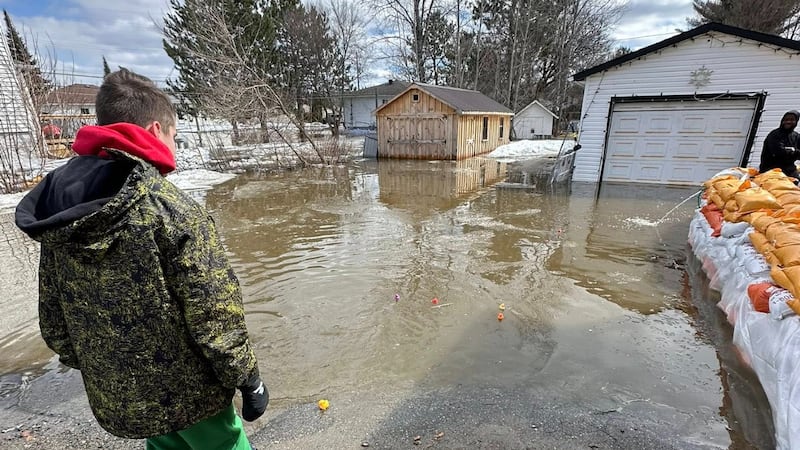
Areas such as French River, Manitoulin Island, Sault/Algoma and West Nipissing have also declared emergencies due to flooding.
Lefebvre said that Sudbury’s larger public works staff allowed the city to deal with flooding without a state of emergency.
“That’s why we didn’t have to declare … before,” he said.
“But seeing what’s coming … seeing that there’ll be more flooding, potentially coming our way, the team decided it was important we have the tools in place to properly address the safety of our residents.”
With warmer weather in the forecast, Conservation Sudbury says water levels are expected to rise for the next two weeks.
Officials are encouraging residents in low-lying areas to be prepared to leave if necessary. You can check Conservation Sudbury’s website or social media for daily updates.
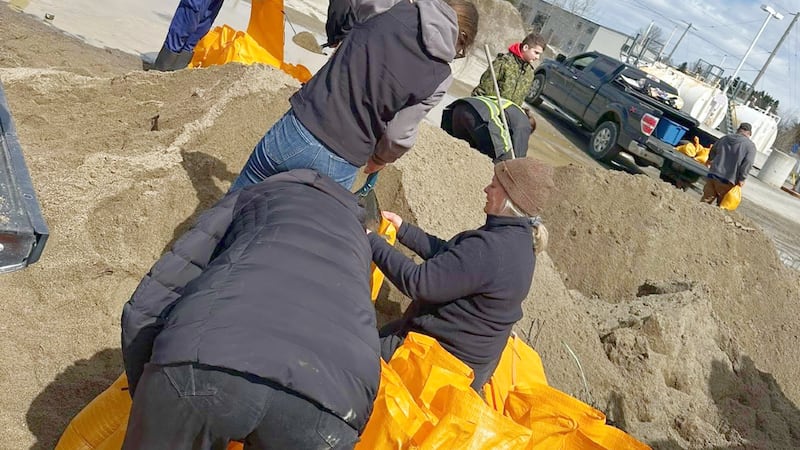
Conservation Sudbury GM Carl Jorgensen said the Whitson River exceeded the “100-year flow” last weekend.
“Those are important benchmarks in our line of work,” Jorgensen said.
“We haven’t seen those exceeded in a very long time.”
Officials are keeping a close eye on melting snow as far away as 100 km, which will make its way to the city in the next two to three weeks.
“There is so much snow still in the north that is still melting,” he said.
“And once the warm weather comes, it’s going to be activated and start heading south.”
Lefebvre said the declaration was a precautionary measure, but that conditions could change quickly.
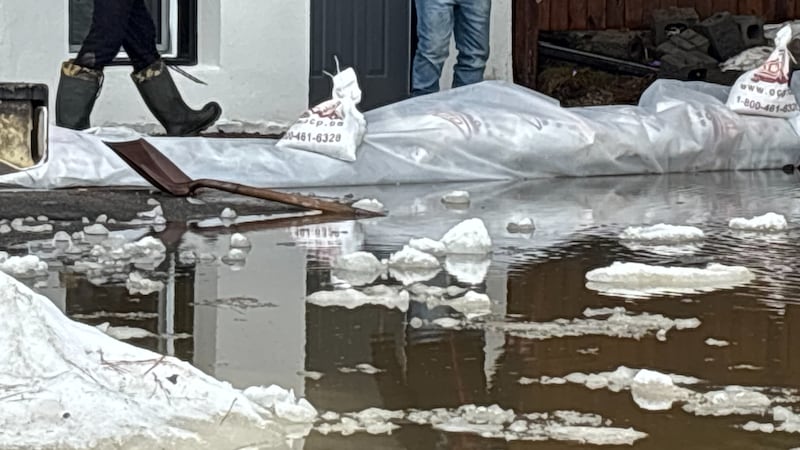
Fire Chief Rob Grimwood said full-time and volunteer firefighters have been busy responding to flooding-related emergencies.
“Last night our crews rescued two people from a car that had driven on a water-covered road,” he said.
“The car had become stranded because of the depth of the water. When the two occupants of the car tried to evacuate themselves out of the vehicle, the car began filling with water. So we had a water rescue team in an inflatable rescue craft rescue both of the occupants from the car — luckily with no injuries.”
“So don’t drive over any water,” Grimwood said.
“Stay away from swollen creekbeds and rivers in general.”
The key message, he added, is to not drive on water-covered roads because it’s difficult to tell how deep it is and whether the road has been washed away.
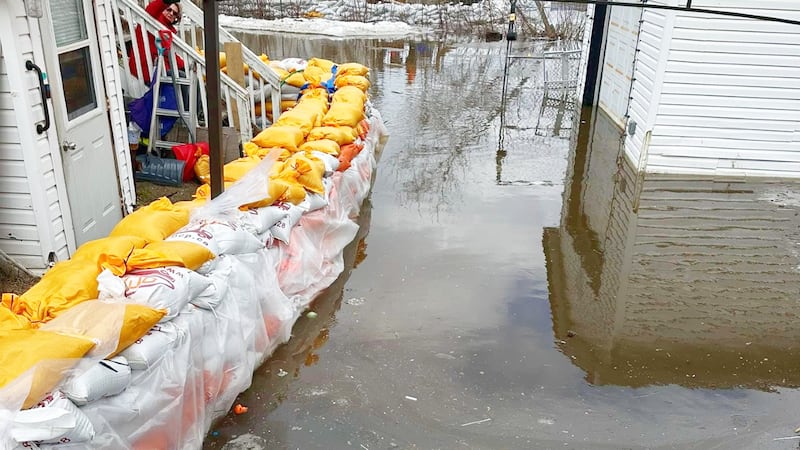
Several roads in the city have been closed due to flooding. New ones that closed as of April 21 include:
- Wabagishk Road (Greater Sudbury)
- Nagy Road (Nairn)
- Ella Road (Worthington)
- Mullen Road (Whitefish)
- Alpine Road (Whitefish)
- Pentney Road (Whitefish)
- McCharles Lake Road (Naughton)
- Other road closures that are still in effect include:
- Janti Road (past address 62-B. Worthington)
- Main Street (between Montpellier Road and Errington Avenue, Chelmsford)
- Larchmont Drive (Chelmsford)
- Mikkola Road (from Bonnie Drive to Kantola Road, Lively)
- Simmons Road (Bridge section, Chelmsford)
- Johnson Road (Worthington)
- Boundary Road (Whitefish)
- Flake Subdivision (Val Caron)
- Graham Road (MR55 to Leblanc Street, Whitefish)
- Belanger Street (Chelmsford)
- St. Laurent Street / Valleyview Road (between 3221 St. Laurent and 2883 Valleyview, Val Caron)
- Grassy Lake Road (from 356 Grassy Lake Road, Whitefish)
- Boundary Road (from Fen Road to Ronka Road, Whitefish)
- Ronka Road (from 613 Ronka Road to Boundary Road, Whitefish)
Streets that have reopened include Main Street East (between Riverside and Elm Streets); Main Street (River Road to Elm Street, Val Caron); Caruso Street (Coniston); Molly’s Road (Wahnapitae); and, Kauppi Road (Wahnapitae).
“Drivers are reminded to obey all posted signage and avoid driving through flooded areas,” the city said.
Click here for the latest updates on all road closures.

