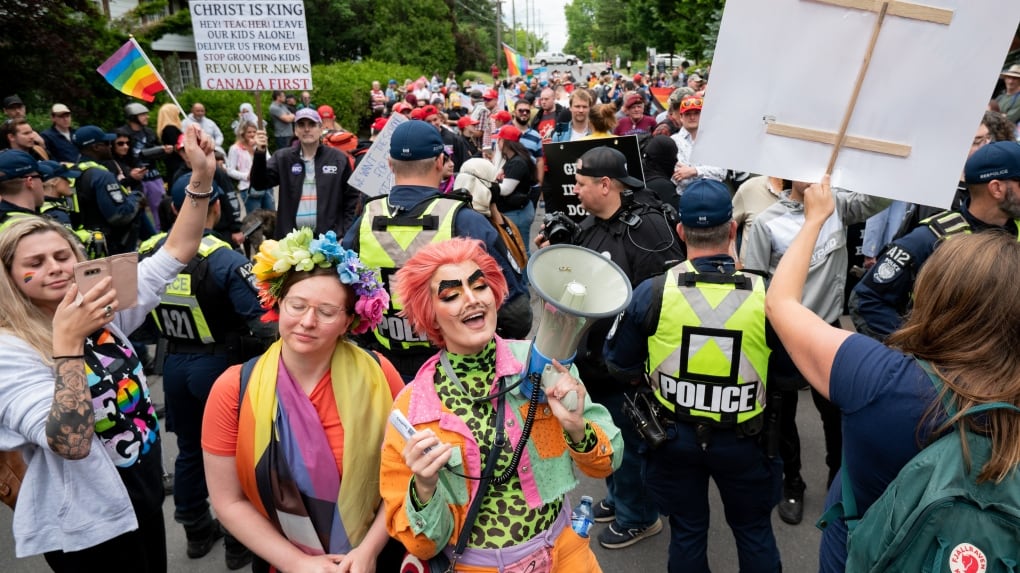
A new “bubble zone” bylaw will take effect in Ottawa in August that will prohibit protests within 50 metres of places of worship, schools, childcare centres, hospitals and residential care facilities.
Council voted 20 to four to approve a new “Safe Access to Social Infrastructure Bylaw,” which will set up zones where protests are prohibited near designated facilities. Councillors Ariel Troster, Shawn Menard, Jessica Bradley and Sean Devine voted against the bylaw.
Troster, the councillor for Somerset ward, initially supported the bylaw when it was approved by a committee last week, but changed her vote.
“The political moment that we are in right now is very scary. The rise in extremism and violence rightfully makes us fearful, and I truly believe that all of us who worked on the bylaw are trying to mitigate that harm. To make our schools and hospitals and places of worship safer,” Troster said.
“We shouldn’t have to protect schools with our bodies. We shouldn’t have to counter-demonstrate against right-wing extremists again and again and again. But ultimately, I believe that it is people who will win against the forces of hatred, not a bylaw.”
Menard told councillors that the city is “about to ban dissent,” adding he is “really sad that we’re in this place today.”
“It is currently illegal to block safe access to a place without this bylaw,” Menard said. “It’s already on the books and available should incidents of blocking safe access occur. This is about silencing dissent where legitimate peaceful assembly is both necessary, sometimes uncomfortable and essential.”
Coun. Devine told councillors that the new bylaw would prohibit demonstrations inside safe access zones, “not because they block anyone, not because they obstruct or target one, because that protest is visible and nearby.”
“Because is it too close for comfort.”
Mayor Mark Sutcliffe said council is elected to “draw the line.”
“Our Noise Bylaw draws lines. All the bylaws that we have draw the lines between one person’s right to do something and somebody else’s right to not have to experience whatever that person is doing,” Sutcliffe said.
“Just because we draw the line somewhere does not automatically mean that it is at a future date going to move to another place that is far less reasonable.”
The new Safe Access Bylaw would establish “safe access zones” to prohibit demonstrations within 50 metres from any access point to the designated facility, with an established timeline to prohibit protests. The “bubble zone” would be established around places of worship, schools, childcare facilities, healthcare facilities and residential care facilities.
Demonstrations and rallies related to labour strike movements will be exempt under the bylaw.
The bylaw would “prevent anyone from hindering or obstructing access to a safe access zone” and prohibit the following behaviour within the 50-metre zone:
- Any act of protest or demonstration
- Discouraging someone from using a facility
- Obstructing or hindering someone from accessing a facility, including specific offences for disrupting persons using a mobility device or service animal
- Staff say the bylaw will also prohibit “causing unusual noise to disturb the peace and comfort of people within designated facilities.”
Under the bylaw, the owners or operators of the facilities must apply to the City of Ottawa to establish a safe access zone, with no fee required to seek the designation. The “safe access zones” would be in effect from one hour before the facility opens until one hour after the facility closes.
Locations for the “safe access zones” will be posted on the City of Ottawa’s website, and the owner or operator of a facility would be notified of any sign requirements.
Facilities that will not fall under the Safe Access Bylaw include community centres and libraries, shelters and other government-owned infrastructure.

