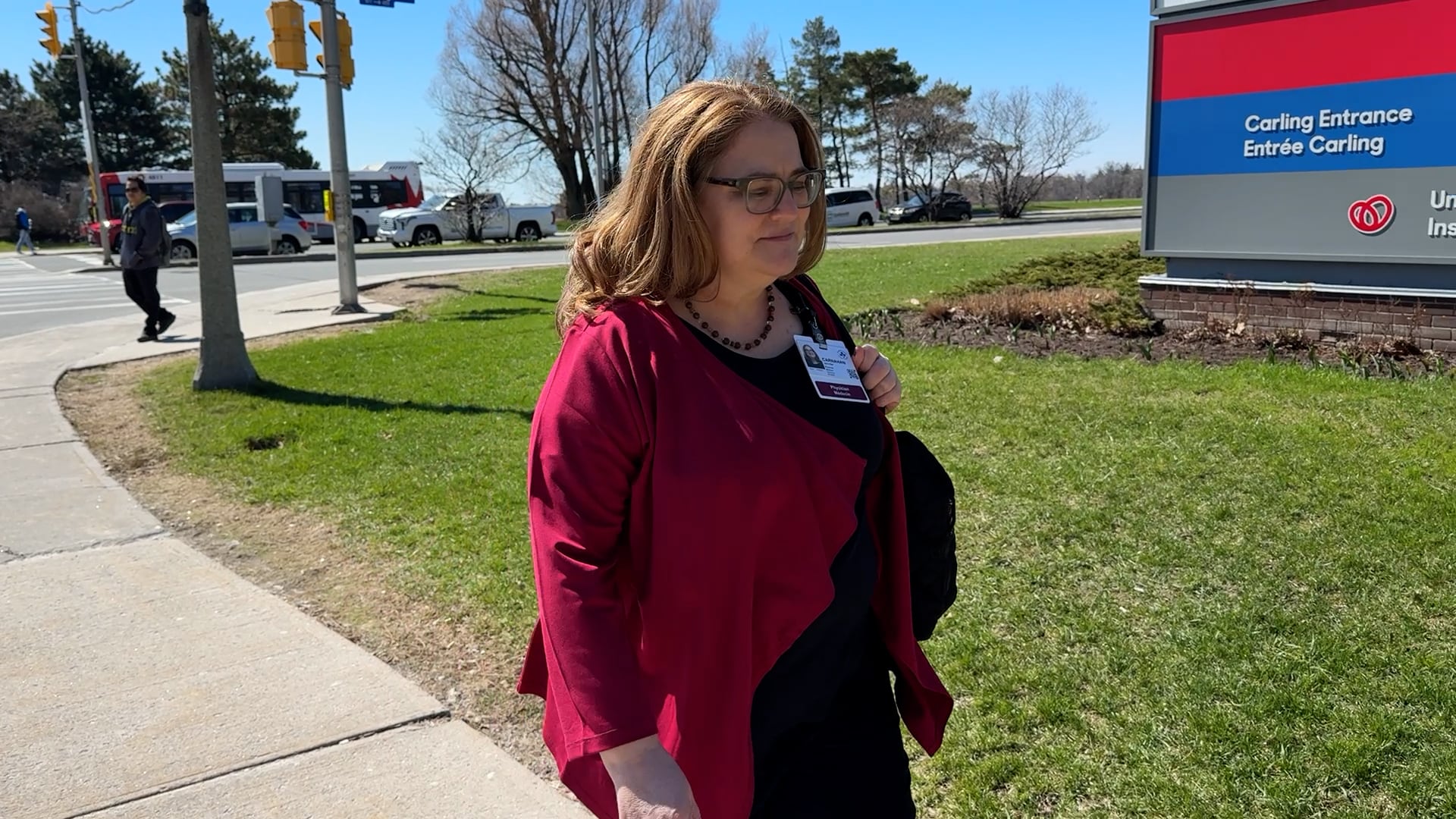
When Dr. Jennifer Carnahan thinks back to why she wanted to become a doctor, she doesn’t start with textbooks — she starts with her grandmother.
Diagnosed with Alzheimer’s disease, her grandmother had once been a vibrant English teacher who helped shape her early life. Watching her gradual decline left a lasting impression.
“I watched her slowly fade away,” she recalls. “That made me think hard about what I wanted to do. I wanted to help people like my grandmother live with dignity.”
That calling led her into geriatrics and eventually into a medical career in the United States.
Carnahan says much of her work in the U.S. revolved around navigating a complex and often fragmented insurance landscape.
“A lot of what we have to do in the United States is learn the health insurance system very well so that we are able to secure the best resources for our patients.”
Carnahan explains that every patient could have a completely different insurance plan, and doctors must know what is covered, what isn’t, and how to secure the best care within those limits.
Even for seniors — many covered under Medicare — the rise of privatized plans like Medicare Advantage has added layers of complexity.
“I found it frustrating,” she says.
Adding to the frustration, a rapidly changing political system under the Trump administration.
“It may sound a little bit extreme to say, but it did start to feel like health services, research, medicine, science — it did start to feel like that was starting to come under attack.”
That frustration, combined with a long-standing interest in health policy, led Carnahan to explore opportunities elsewhere. That’s when she came across a posting from The Ottawa Hospital and the University of Ottawa, both looking to recruit geriatricians.
The opportunity stood out immediately.
Ottawa has an international reputation in geriatric medicine — in part due to the development of the “Five M’s” framework, a widely used approach to caring for older adults. For Dr. Carnahan, it was a chance to work in a system aligned with her values.
“There’s a very different ethos of care here,” she says.
“The Canadian approach feels very community-oriented,” Carnahan says. “Patients, caregivers, nurses, physicians — it feels like everyone is working together. There’s a real sense of mutual respect.”
Ontario is seeing a sharp increase in the number of American-trained health professionals crossing the border. The provincial government says it has taken steps to accelerate that shift.
“Our government has taken action to strengthen our health-care workforce by making it easier for U.S.-licensed nurses and board-certified physicians to move to and practice in Ontario,” the province said in a statement.
The change allows qualified U.S.-licensed physicians, nurse practitioners, registered nurses and registered practical nurses to begin working in Ontario health settings without prior registration with the College of Physicians and Surgeons of Ontario or the College of Nurses of Ontario. The policy came into effect on June 5, 2025.
In 2025, 570 U.S. physicians registered to work in Ontario — a 174 per cent increase compared to 2024, when 208 American doctors made the move.
The College of Physicians and Surgeons of Ontario (CPSO) is responsible for licensing and regulating physicians and physician assistants, setting professional expectations, and conducting investigations for College registrants in Ontario.
CPSO says they have seen an increase in registrations from U.S.-trained physicians in recent years. Among other changes, these updates allow American Board-certified physicians to practise independently without the need to complete additional training or examinations.
As reported in CPSO’s 2025 annual report, 1,259 U.S.-trained physicians have been licensed to practise in Ontario since 2023. Of these, 628 were registered between 2023 and the end of 2024, following the policy changes aimed at removing barriers for these doctors.
For physicians like Carnahan, the transition offers more than just a job opportunity — it represents a shift in how care is delivered.
“We just want to do what’s best for people’s health,” she says.

