
Beavers are altering landscapes as climate change drives the iconic animal further north into the Canadian Arctic.
In a new study published in the journal Ecosphere, scientists combined satellite imagery of surface water with tree‑ring analysis to track the spread of beavers into a remote part of the Northwest Territories.
“Beavers effectively write their history into the landscape with each shrub they cut and every pond they create by damming streams,” lead author and Durham University research associate Georgia Hole said in a news release.
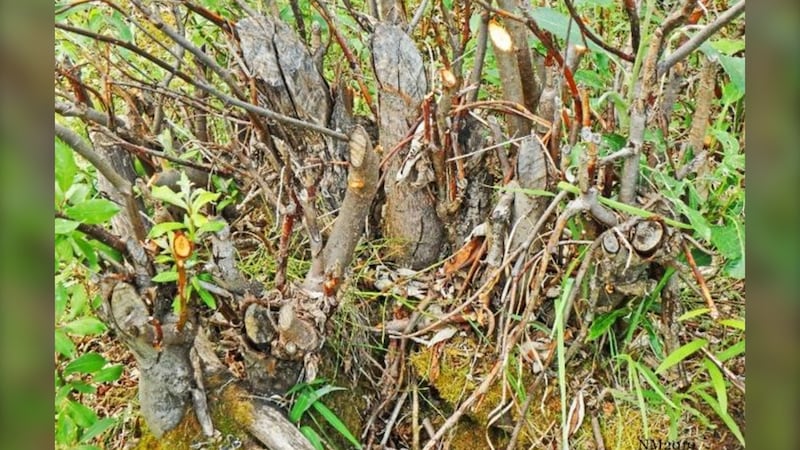
“By dating browsing scars in willow and alder using (tree‑ring analysis) techniques, and linking these to hydrological changes detected in satellite imagery, we’re able to pinpoint when and where beavers were present.”
Beavers are known as ecosystem engineers. The dams they construct can flood large areas, creating wetlands that are visible from space and leave a lasting impact on local landscapes and ecosystems.
Climate change and rising temperatures, meanwhile, have led to increased shrub cover in the tundra, which in turn is providing beavers with construction material and sources of food. But as the animals expand north into the Arctic, their dams can alter the stability of permafrost and affect the flow of water, fish populations and local livelihoods.
“The engineering activities of beavers leave a clear trail of evidence, and our findings confirm important aspects of beaver occupancy at locations extending northwards, as far as the shores of the Arctic Ocean,” senior author Helen Wheeler, an associate professor of ecology at Anglia Ruskin University, said.
“Arctic Indigenous communities are already observing rapid environmental change, and beaver range expansion is part of that shift.”
‘The presence of beavers could increase further’
For the study, researchers worked alongside Imaryuk Monitors, the local Indigenous environmental guardian group, to survey an area stretching from the town of Inuvik, N.W.T., to the Arctic Ocean coast hamlet of Tuktoyaktuk. Along the way, they documented 60 beaver dam sites and collected willow and alder stems that had been gnawed by the animals.
That evidence suggested that beavers began colonizing the region in 2008. Satellite analysis further revealed significant and abrupt expansions of surface water that matched periods of intense beaver activity, recorded as scars in the rings of willow and alder shrubs. “In the Arctic, we often lack the historical baselines needed to understand ecological change,” Hole said. “Our findings demonstrate a powerful new way to track past beaver colonization in Arctic regions that are rapidly transforming under climate change.”
The scientists say they worked in close collaboration with local Inuvialuit researchers and communities. The Inuvialuit people are Inuit who inhabit the western Canadian Arctic, and their communities are increasingly affected by the northward expansion of Canada’s national animal.
“Their impacts on lakes, rivers, fish populations and traditional practices make understanding these dynamics a priority for the Inuvialuit community,” Wheeler said. “As the Arctic continues to warm, the presence of beavers could increase further. The approach we’ve used in this research can help track these changes and support local communities and decision-makers.”

