A former neurologist in Kitchener, Ont., has been acquitted on all 48 counts of sexual assault involving his female patients.
Jeffrey Scott Sloka’s trial is believed to be one of the largest cases of its kind in the province’s history.
Here’s how the day unfolded:
3:30 p.m.: The media cannot identify any of the complainants due to a publication ban.
“There’s no words to [explain] what happened today, and it is devastating on every level,” said one. “It doesn’t matter what a judge says or what people think [they] know. We are behind one another 110 per cent.”
“There is no justice,” she continued. “None. No justice at all. He walked away free.”
“The system failed. It’s broken,” said another. “For all of us that took the stand, it was victimizing… reliving everything again, getting questioned [about] yourself.”
Maddy Kenyon, a public educator with the Sexual Assault Support Centre of Waterloo Region, tried to help the women come to terms with the verdict.
“People started to cry, people were in disbelief,” she told CTV News. “I think a lot of us are going to be processing this for a long time. [It] sends a really horrifying message about who deserves respect, safety and dignity in our community.”
Many of the complainants had never met before Friday’s verdict.
“There are 40 strong women that have banded together,” said one. “We couldn’t before. [That’s] where we gain our support and our strength.”
Victims of sexual assault can reach out to the Sexual Assault Support Centre of Waterloo Region’s 24-hour support line at 519-741-8633.
3 p.m.: Sloka has not commented publicly on Friday’s verdict.
“Dr. Sloka will not be speaking to the media,” his lawyer, David Humphrey, told CTV News. “But he wants me to, on his behalf, let everyone know that all he ever wanted out of this was a fair trial. He got a fair trial, and the community got a fair trial. People should know that.”
After the verdict, Sloka’s accusers gathered outside the courthouse to consol each other while the former neurologist left by one of the back doors.
“Given the emotions involved by some it only makes sense that security took steps that he didn’t have to be in close quarters with some people who are very upset with the verdict today,” Humphrey explained.
1:30 p.m.: Carly Pettinger was at the courthouse on behalf of her friend, who was one of the complainants in the case.
“That person had to move out of province due to the trauma of being sexually assaulted by Sloka,” she claimed.
Pettinger was shocked by the judge’s verdict.
“I almost threw up,” she told CTV News, getting emotional. “[The judge] said that… some of their testimony was [not] credible, he didn’t give weight to the doctor who testified on behalf of the Crown’s case. My heart is absolutely broken.”
Pettinger also worries about what the verdict means for other victims.
“I’m very aware of the challenges that women who are sexually assaulted face, the many reasons why women don’t come forward, because they often don’t have justice… there’s no justice in courtrooms.”
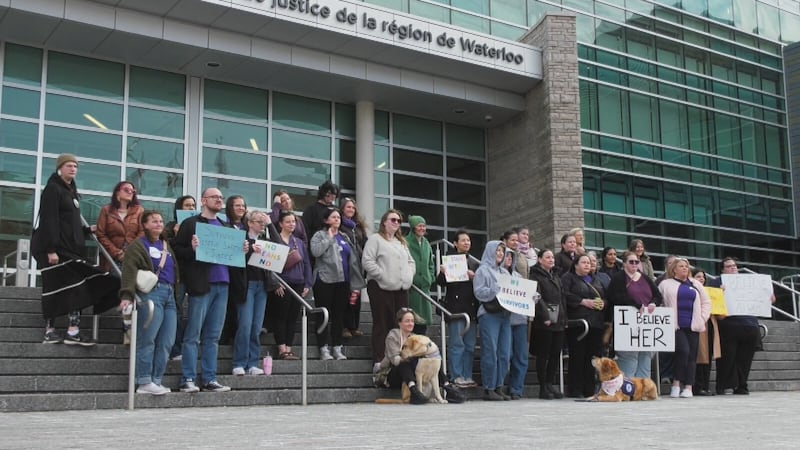
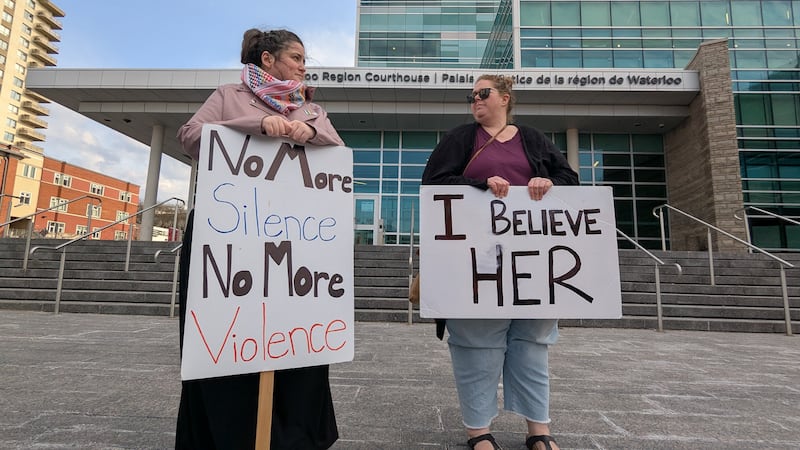
1 p.m.: Sara Casselman, the executive director of the Sexual Assault Support Centre of Waterloo Region, spoke to CTV News outside the courthouse.
“I’m actually still in shock over the verdict. As much as I knew it was a possibility, I was not expecting not guilty on all charges,” she said. “I think it’s really important that our community knows that not guilty does not mean innocent... It does not mean not guilty of causing harm.”
Casselman was there to support Sloka’s accusers.
“At one point, there were 70 women involved in this case. Seventy women in our community can’t be wrong about what that experience was like for them,” she insisted. “Women don’t lie about being sexually assaulted. It’s very, very rare that someone would lie. It’s much more likely that they would never come forward than it is that they would lie about it.”
Casselman was moved by what she saw in the courtroom.
“I saw women stand up en masse and walk out. Overcome. It was actually horrific to see.”
She hopes the verdict doesn’t dissuade other victims from coming forward.
“There are many, many women in our community who are saying they were sexually assaulted, they were sexually violated. Our community needs to wrap those women in care - and believe them.”
12:20 p.m.: Justice Parry’s decision is 1,002 pages in total.
In it, he breaks down the testimony of Dr. Vera Bril and the defence’s objections to her evidence. He then discusses Sloka’s medical practice and experience, as well as what happened during his examinations.
Each one of the 48 complaints is addressed separately. Justice Parry summarizes the allegations, as well as the evidence presented by both Sloka and other expert witnesses and then provides his own assessment.
“Significant inconsistencies were revealed during her evidence,” he said of one accuser.
For another, Justice Parry writes: “[The complainant] had an unreliable memory, while simultaneously possessing an overconfidence in its strength.”
He had harsher words for others.
“[The complainant] was not a credible witness,” he wrote. “I have concluded that she fabricated an allegation against Dr. Sloka for the purpose of obtaining a second opinion and the reinstatement of her driver’s licence.”
Memory recall, reliability and inconsistencies were common themes in Justice Parry’s opinion.
12:10 p.m.: The summary of Justice Parry’s decision continues: “Having looked at the totality of the admissible evidence on each count, I have concluded that on each count the Crown has failed to prove that Dr. Sloka used medical examinations as a ruse to gain access to the bodies of his female patients. The Crown has also failed to prove that Dr. Sloka engaged in sexual activity when conducting any examination on any of the 48 patients in this case. On each count, the totality of the evidence satisfies me that each patient consented to and participated in medical examinations.”
It ended with: “Dr. Sloka must be acquitted on each of the 48 counts.”
12 p.m.: Justice Parry’s decision went on to say: “Having considered the evidence of Dr. Sloka on each count, in the context of the totality of the evidence, I accept that he adequately proposed, identified, and explained each examination he acknowledged performing. Further, I accept that he subjectively believed in the medical and/or neurological justifications for his investigations, examinations, and treatments. In my view, his evidence refuted any potential inference that he possessed a sexual purpose when examining any of the 48 patients in this case.
“With each examination for each patient, he has satisfied me that he possessed a valid medical purpose. I also accept that he subjectively believed that it was permissible and appropriate for him to engage in each acknowledged investigation, examination, and treatment. When he denied performing certain examinations, I have accepted his denials. I have also accepted his evidence that he performed each examination in accordance with his training.”
11:45 a.m.: A copy of Justice Parry’s verdict is shared with the media.
In it, he addresses the alleged victims who who testified in court.
“I have concluded that, to varying degrees, each provided unreliable evidence,” he wrote in the decision. “With many of them, their memory, perceptions, and testimony were tainted by what they saw in media or CPSO publications. Some also provided evidence that lacked credibility. Some were also deliberately dishonest with the court.”
The judge said he weighed that against the defence’s case.
“After considering the evidence of each complainant in the context of the evidence as a whole, I am not satisfied that Dr. Sloka conducted any examinations that he did not admit conducting; nor am I satisfied that he conducted any examinations in a manner contrary to his training; nor am I satisfied that Dr. Sloka failed to adequately propose, identify and justify the examinations that he performed; nor am I satisfied that Dr. Sloka conducted any examinations without the express consent of any patient.
“Consequently, for each count, the Crown has failed to establish several important factors involved in the determination of the nature of the examinations performed by Dr. Sloka.”
10:50 a.m.: According to CTV’s Krista Simpson, the Crown has already indicated they will not comment following the judge’s verdict.
10:31 a.m.: The judge announces a recess.
10:30 a.m.: Moments after the judge delivers his verdict, three spectators stand up and walk out of the courtroom. They are followed by others in the courtroom.
Some of the spectators are seen in the hallway crying and hugging each other.
Sloka continues to stare down at the table.
10:30 a.m.: Sloka is acquitted on all 48 counts of sexual assault.
10:29 a.m.: The judge says he found no evidence there was a deliberate “ruse” by Sloka in regards to his female patients.
10:28 a.m.: Judge finds the Crown failed to establish the exams were contrary to Sloka’s medical experience but were, instead, “in accordance” with his training. He also felt Sloka adequately explained to each patient his actions and there was a medical purpose for the exams.
10:26 a.m.: Called some of the testimony in court “dishonest.”
10:24 a.m.: The defence wanted Dr. Bril’s testimony excluded. The judge says he felt the doctor displayed bias.
10:23 a.m.: The judge says each count has to be assessed on its own merits.
10:20 a.m.: The judge reviews the defence’s case, specifically criticism of the Crown’s expert witness Dr. Vera Bril.
10:15 a.m.: As the judge describes the Crown’s case, Sloka sits unmoving, staring down at the defence’s table.
10 a.m.: Judge says his full decision is too “voluminous” to read into the court record so he will summarize his findings. He notes each charge relates to a separate complainant.
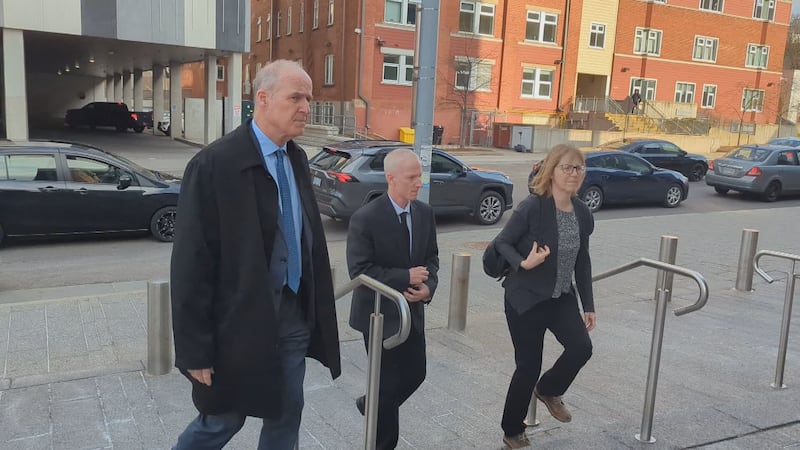
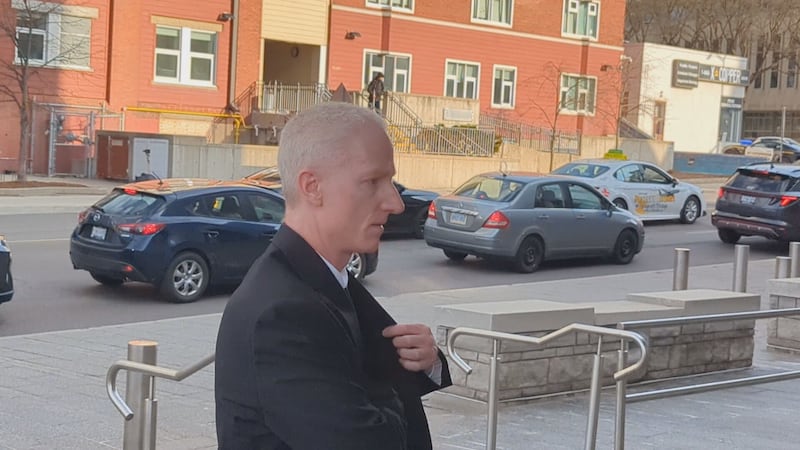
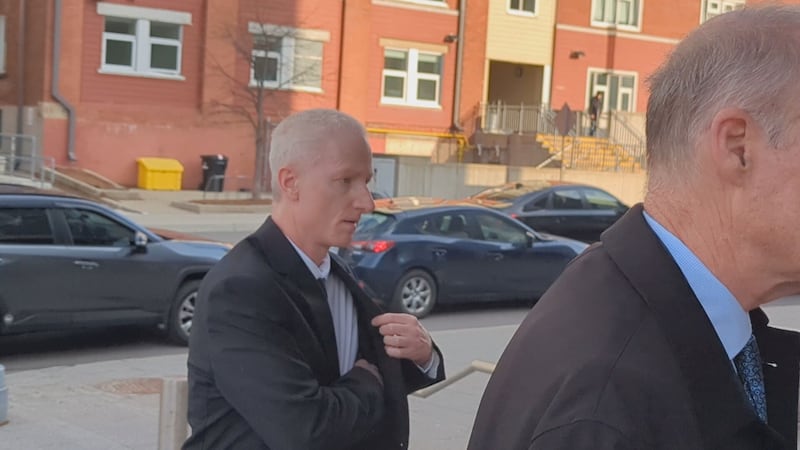
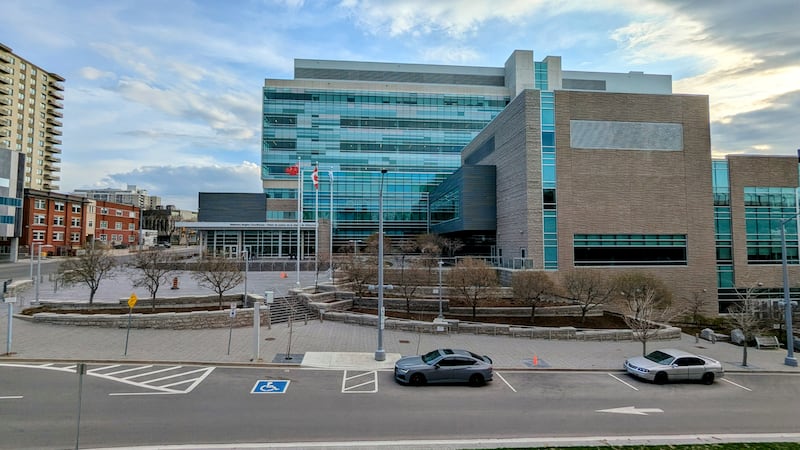
8:16 a.m.: Jeffrey “Scott” Sloka is seen walking into the Kitchener courthouse.
At one point, Sloka faced 77 charges stemming from complaints by patients who consulted his private practice between January 2010 and July 2017. Some of those were later withdrawn at the request of the Crown. By the time his trial ended, in March 2026, the total had dropped to 48 counts of sexual assault.
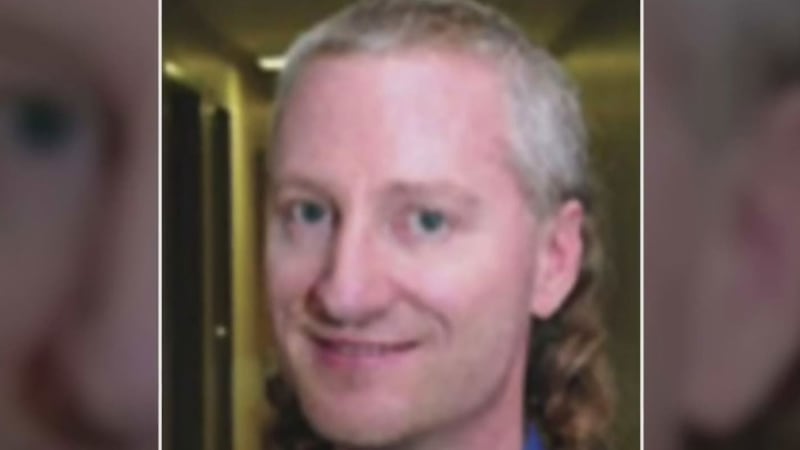
Sloka, who also goes by the first name Scott, was accused of improperly draping his patients, touching their breasts and performing invasive pelvic and rectal exams.
The Crown argued Sloka’s motive was sexual, while the defence insisted there was a medical purpose for his actions.
History of the case
Restrictions were placed on Sloka’s practice in September 2017 after two patients filed complaints with the Ontario College of Physicians and Surgeons. They said signs had to be posted throughout Sloka’s office that indicated he could not be left alone with patients.
In April 2019, his medical license was revoked.
Sloka was arrested in September 2019 and initially charged with 34 counts of sexual assault.
By February 2020, that number had risen to 69. Another eight were laid in June 2021.
Sloka pleaded not guilty to 63 charges when his trial got underway in September 2021.
The first patient who took the stand said she sought out Sloka’s medical opinion after experiencing a blackout and, during her appointment, he performed a vaginal exam.
“It is far outside our standard of practice,” neurologist Dr. Vera Bril later testified. “Far, far outside.”
At that point in the trial, the number of charges against Sloka had dropped to 50.
In August 2023, the former neurologist took the stand in his own defence. Sloka addressed every complaint filed against him over a three-week period. He frequently disagreed with the testimony from former patients, denied some incidents ever happened, or offered a medical explanation for why he performed certain exams.

