For Carol Pavey, the final hours of a month-long European trip unravelled in a maze of lines in Lisbon’s main airport last week.
What began as a routine morning quickly turned into something else.
“I could see that it was a long line, but you couldn’t see the whole of it,” Pavey said in a Zoom interview with CTVNews.ca.
Pavey, a Canadian permanent resident travelling on a U.S. passport, said the lines were “snaking through ... and seemed to be moving decently.”
That illusion didn’t last. As Pavey, who travelled with her husband, rounded a corner and descended a ramp, the full scale became clear: a sprawling queue feeding into more lines.
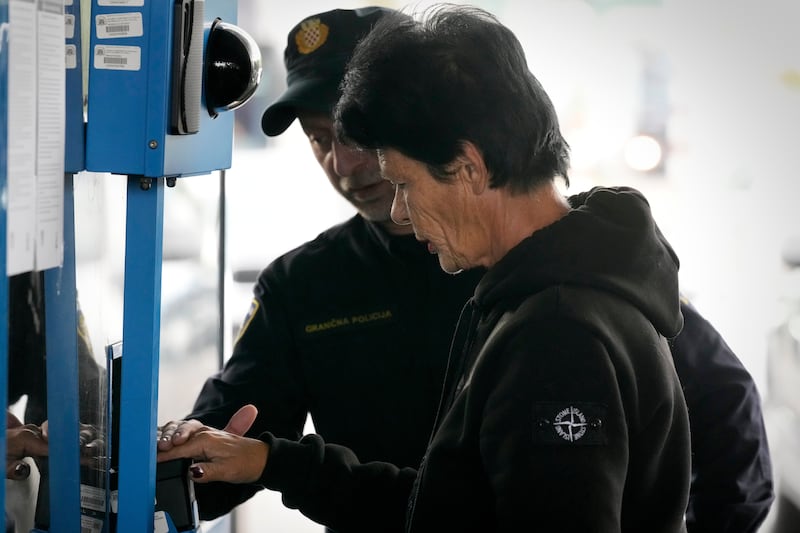
At the centre of the congestion were the new biometric kiosks.
“There was a huge bottleneck,” she said. “People were coming in, people were trying to get out, people were having difficulty with the machines - and there was one employee ... trying to direct traffic.”
What is EES and how does it work?
Pavey’s experience comes as the European Union rolls out its new Entry/Exit System (EES), a sweeping modernization effort that replaces manual passport stamping with digital records tied to biometric identifiers like facial images and fingerprints.
The system, which began a phased rollout in October 2025 and was fully implemented on April 10, is designed to track short-stay travellers from non-EU countries — including Canadians — more accurately and efficiently.
The new system applies across the Schengen area — 29 European countries, excluding Ireland and Cyprus — that share external border controls, meaning travellers are processed under the same rules.
It is also used in Norway, Iceland, Switzerland and Liechtenstein, non-EU members that are part of the Schengen area.
Biometric checks take place at airports, land crossings and seaports when entering or exiting the region. However, concerns are pointing to longer lines at airports and train stations.
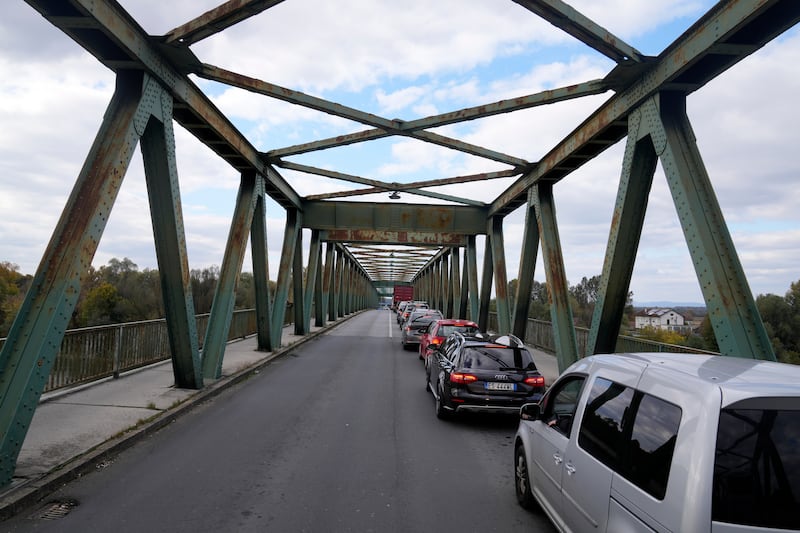
According to the European Commission, the EES system has refused entry to travellers more than 27,000 times, including 700 people who posed a “security threat.” So far, 52 million crossings were registered since its initial launch last year.
CTVNews.ca asked readers to share their experience with the new EES system. Here’s what they said.
‘Extreme bottleneck’ queues
For Mark Leishman of southern Alberta, the return of a family trip through Europe nearly delayed at the departure gate.
After visiting France, Belgium, Netherlands and Luxembourg over his children’s Easter break, Leishman and his family arrived early — more than two hours ahead — for their April 13 flight home from Paris-Charles de Gaulle Airport to Calgary. It wasn’t nearly enough.
What followed, he says, was a trial of lines: first to access the gates, then again for passport checks, then yet another queue to exit the European Union. Families with children were funnelled into separate lines from adults, but the distinction offered little relief.
At times, hundreds of passengers were left waiting as only a handful of border booths were staffed, creating what Leishman described as an “extreme bottleneck.”
“We were seconds from missing our flight,” Leishman said, recounting how the family had to abandon plans to claim tax refunds and instead focus on navigating the maze of checkpoints.
After finally clearing passport control — without any biometric data being collected — the family still faced another slow-moving security line. With just 20 minutes to departure, they sprinted through the terminal before being escorted by a waiting WestJet agent to their gate, boarding last.
“Thankfully they waited,” Leishman said. “But they could have just as easily have left us.”
For families in particular, Leishman says the takeaway is simple: arrive far earlier than you think you need.
A test of endurance
Travelling back to Ottawa from Italy on April 13, Benjamin Agnes had to use the EES system which he described faced power issues.
Agnes said many people were sent to manual passport check.
“The system does not work fast enough, breaks down frequently, and they do not have enough scanners to match the amount of incoming/outgoing traffic during peak hours at airports,” he said.
On previous trips to Europe, Agnes said it took less than 30 minutes. Now with new rules in place, entry and exit combined takes nearly three hours, Agnes explained.
For one Canadian couple arriving in Rome, the welcome into Europe felt less like a routine border check and more of a two-hour test of endurance.
Touching down at Rome Fiumicino Airport on April after their Air Canada flight, Doug Kube and his wife quickly shuffled into one of two lines — what he described as “the mother of all line ups.”
He says the queue stretched so far it was impossible to see the end. After an hour of waiting, the Collingwood, Ont. residents hadn’t even reached passport control. Another 30 minutes passed before they arrived at the automated e-gates.
“As we watched, about one in every five people who scanned their passport were declined and had to walk to another line, I assume for manual passport review,” Kube said.
The couple made it through the biometric scan, only to face another step — a border officer who reviewed and stamped their passports before granting entry.
A new reality of flying
Eventually, Pavey says, her husband’s Canadian passport worked after multiple attempts. Hers never did.
“My U.S. passport never even registered after about 20 attempts on 10 machines.”
With time slipping away and no clear guidance, panic began to set in.
“I just said ‘We’re going to miss our flight,’” she recalled.
“At that moment they opened all the other gates ... and we just walked through ... straight to a human,” she added.
A border officer stamped her passport in seconds.
“I said, ‘My passport never did register with the machine,” and he said, ‘This is easier right?’ — chunk — and stamped it."
After nearly missing their flight to Toronto, Pavey and her husband were left with more questions than answers.
“I don’t mind waiting in a line,” Pavey said. “But the amount of difficulty was out of proportion ... and there was nobody there to assist.”
“It’s certainly going to make me behave a little differently at the airport,” she said.

