A group of researchers at the University of Manitoba are studying ways to address the ever-growing problem of plastic waste.
Millions of tons of plastic are produced every year, yet less than 10 per cent is recycled, fueling growing environmental and health concerns.
David Levin from the University of Manitoba refers to plastic pollution as a ‘global crisis.’
“We find plastic everywhere on the planet,” Levin said, who is a professor of biosystems engineering at the university. “On top of Mount Everest, to the bottom of the Marianas Trench, in the deepest part of the ocean, and in the Antarctic and in the Arctic.”
He said he wanted to find a solution to this growing problem and began researching with a team of biologists and chemists.
Finding a solution
Levin and his team are working on a way to deal with plastic waste.
Plastic pollution from polyethylene terephthalate (PET), which is the plastic commonly used for drinking containers, remains a major environmental challenge.
In their recent study, “Novel genomically engineered antibiotic-free whole-cell biocatalysts for PET hydrolysis and waste remediation,” and his team developed a more sustainable approach by engineering bacteria to naturally produce enzymes that break down PET, without the need for antibiotics or complex processing.
This low-cost, self-sufficient system offers a promising path toward more efficient and environmentally friendly plastic recycling.
The long-term goal is not just to destroy plastic, but to turn it into useful and safe products.
“If we can find a way of converting the plastic into a resource that microbes can metabolize and produce a product of value, like an antibiotic, or an antioxidant, or some kind of value-added product, then the plastic will have some value, and it won’t just get discarded in the environment,” he said.
To make this work, Levin and his team are also developing genetically stable bacteria.
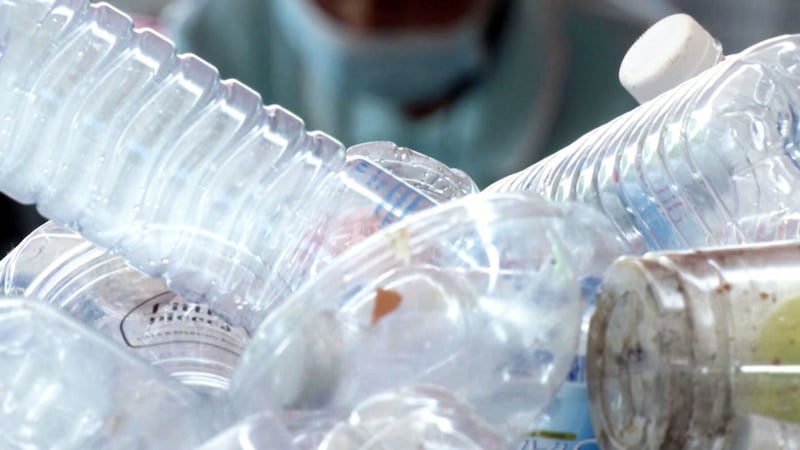
The team created a new kind of bacteria that can safely degrade plastic and stay alive without needing special chemicals or antibiotics. This new system could help clean up plastic waste in a simple, long-lasting way.
This research has now been published and may represent a major step forward in addressing the world’s growing plastic pollution crisis.
“We are dealing, not only with synthetic plastic, and with synthetic materials that are human made, but also dealing with our new synthetic organisms that we are making,” said Nediljko Budisa, who is part of this research team and a professor at the University of Manitoba. “Therefore, it is very important that all this scientific progress is communicated to society, and society should take part in this discussion.”
For Hamid Karbalaei-Heidari, conducting this research is crucial for the future of our planet.
“For me, it was fascinating to explore how we can address one of the most pressing crises we face: plastic pollution clogging our oceans,” said Karbalaei-Heidari, who works in the department of chemistry at the University of Manitoba.
“Traditional mechanical recycling methods are very expensive and often produce toxic byproducts that harm the environment. But we can learn from nature.”
“We’ve developed a new type of biocatalyst that can degrade plastic safely in an environmentally friendly way,” he said.
”That’s what motivated me to pursue this research.”
For Katherine Romero-Orejon, a postdoctoral fellow, being part of the project has been a meaningful opportunity to contribute to real-world change.
“This project was very insightful and showed how combining science and engineering can help you learn more and contribute better to research projects,” she said.
A need for change
Levin says science, technology, and engineering are important tools to finding solutions to these environmental problems.
He is happy his team is working hard to bring solutions.
“We need to find a way of mitigating this plastic pollution, so we can leave the planet in a better shape than when we found it,” he said.

