A Saskatoon teenager living with Parkinson’s has been seeking out-of-province treatment due to the rarity of his disease.
Seventeen-year-old Joey Sheikh has juvenile Parkinson’s, a rare form of the disease that develops before the age of 21.
“My body gets really shaky,” said Sheikh, who has tremors in his legs, hands and throat that impact his mobility, fine motor skills, speech and eating. He first showed symptoms when he was five years old after falling on the playground at recess.
“We started to notice that things were very different,” Sheikh’s mom, Julie Johnson, told CTV News. “Joey was no longer able to write his name and had lost lots of his fine motor skills.”
It took three years of testing before Sheikh received his Parkinson’s diagnosis, at the age of eight.
“Our neurologist realized that he was a very complex case,” Johnson said, which is when they were referred to The Hospital for Sick Children, or SickKids, in Toronto.
Through trial and error, Sheikh has taken various medications to help control his tremors. But there came a point when his mom “was really starting to worry about him.”
Sheikh lost most of his mobility and began to rely more on his wheelchair. He lost his fine motor skills and couldn’t carry a conversation.
“It was too hard and no one could understand me,” said Sheikh, recalling how people would have to place their ear near his mouth so they could hear him.
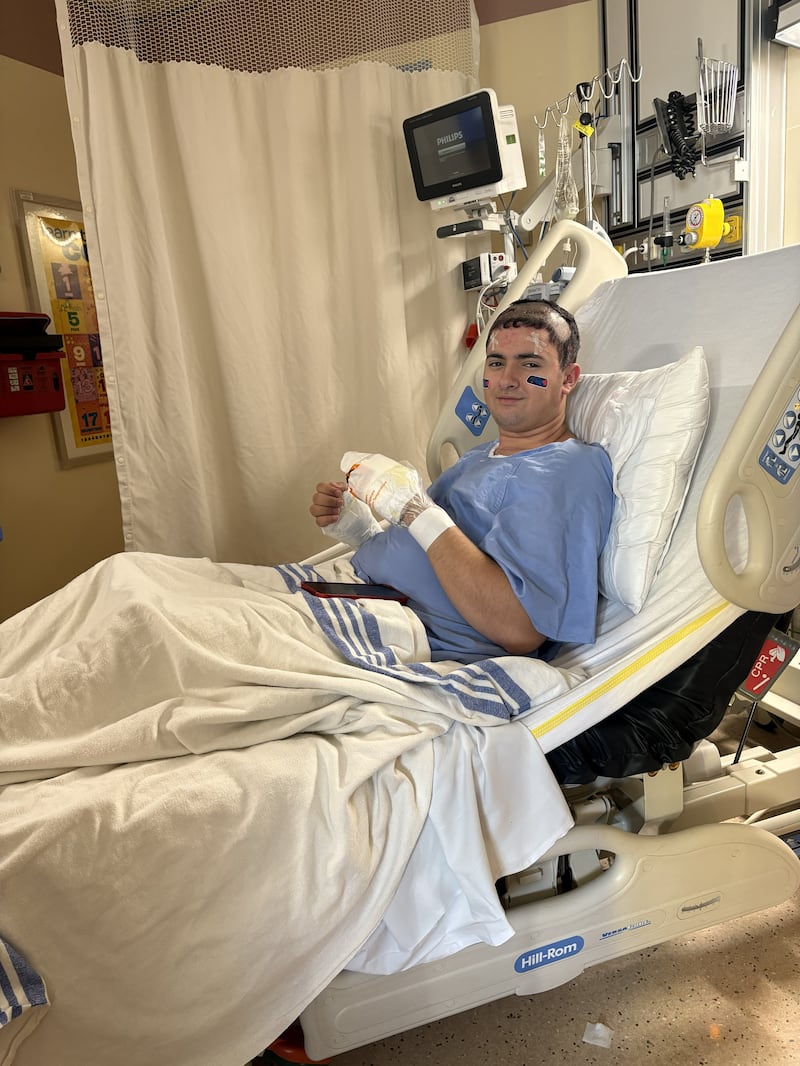
He underwent deep brain stimulation (DBS) at SickKids last fall to help reduce his tremors. The 14-hour procedure involved placing electrodes in his brain and a device in his chest to control the stimulation.
“It’s a type of pacemaker that’s used for the brain,” said Dr. Carolina Gorodetsky, Sheikh’s pediatric neurologist at SickKids.
“By delivering a tiny amount of electricity, the size of a triple-A battery, you can improve the function of cells that are specifically responsible for the motor function.”
Since the procedure, Sheikh’s health has been improving. The teenager who loves basketball and WWE wrestling can now run, dribble a ball and shoot hoops on the court.
“I can do a lot that I couldn’t before,” he said.
The cost of care
Most provinces, including Saskatchewan, don’t have hospital programs that offer DBS for pediatric patients.
“DBS is not readily available across the country because of the specialty and the neurosurgeon that’s required,” said Karen Lee, president and CEO of Parkinson Canada.
“In the case of Joey, he had to get that specialized care outside of the province and that of course incurs costs.”
Gorodetsky says there are great benefits to pediatric DBS and she is advocating for greater access across the country. She would like to see more physicians trained and resources added to help develop DBS programs in more provinces.
“We’ve treated children from literally coast to coast. We have children from Vancouver Island to Newfoundland and there are a lot of challenges for the families,” she said.
“There is the financial aspect of it. There is a need to stay in Toronto. There’s less support from their families and loved ones from their home communities.”
Johnson says works two-and-a-half jobs to help cover her son’s treatment expenses. Sheikh goes to speech therapy, occupational therapy and physiotherapy regularly. At times, he’s been on medication that wasn’t covered by insurance.
The biggest costs come when they travel to Toronto for appointments, Johnson said. The appointments are covered by Saskatchewan Health, but the cost of flights and accommodation aren’t covered under government programs now that Joey is older than 16.
“It’s very much a financial strain,” said Johnson, who’s had to fundraise in the past to pay for travel expenses.
On top of the financial burden, treatment also costs time. Sheikh leaves class for his therapy appointments and he’s missed months’ worth of school during his treatments in Toronto.
Last year, Sheikh and his mother travelled to SickKids every two months. Now they go back about every six months. They hope in the future they’ll only need to go once a year.
In 2024, the total costs associated with Parkinson’s in Canada was estimated at $3.3 billion, projected to increase to $4.4 billion by 2034, according to Parkinson Canada. People living with the disease and their care providers take on approximately 90 per cent of those costs.
‘Never give up’
Most people diagnosed with Parkinson’s are men aged 65 or older. However, Sheikh’s situation is a reminder that the disease doesn’t just target one demographic.
“Women are diagnosed with Parkinson’s. People who are in the prime of their lives, and who are building their families are diagnosed as well as children,” Lee said.
An estimated five to 10 per cent of people with the disease are diagnosed with early onset Parkinson’s before the age of 50. Lee says juvenile Parkinson’s is even rarer.
Despite the rarity of his disease, Sheikh wants people to know he can still do what he loves, “it’s just harder.”
Before his DBS procedure, Johnson said, she didn’t know what her son’s future would look like. Now they are planning what he might do after he graduates high school next year.
Sheikh is considering going into education to become a math or history teacher.
“I like teaching people things and I think that would be a good thing for me,” he said.
Whatever the future holds, he plans to live by his motto: “never give up.”
“I use that every time I do something like basketball or anything. I say, ‘never give up,’ and ‘you can do anything that you put your mind to.’”

