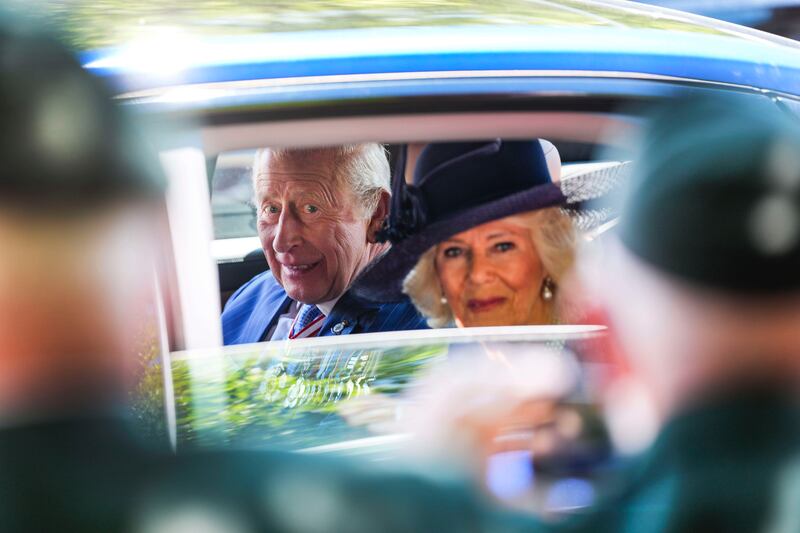
King Charles’ 24-hour trip to Ottawa last May cost Canadian taxpayers at least $2.6 million.
According to data obtained by CTVNews.ca, costs for the overnight trip included almost $870,000 for a ceremonial air force flyover, nearly $860,000 in police expenses and close to $370,000 for air and ground transportation.
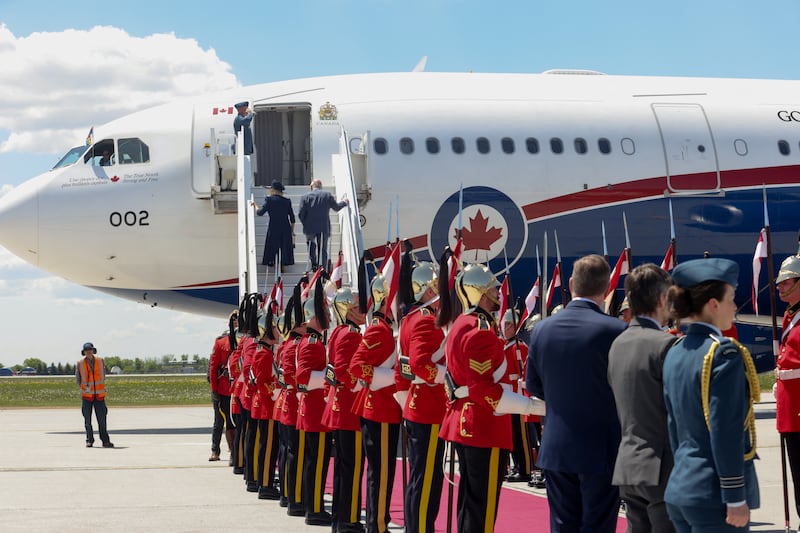
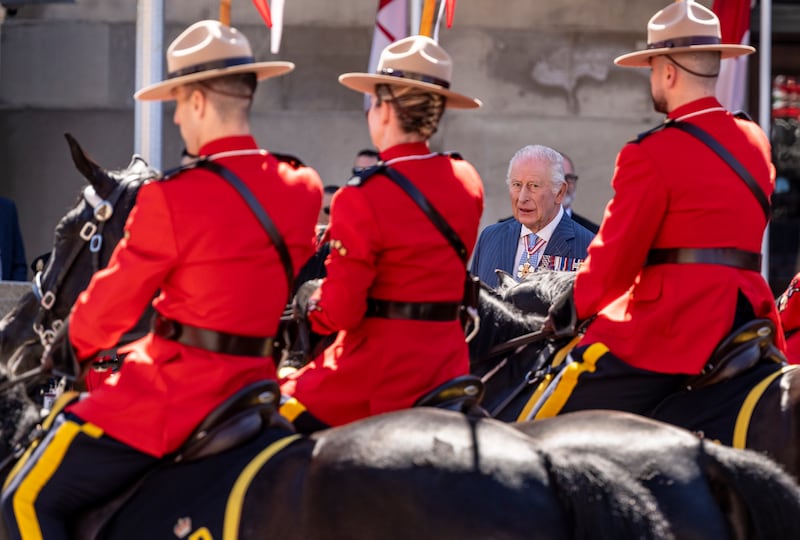
Charles visited Ottawa with Queen Camilla on May 26 and 27, 2025, his first trip to the country as King of Canada. In an apparent show of support for Canada’s sovereignty, Charles delivered a throne speech to open a new session of Parliament.
“The Crown has for so long been a symbol of unity for Canada,” Charles said at the time. “As it should, it stands proudly as a symbol of Canada today, in all her richness and dynamism.”
Costs associated with the whirlwind trip were obtained through access to information requests or disclosed directly by the Royal Canadian Mounted Police, Public Safety Canada, the Department of National Defence, the Privy Council Office, Health Canada and the Department of Canadian Heritage, which organized the trip.
Those costs totalled $2,636,484.92, according to CTVNews.ca’s investigation. With the visit lasting roughly 24 hours, that boils down to $109,853.54 per hour or $1,830.89 per minute.
On Monday, King Charles arrived in the U.S. for a four-day state visit. In his last official visit to Canada before becoming King, Charles’ three-day trip in May 2022 cost at least $1.4 million, according to a previous CTVNews.ca investigation.
From apple juice to jet fuel
Canada’s Department of National Defence footed the largest bill, spending an estimated $1,284,064.05 on the royal visit. That included $868,995.23 for a ceremonial air force flyover, $330,462.33 for transportation like roundtrip flights for His Majesty aboard a new Canadian Airbus CC-330 Husky aircraft, $70,010.53 for 803 meals and snack packs for travellers, and $14,373.15 on hotel rooms in both the U.K. and Ottawa.
Jet fuel for the CC-330, which is typically used by the prime minister for overseas travel, cost about C$225,000, according to receipts and invoices obtained through an access to information request. Those receipts and invoices contained a few odd redactions, such as the total number of apple juices purchased for His Majesty’s flights.
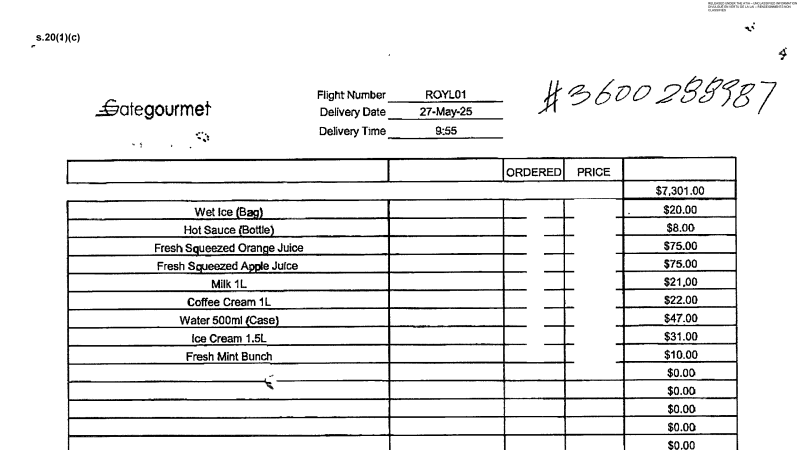
The Department of Canadian Heritage, which largely organized the trip and related ceremonies, spent $442,670.65. Through an access to information request, CTVNews.ca obtained a spreadsheet with additional details on those expenditures, such as $17,149 for premium economy flights and $3,648 for rooms at Ottawa’s elegant Lord Elgin hotel for Royal Household staff during a dry-run rehearsal.
Other expenses absorbed by Canadian Heritage included $17,474 for travel, hotel accommodation and per diems for Royal Household staff for the royal visit, $36,413 for ground transportation like buses and vans, $997 for tablecloths and $656 for hockey jerseys. Another $2,500 went to the residence at 7 Rideau Gate in Ottawa, which the Canadian government uses as a guesthouse for visiting dignitaries, while the City of Ottawa was reimbursed for $146,944.73 in costs like road closures and on-site paramedics.
Security was co-ordinated by the RCMP, which incurred $253,134 in costs including officer overtime, travel expenses and meals. Public Safety Canada covered $604,732.63 in costs associated with Ottawa Police Service assistance like crowd management, road closures and motorcade co-ordination.
The Privy Council Office, which is Canada’s top bureaucratic department, commemorated the visit with a $50,000 donation to The King’s Trust Canada, a charity that provides free skills training to young people facing barriers. Health Canada also absorbed $1,883.59 in costs associated with providing a dedicated ambulance in the event of a royal medical emergency.
The expenditures mostly capture incidental costs and largely do not include normal government expenses such as RCMP and Canadian Heritage staff salaries, which would push the true cost of the royal visit even higher. The $2.6-million total also does not include expenses that may have been covered by British taxpayers.
CTVNews.ca previously reported the figures from National Defence, which did not provide updated data at the time of publication. The Canadian Heritage total also includes costs that were reimbursed to other government departments and agencies, including the RCMP’s ceremonial expenses.
‘Good bang for the buck’
Royal visits like these represent just a fraction of what Canada’s ties to the throne cost Canadian taxpayers.
According to the Monarchist League of Canada, our constitutional monarchy cost over $64.6 million in the 2022-23 fiscal year, up from $58.75 million in 2019-20. That includes expenses associated with the Governor General, provincial lieutenant governors and royal tours. The pro-monarchy advocacy group says this works out to an annual cost of about $1.61 per Canadian, which is below the estimated £1.29 (C$2.38) per year the Crown costs each citizen of the U.K.
Monarchist League of Canada dominion chairman Robert Finch believes this represents “money well spent” and “good bang for the buck.”
“When you think about it, we pay very little for it yet get a system of good government that has stood the test of time,” Finch told CTVNews.ca. “The monarchy can be a very powerful force for national unity and Canadian identity. Last year when the King came to Ottawa, the crowds were out in full force. There’s nothing like a royal tour to rally such a diverse group of Canadians together.”
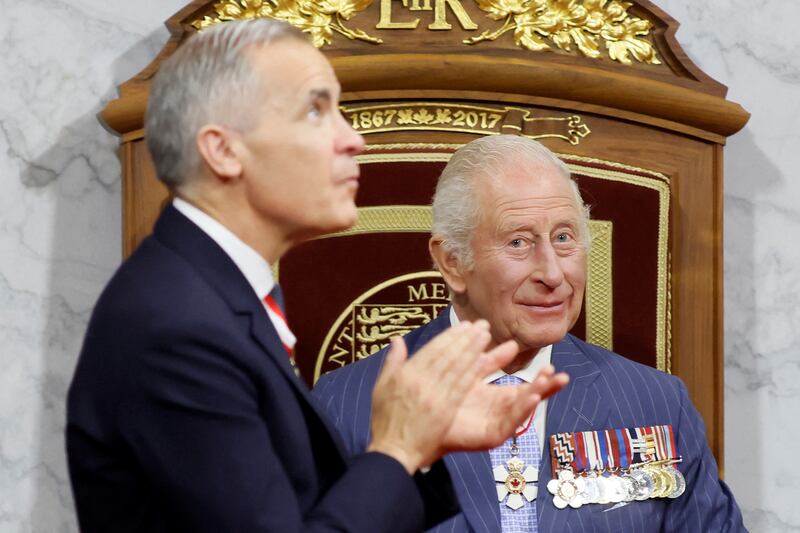
Charles was invited to Canada by Prime Minister Mark Carney, who served as the governor of the Bank of England between 2013 and 2020. Canada is a constitutional monarchy with the British monarch as its ceremonial head of state, represented by the Governor General.
“We’re able to have a non-partisan head of state completely above the fray of divisive politics,” Finch added. “A quick look to the south of us tells you just how important this is.”
The National Defence spending figure was initially obtained by Bloc Québécois MP Xavier Barsalou-Duval through what’s known as an order paper question, which is a procedural tool for lawmakers to get information from the government. The Bloc Québécois have long advocated for severing Canada’s ties with the British throne.
In a written statement to CTVNews.ca, Barsalou-Duval previously described the monarchy as a “colonial, archaic institution” that runs counter to the values of Quebecers.
“The decision by Mark Carney’s Liberals to invite King Charles III was as expensive as it was pointless,” Barsalou-Duval said in French. “Quebecers have the right to question how their money is being managed in Ottawa for a visit that only lasted a few hours.”