Michael Cnudde has high-functioning autism and says it has made it difficult to secure and hold employment throughout his life, which has greatly impacted his finances.
The 63-year-old from Toronto was once close to experiencing homelessness, but managed to find a friend who he could live with for three years.
He applied for the Disability Tax Credit (DTC) — a non-refundable tax credit that lowers the amount of income tax owed by individuals with physical or mental disabilities, including family members who support them — with his family doctor two years ago, hoping for some financial relief.
Qualifying for the DTC would make him eligible to receive federal support offered to Canadians living with disabilities, including the Canada Disability Benefit, the Child Disability Benefit, the Registered Disability Savings Plan and the Canada Disability Savings Grant and Bond.
However, his application was rejected.
“It’s a shame,” Cnudde told CTVNews.ca “It would’ve been helpful, because like many people on the autism spectrum, I’ve had difficulty holding on and finding employment.”
“I will probably keep working until I hit 70, I guess, if I’m lucky” he added.

Obstacle while living with disabilities
Cnudde is one of many Canadians who have difficulty qualifying for the DTC.
Rabia Khedr, national director for Disability Without Poverty, says accessing the DTC is a common obstacle for many living with disabilities because of its “stringent” medical criteria and lengthy application process, which must be completed by a certified medical practitioner — sometimes at a cost to the individual.
The federal government proposed to reform the Disability Tax Credit application process in its spring economic update earlier this week.
They are proposing to improve the process by simplifying the process for people with certain long-lasting medical conditions that already meet the medical criteria, expand the list of medical practitioners who can certify eligibility and allow provincial and territorial public guardians or trustees to certify as well.
Khedr says while this announcement is a “step in the right direction,” barriers still remain.
“There’s a lot more work that needs to be done in order to make the Disability Tax Credit application process more accessible,” she said.
Khedr says although the government promises to simplify the process, people living with disabilities still need to find a medical practitioner to certify their impairment — which she says is particularly challenging for those without a family doctor who is aware of their medical history.
She also says that with a national shortage of family physicians, the process still places an administrative burden on family doctors to fill out the application.
“People still have to jump through multiple hoops to qualify for the Disability Tax Credit,” she said.
Khedr says one fix to the current process would’ve been to automatically qualify individuals who already applied and are enrolled in a provincial or territorial program for the DTC, and subsequentially, its other benefits.
“These Canadians have already been assessed by their own provincial governments,” she said. “They’re already living in deep poverty. Making them re-prove their disability federally is a barrier with no policy justification.”
Canada Disability Benefit
Additionally, as a result of barriers to qualify for the DTC, many have not been able to access the new Canada Disability Benefit (CDB), which began rolling out monthly payments last year — at most $200 for eligible Canadians with disabilities.
Through the benefit’s development, the government held public consultations with advocacy groups for their input on the benefit. Advocates recommended not to make eligibility for the DTC a requirement to access the new CDB, but it ultimately was.
Jennifer Kozelj, press secretary for Minister of Jobs and Families Patty Hajdu, confirmed to CTVNews.ca in an email in July 2025 that “the Disability Tax Credit was determined to be the best option to deliver a national, portable benefit on time.”
Advocates also said the amount was not sufficient for people with disabilities living in poverty.
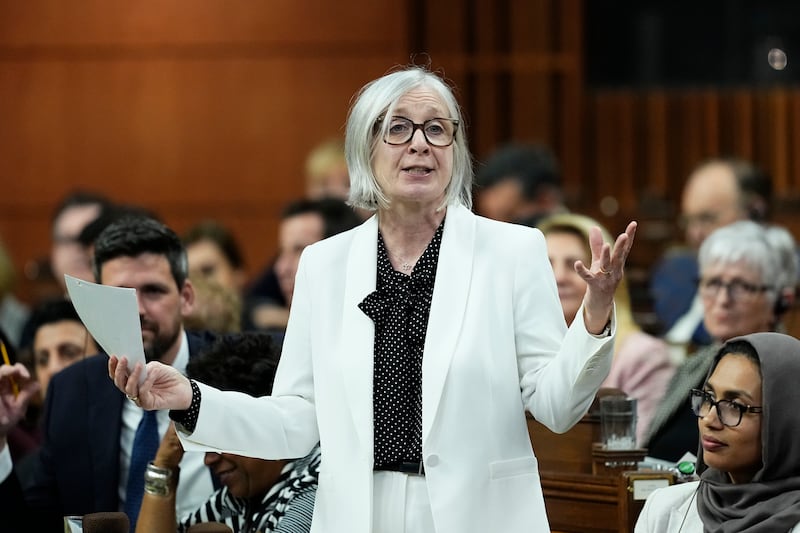
Hajdu told Vassy Kapelos on CTV News Power Play on Thursday that the CDB was meant to supplement other benefits people living with disabilities get through provincial and territorial systems.
However, individuals in Alberta who receive provincial disability support have not benefited from the CDB, as the provincial government counts the new benefit as income and reduces their own payments by the same amount.
Khedr says they will keep pressing until the CDB reaches everyone it was intended to.
“When times are tough for able-bodied Canadians, able-bodied Canadians in positions of power get tough on the programs and services for people living with disabilities,” she said. “Although the benefit is not enough, we can only dream of it being increased right now.”

Disparities in access
According to the Canadian Medical Association, there are 84 per cent of people living with disabilities who currently do not hold a DTC certificate.
The association has also been advocating for a change in the application process, and while they are happy about the reform in the process, they say there are still additional steps to take.
“We know there’s a lot of people living in Canada with disabilities that have not been able to take advantage of the Disability Tax Credit,” Dr. Bolu Ogunyemi, president-elect of the Canadian Medical Association, told CTVNews.ca in an interview.
While the proposed reform will narrow the current gap, he says there will still be a significant percentage of individuals who are living with disabilities who will still not benefit from the DTC.
He says the association plans to connect with more groups and individuals to gather more data that will inform their next steps on advocating on how to better make the DTC more accessible to those who need it.
“We’re going to keep pushing, we’re going to keep collaborating,” he said.
“We’re going to keep collecting data and making sure that the data will lead to policy change, which will ultimately lead to more people in Canada being supported in that way.”

