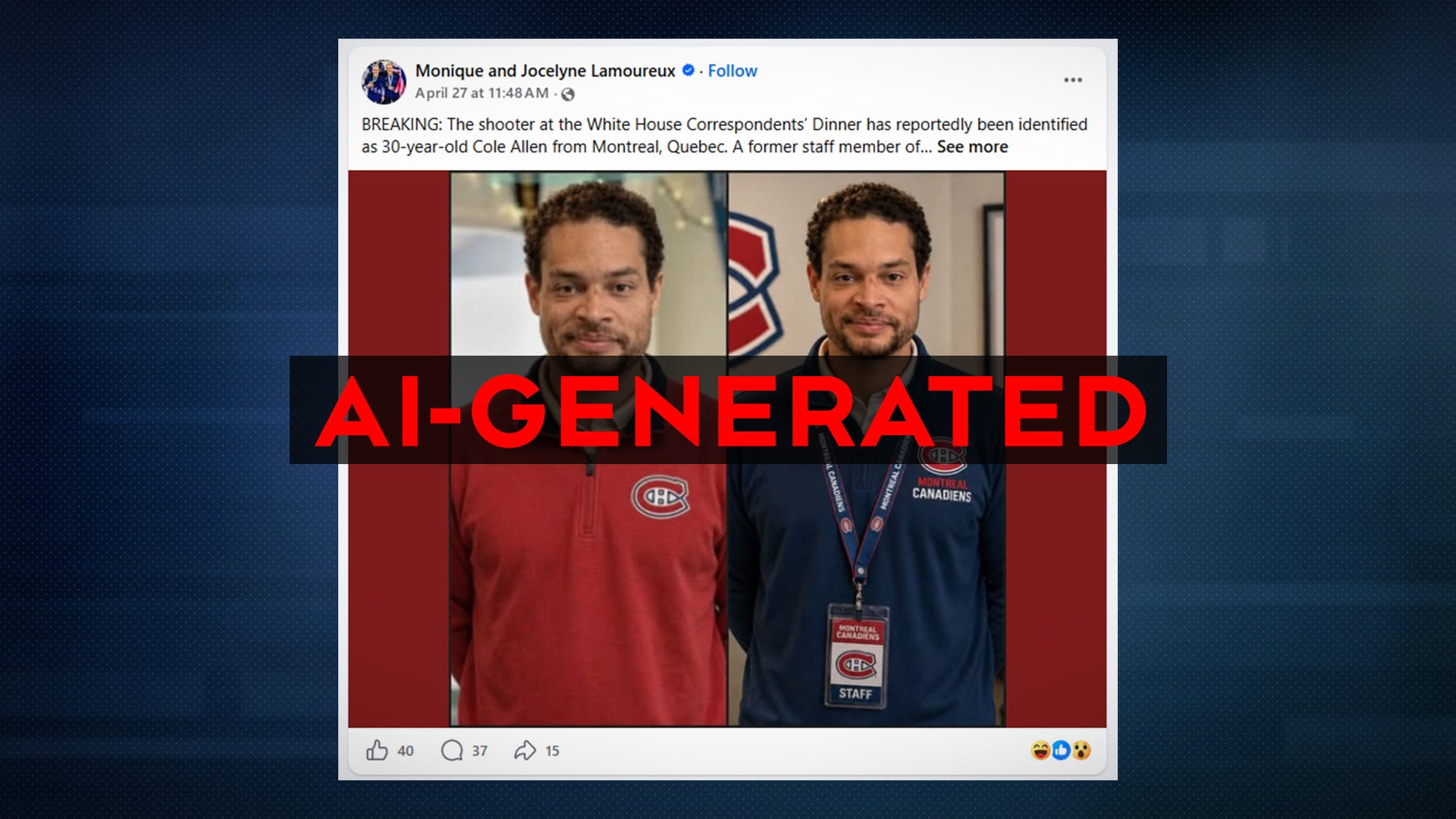
A series of posts has been circulating in recent days on social media claiming that the man arrested at the White House Correspondents’ Dinner last weekend has ties to the Montreal Canadiens.
After being arrested by police Saturday in Washington, the alleged shooter, 31-year-old Cole Allen, has been charged with trying to assassinate U.S. President Donald Trump. He faces two other firearms charges.
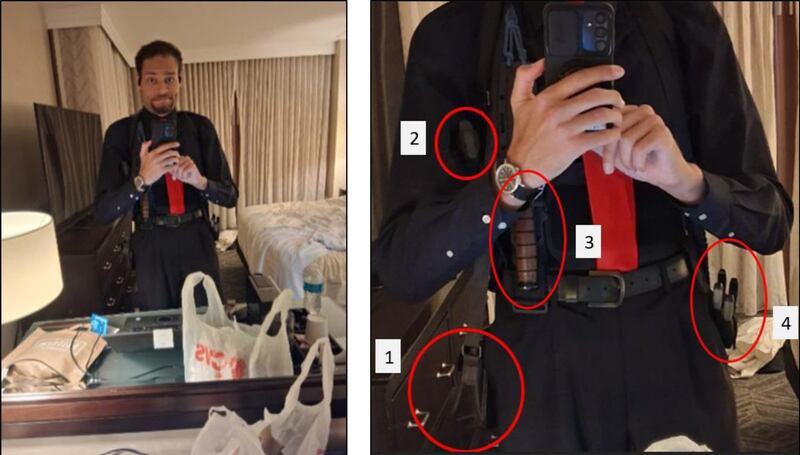
Allen, a highly-educated tutor and amateur video game developer from Torrance, Calif., is accused of storming past security at the Washington Hilton before he was arrested. Authorities say he was carrying two firearms and knives.
In the days after the arrest, multiple posts on Facebook included images of him that were altered with artificial intelligence (AI), showing him wearing Habs gear, including a lanyard bearing the Canadiens logo attached to a badge marked with the words “MONTREAL CANADIENS STAFF.”
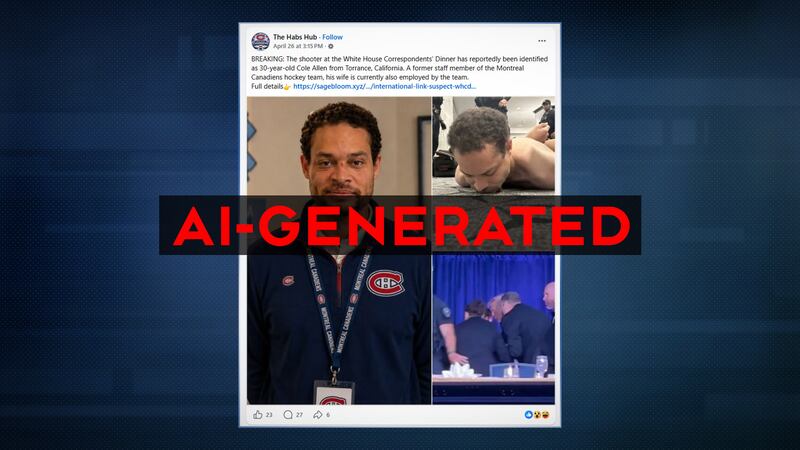
Many of the posts begin with the words “BREAKING” and identify him as either a current or former Canadiens staff member.
Allen, however, has no ties to the hockey team.
“I can confirm that Cole Allen never worked for the Canadiens,” wrote Chantal Machabée, vice-president of communications for the Canadiens, in an email to CTV News.
She referred to the online posts simply as “fake news.”
Searches online show that several Facebook posts link the alleged shooter to several other sports organizations, including the Minnesota Vikings, the Detroit Lions, and others — all thanks to AI.
Some of the accounts alleging the Canadiens connection are managed by other Facebook accounts based overseas. One of them is the “Monique and Jocelyne Lamoureux” Facebook page, which has a profile photo of the American Olympic gold medalist twin ice hockey players.
At first glance, the account looks legitimate. It has nearly 69,000 followers and next to the profile name is a blue verified badge issued by Meta, the owner of Facebook.
However, a review by CTV News shows that the account, which was created in 2013, is now managed by five accounts based in Vietnam and one in Sierra Leone. It is also linked to more than 450 inactive ads on Facebook and Instagram that have been removed for violating the company’s advertising standards. Many of the ads were targeted at European countries.
The account is responsible for spreading AI-related disinformation about other notable figures, including fake stories about the Canadiens’ Cole Caufield’s grandmother and other athletes.
- Sign up now for daily CTV News Montreal newsletters
- The information you need to know, sent directly to you: Download the CTV News App
Clicking on the link included in the post about Allen being a Canadiens employee takes the user to a purported news article.
CTV News showed the page to disinformation expert Mathieu Lavigne, who said the motive behind the Facebook clickbait is clear.
“There are definitely some financial incentives there,” said Lavigne, analytic lead at the Media Ecosystem Observatory, based at McGill University.
The fake news website linked to the post is littered with ads and monetized videos.
But there appears to be a more sinister part of the scheme. One of the pop-ups urges the reader to click on a link that installs a piece of software on their device that allows the scammer to “hijack” and gain control of their internet browser, and monitor the user’s browser history.
- Researchers studied who’s spreading the most conspiracy theories in Canada. Here’s what they found
- AI is a gold mine for spammers and scammers, but Google is using it as a tool to fight back
Lavigne said it’s unclear if the malicious browser extension is directly associated with the owner of the pages, but he said internet users can expect to see more of these types of online scams in their social media feeds now that AI is advancing and becoming more widely used.
He suspects the original owner of the Facebook profile lost access to the account, and it has since been repurposed by bad actors.
“It’s very common right now. If anything big happens, especially a shooting or violent event, we’re going to see a lot of this information being spread about it,” he said.
He also said the case shines a light on the need for more accountability on social media platforms to rein in disinformation.
“I think that Facebook needs to seriously evaluate why it is the case that users are seeing a lot of all this AI slop from unknown accounts and AI-generated content in their feed, and what they can do to make sure that the platform is safe for users and that users are seeing the type of content that they’d like to see,” he said.
With files from The Associated Press

