Members of Alberta’s energy sector are optimistic about global demand for its resources, a different relationship with the federal government and a new pipeline project.
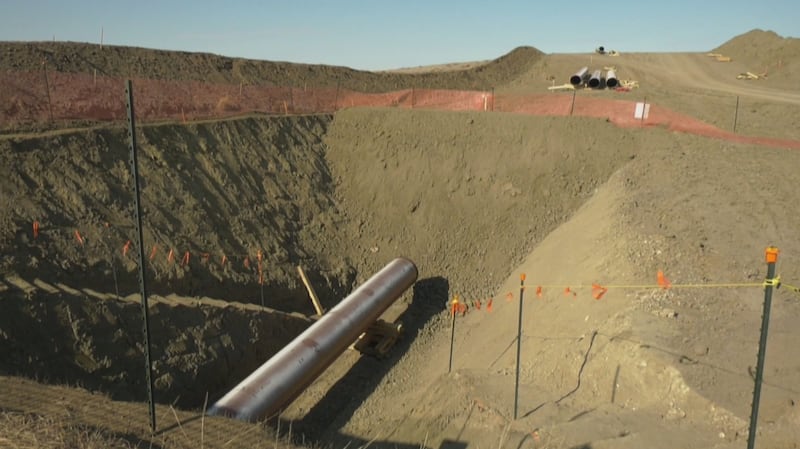
U.S. President Donald Trump approved a permit for the Bridger Pipeline using parts of the Keystone Pipeline Project scrapped in 2021 by Joe Biden due to environmental and indigenous concerns.
The Bridger project would take a different route along the Montana-Saskatchewan border before a south turn towards Wyoming.
“It gets through using existing infrastructure and some expansions in certain areas,” said Al Salazar, the head of macro oil and gas research with Enverus Intelligence.
Salazar said the revised route removes much of the controversy Keystone faced.
“Seventy per cent of it is through, I believe, private lands,” he said.
Northern link
The project would connect to a northern link, owned by Alberta’s South Bow Corporation, to pump a lot more oil to Americans.
“Huge new export capacity (of around) 550,000 barrels,” said Heather Exner-Pirot with MacDonald-Laurier Institute Energy.
The project is expected to face opposition from environmental groups.
“This project will meet with the same opposition that Keystone did,” said Jenny Harbine, an attorney with EarthJustice in Bozeman, MT.
Canada is still pressing to expand other markets.
“We should be doing everything we can to create the infrastructure, so we have the optionality to sell our energy to as many of our allies as possible, not just the one we have a border with,” said federal energy and natural resources minister Tim Hodgson in a speech in Calgary delivered at the Canadian Association of Energy Contractors spring luncheon.
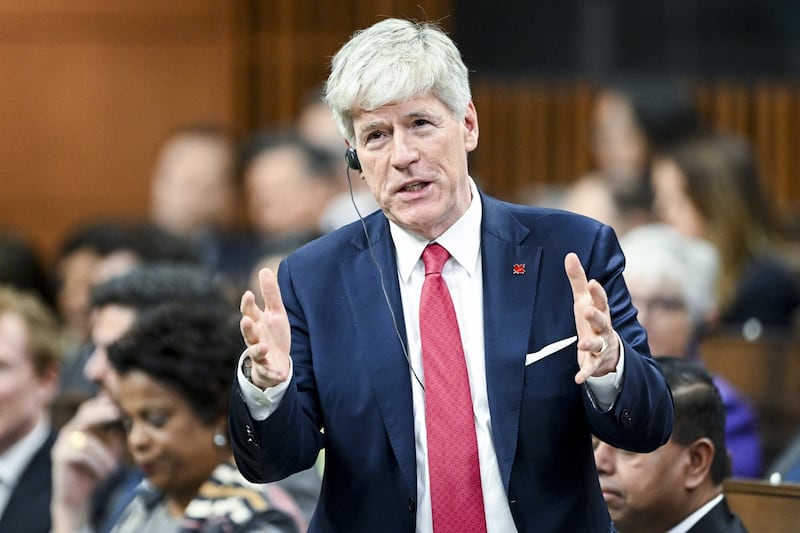
“With energy insecurity and volatility we have seen in places like Ukraine and over the last two months due to the war in the Middle East, (the energy industry’s) work creating strategic (resource) autonomy for Canada has never been more important,” he added.
He also praised the industry for its role in helping Canadians.
“This government now understands that energy is the engine of this economy,” said Hodgson which was met with big applause in Calgary.
Industry representatives liked what they heard from Hodgson.
“We do see the prospects of alignment between the Government of Canada and the Government of Alberta. That’s also a remarkable change of circumstance. And so there is profound momentum in the Canadian energy business,” said Evan Bahry, President of Energy Connections Canada.
“The world is coming to Canada. Now is our chance to help not only our allies out, but frankly, to help the Canadian economy out,” he added.
Looking ahead
The Bridger pipeline expansion and a July 1 deadline for Alberta to present a potential pipeline project to the west coast to be considered for fast tracking from the federal Major Projects Office, producers are considering their options.
“I think everybody’s going to be looking at what the terms are going to be, what the tolls will look like and who wants to commit barrels south versus west? We don’t know what that looks like. It’s a interesting conversation,” said Calgary Chamber of Commerce president and CEO Deborah Yedlin.
If approved the Bridger pipeline is expected to be on stream by 2029-2030, much faster than the roughly eight years it would take to build a new pipeline.
It has raised questions about the potential impact on other possible projects which may arise due to Canada’s memorandum of understanding to fast track nation building projects.
“I’ve had folks ask me if this takes away momentum from other projects and I don’t think it does,” said Salazar.
“It really depends on what happens in the Strait of Hormuz and the shut in production in OPEC increasing global demand for Canadian resources.”

