The Horse Wildfire. The Beast. Or simply: the Fort McMurray fire.
Whatever you call it, the flames that hit the northern Alberta community 10 years ago amounted to the most expensive natural disaster in Canadian history.
In Part 1 of Fort McMurray: A Decade After Disaster, we explore what it was like for the people fleeing their homes and how the city has changed in the years since.
The fire enters Fort McMurray
May 3, 2016, the wildfire that had been burning near the city of Fort McMurray for days turned toward town, whipped into a frenzy by strong winds.
“There was no comprehension that we would be experiencing what we did by the afternoon,” Melissa Blake, the mayor at the time, told CTV News Edmonton.
Blake recalls checking its progress from a seventh-floor boardroom at city hall.
“You look out at 10 a.m., it’s not so bad. There’s a little smoke in the background. You look out at 1 p.m. and holy cow. There’s some flames that you can see behind Abasand, and then all of a sudden you’re looking at the flames consuming the top of Abasand, and at the same viewpoint, I was able to see the traffic coming down Abasand Hill.”
Traffic backed up on the only highway south out of Fort McMurray.
As cars crawled along, flames devoured dry trees and grass beside them.
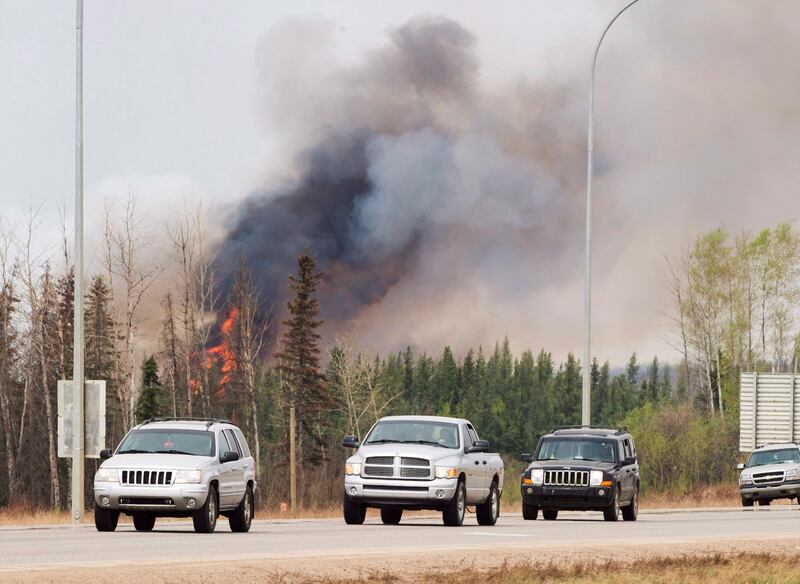
Ten years later, Fort McMurray residents describe the organized chaos of more than 80,000 people evacuating at once.
Cassie Coulson was an education assistant at an elementary school.
“Everything shifted really fast. The buses weren’t able to come through (so) us as a staff decided, ‘Well, we have to get the kids out of here, what are we going to do?’ So we piled all the kids that were left in every vehicle,” she said.
As evacuees made their way south, they encountered empty gas stations and overflowing hotels.
“I’m running on fumes, fumes of gas,” an evacuee said in 2016. “Nothing, like, any drop in the tank.”
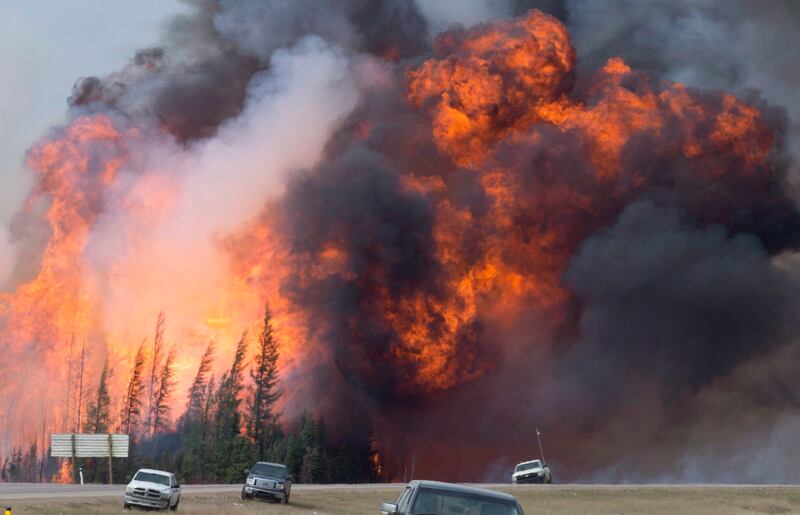
The fire forced many others north to oilsands camps, including Blake, who remembers being flown out of there days later along with her neighbours and all their pets.
“I think it was the Suncor-contracted WestJet planes that took us all out,” Blake said. “There was no restriction on the animals, the big dogs, little dogs, little cats, fish. It didn’t matter, you could get on board that WestJet plane and they were going to take you somewhere.”
For the better part of a month, cities and towns across Alberta welcomed and supported evacuees with supplies and kind gestures. Some children finished their school year in Edmonton classrooms.
“I used to go to St. Anne, which I got evacuated from … today’s my first day so I was teaching the class about some of the stuff I learned at St. Anne,” Liam Flett said on May 6, 2016.
Some people, like Justin Brant, left the province as they waited for re-entry.
“A lot of people went back to where they’re from,” he said. “Newfoundland, Ontario, New Brunswick, Quebec. I heard of people going all over.”
The damage caused
As the weeks dragged on, cleanup crews took on the tall task of making Fort McMurray fit to live in again. Mayor Blake says calls to city staff became hostile as evacuees demanded information they didn’t have or couldn’t share.
“We were getting a lot of pressure and negative feedback saying, ‘Let us in, let us in, let us in,’ and we simply couldn’t,” Blake recalled. “Like I was looking literally two weeks into the fire at power lines that were snapping, crackling and popping, and it just wasn’t safe to bring people back.”
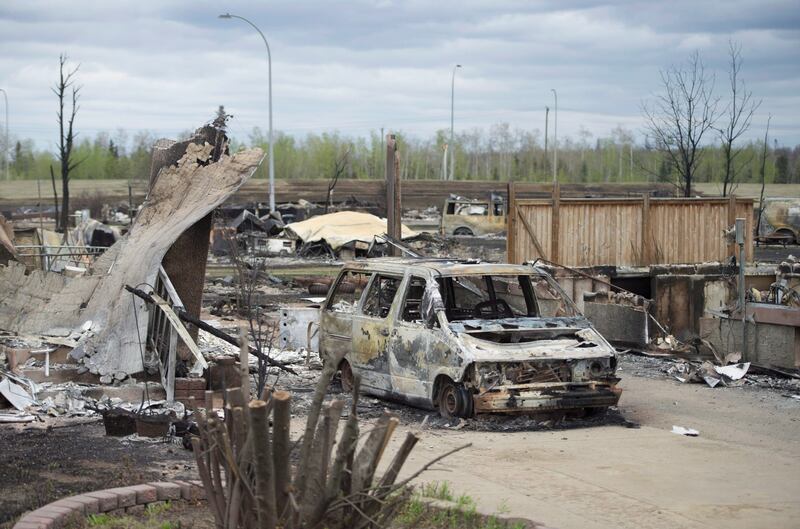
Fire crews managed to save roughly 90 per cent of the city, including major municipal infrastructure like the water treatment plant, hospital and schools.
The fire destroyed more than 2,400 structures — mostly homes.
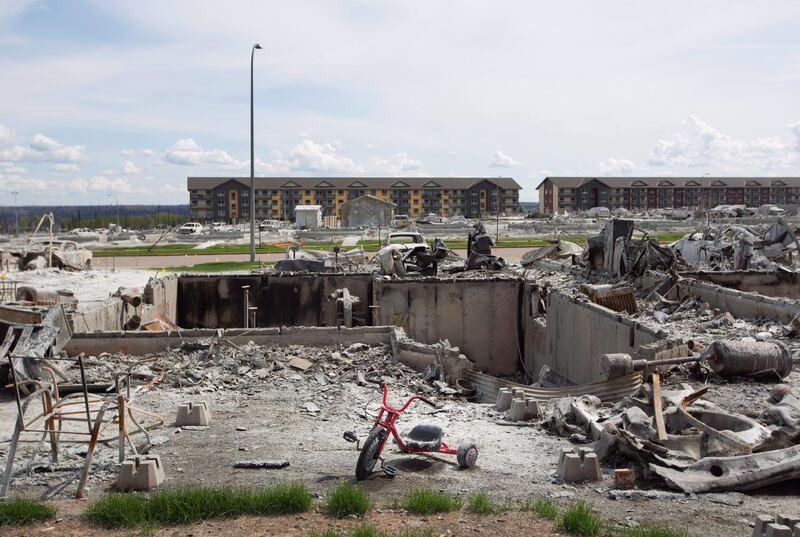
The damage was concentrated in a few neighbourhoods. Abasand lost more than 1,100 homes. Beacon Hill, nearly 500 — roughly 80 per cent of the community. Thickwood and Timberlea ignited when ashes jumped the Athabasca River. Most of the Waterways neighbourhood was also destroyed.
“When you’re used to coming into a community and seeing, if you want to call it a skyline, a skyline of residential homes, that is no longer a skyline, and it’s literally flattened,” Irv Heide told CTV News Edmonton.
Heide had just retired from the Fort McMurray RCMP when the fire hit. He joined the international humanitarian group Team Rubicon, which formed its Canadian chapter in response to the wildfire.
Once evacuees had been through the highs and lows of returning home, Team Rubicon helped people safely sift through the debris.
“We found wedding rings, we found war medals, sports award things, toys,” Heide said. “The majority of people just couldn’t move on until they actually physically saw what they saw, and we helped facilitate that.”
The rebuild
Over the past decade, Beacon Hill has been mostly rebuilt. Almost every home still looks new. Gaps still remain where houses used to be. Fort McMurray Today reported more than 80 per cent of properties lost in the fire citywide had been rebuilt by 2022.
“There’s still people fighting insurance companies and builders and stuff like that to this day,” Brant said. “But a lot of the people have come back and a lot of people say there’s no place they’d rather be, too.”
A decade after the disaster, the oilsands boom has slowed, but present Mayor Sandy Bowman says Fort McMurray’s population has grown with the rest of Alberta.
“The camp population went down by 11 per cent and the permanent population went up by the same amount,” Bowman said.
While it’s basically back to business as usual, the emotional toll from the fire is less tangible.
Local social agencies have concerns about mental health and rising rates of domestic violence, divorce and addictions.
Long-term health impacts to first responders are also uncertain.
Even though the stickers are faded and peeling, Mayor Bowman believes his community is still “Fort Mac Strong.”
“People that are here are proud of this community and stand up for each other, and I think everyone worked together to build it back up.”
It’s a sentiment that’s part of Fort McMurray’s fabric, even as its people continue to support each other through a steady stream of emergencies.
“There’s no place like it, like seeing what happened on the highway, and now with the flood possibly happening again. Yeah, there’s no place like Fort McMurray,” resident Cassie Coulson said.

