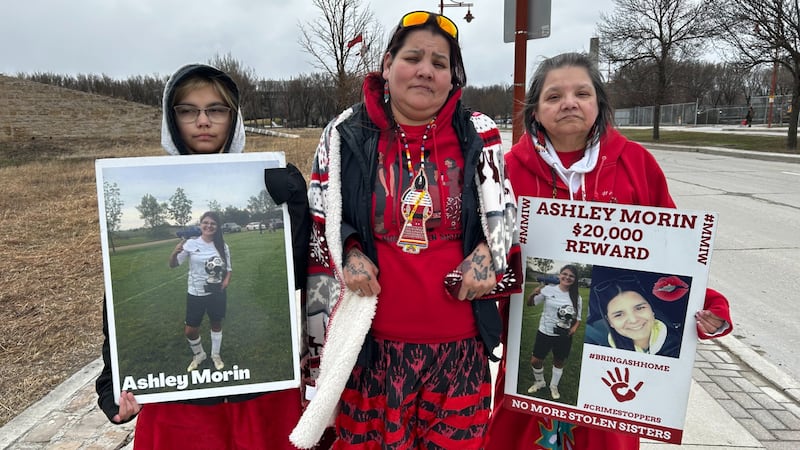
WINNIPEG – It has been more than seven years since Ashley Morin disappeared. Her sister, Janine Morin, has never stopped searching.
“We still have hopes that someone will come forward that has information leading up to finding her,” she said.
Ashley went missing on July 10, 2018, and was last seen in North Battleford, Sask., about 136 kilometres northwest of Saskatoon.
A year after her disappearance, the RCMP announced they believed she was a victim of a homicide. The case remains active and is under investigation by the Saskatchewan RCMP’s Historical Case Unit.
Ashley was 31 when she went missing.
“All we want is to bring my sister home,” Janine said. “She was kind. She had the biggest heart. We just want to bring her home. We need that closure.”
Ashley is one of many Indigenous women and girls who are missing or have been victims of violence in Canada.
Red Dress Day observed across Canada
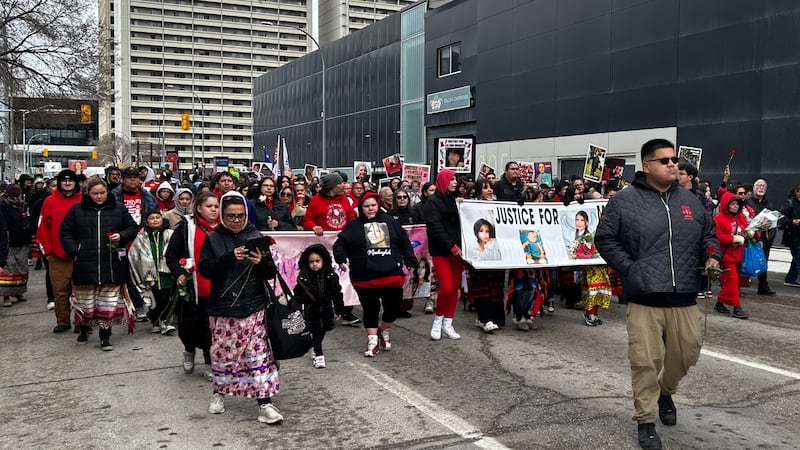
Janine and her family joined thousands of Winnipeggers as they marched through the streets of the city on Tuesday to mark Red Dress Day.
The national day of awareness – which brings attention to the issue of Missing and Murdered Indigenous Women, Girls, and Two-Spirit People (MMIWG2S+) – was first observed in 2010.
Metis artist Jaime Black created an art installation called the REDress Project, featuring red dresses hung in public spaces, to serve as reminders of those who have been lost or are missing.
Black displayed more than 100 red dresses around the University of Winnipeg campus to raise awareness on the issue.
Vigils and marches were held in cities throughout the country Tuesday, including on Parliament Hill in Ottawa.
The event was led by Bridget Tolley, founder of Families of Sisters in Spirit.
2026 marks 25 years since Tolley’s mother, Gladys, died after she was struck by a police cruiser near her home on Kitigan Zibi First Nation in Quebec.
It also marks 10 years since the launch of the National Inquiry into Missing and Murdered Indigenous Women and Girls, and five years since the release of its national action plan, which included 231 calls for justice.
According to the federal government, Indigenous women are 12 times more likely than non-Indigenous women to go missing or be murdered.
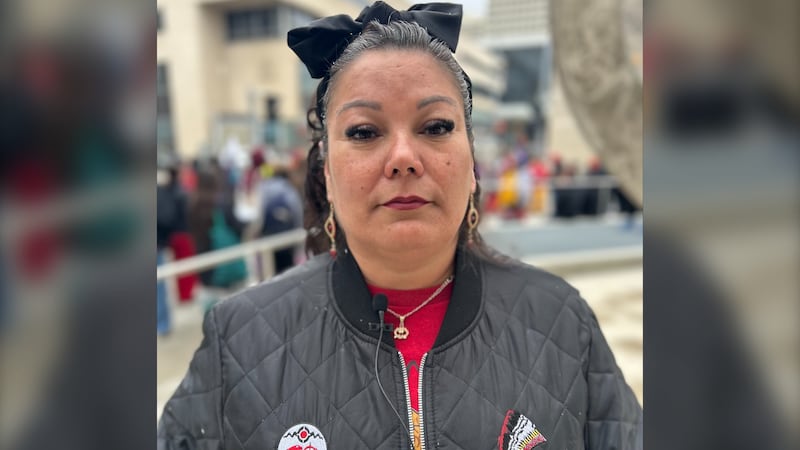
“This is why we come together to remind people that they aren’t alone,” said advocate Melissa Robinson. “We are here to support them. We are here to be there.”
Robinson is the cousin of the late Morgan Harris, who was one of four Indigenous women killed by serial killer Jeremy Skibicki in 2022.
She says days of remembrance like Red Dress Day are extremely hard for her and her family.
“It’s a tough day to look back at the numbers and to know that our women continue to be targets,” she said. “It’s a scary thing.”
Irene Roussin is also among those grieving. Her granddaughter, Mackaylah Gerard-Roussin, was just 20 years old when she was killed south of Steinbach, Man., in 2022.
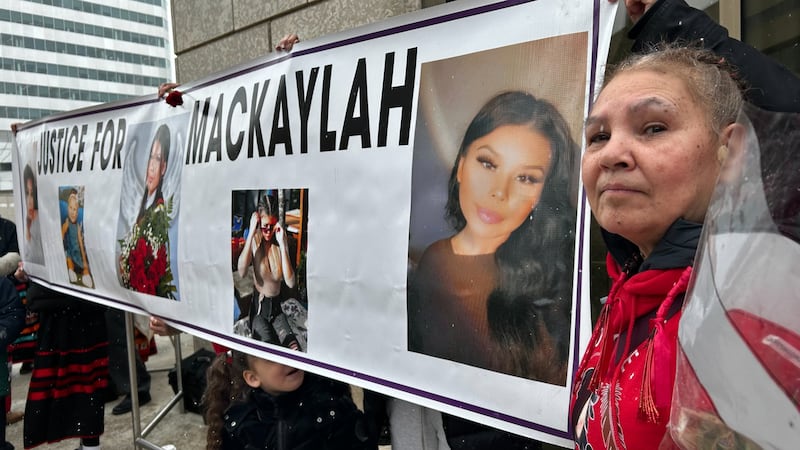
The man responsible for her death, Josh Benoit, was found guilty of first-degree murder in a Winnipeg courtroom.
While the verdict brought some measure of justice, Roussin said it cannot undo the loss.
“She had goals to be a psychologist for young children going through difficult times in her time,” she said.
“That was her goal and that was taken from each and every one of us. Her memory will go on and on, no matter what.”
For Janine Morin, the fight to find her sister continues.
She wants Canadians to understand that awareness of MMIWG2S+ issues extends far beyond a single day.
For families like hers, the pain is constant.
“I’m going to continue until she comes home,” she said.
“I just want to bring her home, whatever that may look like. If you know something, speak up.”