Canadians willing to stay up late, or wake up early, could catch a glimpse of shooting stars Tuesday night and Wednesday morning as the Eta Aquariid meteor shower reaches its peak.
The annual event occurs when Earth passes through a stream of debris left behind by Halley’s Comet, producing bright streaks of light as particles burn up in the atmosphere.
“(Meteor showers happen when) our planet goes through a cloud of little sand-grain-sized pebbles that are floating in space … deposited by comets,” said astronomy expert Andrew Fazekas in an interview with CTVNews.ca.
As Earth moves through this debris, the particles hit the atmosphere and burn up high above the ground.
The Eta Aquariids are linked to Halley’s Comet, which orbits the sun roughly every 76 years and sheds material along its path.
“When we’re looking at the sky and we see those streaks of light tonight, those are really produced by the leftovers, the bits and pieces of Halley’s comet,” Fazekas explained.
The shower is expected to peak overnight into Wednesday morning, with activity increasing after midnight.
“As soon as it gets dark, you can start looking and it really starts peaking after midnight until around 3, 4 in the morning,” Fazekas said.
While viewing conditions in Canada aren’t ideal, sky watchers can still catch some of the brighter meteors with a bit of patience. The Aquarius constellation sits low on the horizon, meaning fewer meteors will be visible here compared to the southern hemisphere.
“For us here in Canada, the Aquarius constellation where they appear to come from, is very, very low in the horizon … so we don’t see as many meteors,” he said.
The shower is also considered modest, typically producing between 10 and 25 meteors per hour at peak under ideal conditions.
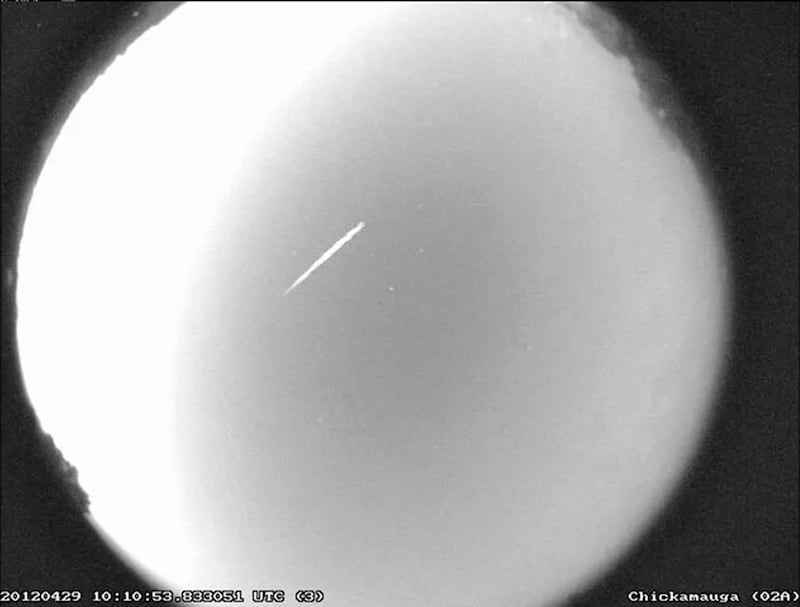
“The numbers I expect is probably closer to 10 shooting stars per hour for us here in Canada,” Fazekas said.
A bright moon may further reduce visibility this year, though it won’t completely wash out the show.
“We just had a full moon a few days ago, so there’s still going to be a bright moon in the sky overnight,” he said, adding that the fainter meteors will likely not be visible, but bright ones “will still shine through.”
Despite these challenges, no special equipment is needed to watch the meteor shower.
“Just your eyes (are enough) because binoculars and telescopes show you very small parts of the sky … that’s not good because meteors are going all over,” Fazekas said.
He recommends finding a dark location away from city lights and allowing time for your eyes to adjust.
“It takes about 20 to 30 minutes for your eyes to adapt to dark, and you’ll see many more meteors if you protect your eyes from light,” he said.
Staying warm and comfortable is also key, as viewing often requires patience.
“My observing tip is definitely you wanna stay warm … you have to be patient,” Fazekas said. “My suggestion is to take out a lawn chair … so you can lean back because otherwise, you’re looking up and your neck will … get very tired quickly.”
For the best view, he suggests keeping bright light sources, including the moon, out of your line of sight.
“This year, because there’s the moon in the sky, turn your back to the moon,” he said.

