A breeding program for northern spotted owls—one of the most endangered species in Canada—has welcomed its first chicks of 2026, and the public can catch a glimpse of the rare birds on a live webcam.
The two chicks hatched last month at the Northern Spotted Owl Breeding Program’s facility in B.C.’s Lower Mainland, where staff are working to restore the province’s population to more than 250 adults over the coming decades.
While numbers are difficulty to confirm, there are estimated to be fewer than five of the owls remaining in the wild in B.C., with more in Washington and Oregon.
The recent arrival of the first two chicks of the year—a male with a green spot on his head and a female with purple markings—is an occasion worth tuning in for, said facility co-ordinator Jasmine McCulligh.
- RELATED: Watch the live owl chick webcam
“Because this is the only breeding program in the world for this species, this is the only opportunity to see these really unique behaviours for yourself,” McCulligh said.
“They’re so charismatic and engaging—you can really get to know them just by watching them.”
The chicks, who are not genetic siblings, are being raised by “foster parents,” two adult owls named Einstein and Zalea, McCulligh said.
Zalea is currently spending most of her time in the nest to keep the chicks warm, but that will change as time goes on.
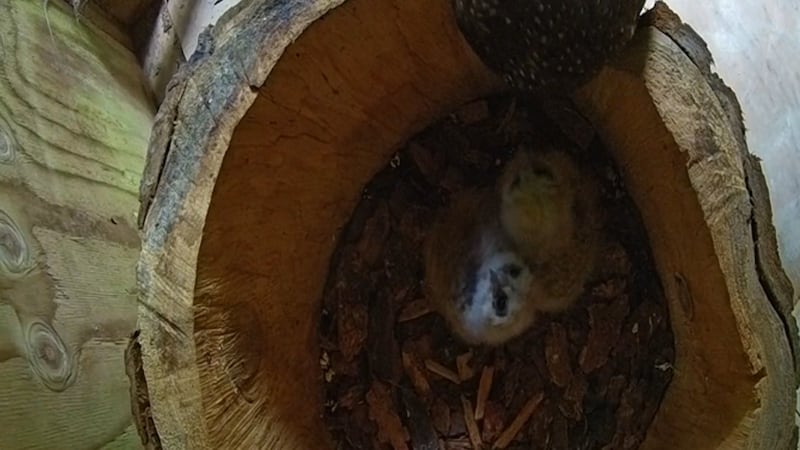
The chicks are expected to fledge at about 30 days old, which will come around mid-May, leaving a window of only a couple weeks to see the rare birds.
Northern spotted owls are a “species on the brink,” McCulligh said, and worth rooting for. She hopes the webcam will serve to increase interest in their longevity.
“I think seeing these fluffy little babies should encourage people to care about them,” she said.
In the wild, the birds are reliant on old-growth forests, and need large areas to thrive, according to the facility co-ordinator.
“Habitat loss, fragmentation and also competition from the invasive barred owl are contributing to their decline,” McCulligh added.
Interested viewers have been told to tune in between 6 p.m. and 10 p.m. for a potential live feeding—though staff warned it’s hard to predict when the parents will deliver the nourishment to the chicks.
The webcam is hosted by the NSOBP and the Fish and Wildlife Compensation Program, a partnership between government bodies, First Nations and other stakeholders with an aim of conserving species in watersheds impacted by BC Hydro dams.

