CALGARY – A new report is raising concerns about foreign interference in Canada, with researchers warning that the Alberta separatism debate has become a growing target of co-ordinated online campaigns tied to countries such as Russia.
The study found a surge in foreign-linked content amplifying Alberta separatism, including messages about independence, Canada’s decline and even the province joining the United States. Much of it is designed to blend into domestic conversations and spread through social media.
Brian McQuinn, a co-author of the report and co-director of the Centre for Artificial Intelligence, Data and Conflict at the University of Regina, said the tactics are subtle and often go unnoticed.
“The reason people don’t see it, is it’s very covert. Eighty-three per cent of the disinformation that is passed around, at least on the Russian side, is done by average Canadians,” he said. McQuinn also noted that messages are crafted to align with existing beliefs, so people share them without fully scrutinizing the content.
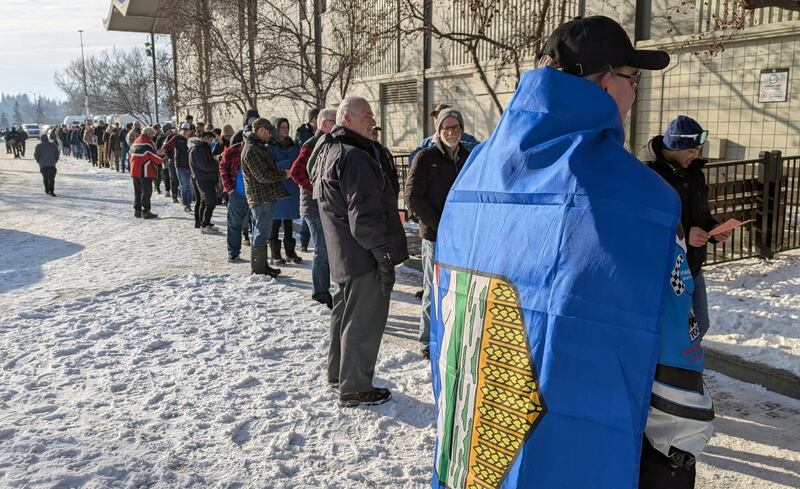
The report found that between December 2025 and April 2026, Alberta separatism became one of the most prominent Canadian topics across known disinformation networks, with co-ordinated posts aimed at inflaming political divisions.
“They will be on both sides online, amplifying it and changing the language to become more violent, changing the language where people who disagree with are you seen as an existential threat to the country and so their job is to amplify conflict,” McQuinn said.
He added that the focus on Alberta separatism has intensified sharply in recent months.
“Russia, for example targets any number of issues. It just happens to be that in the last few weeks and months, that the amount targeting Alberta has quadrupled compared to any other province.”
Researchers say the activity is part of a broader, long-term effort to erode social cohesion.
“This is not about just this referendum, this is about Russia … trying to reduce cohesion within the country over a 10-, 20-, 30-year period,” McQuinn said.
Alberta’s voter data security breach
Concerns about foreign influence comes as controversy grows within Alberta, over a separate issue involving voter data security breach.
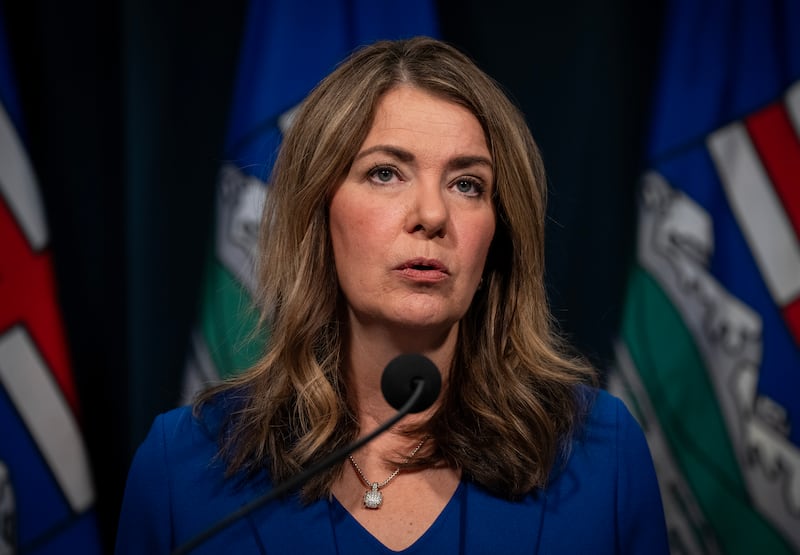
The Alberta NDP says it has evidence that two people in Premier Danielle Smith’s inner circle attended an online meeting connected to the Centurion Project — a separatist group facing allegations it obtained an electors list containing information on millions of Albertans. It’s alleged the Republican Party of Alberta, a registered political party, authorized to have the electors list, shared it with the Centurion project.
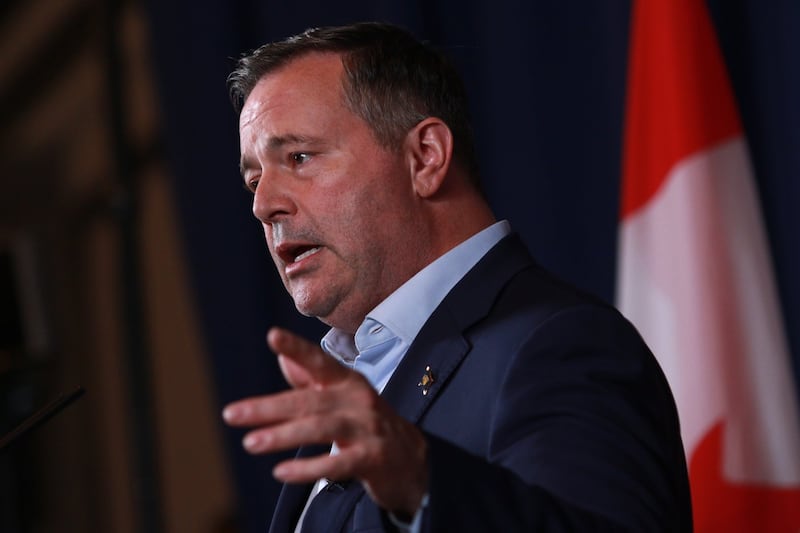
There are also claims that voter data — including that of former premier Jason Kenney — was demonstrated during that meeting.
Kenney says he is considering legal action after his personal information was allegedly shared at the event.
“I understand that my personal information, including my home address, was shared publicly on a screen at a recent Alberta separatist event,” he said in a statement posted to social media Tuesday.
Smith has said she was not aware of the alleged data breach until it was reported publicly. She said during question period Wednesday that a staff member attended the meeting, but was unaware of any wrongdoing.
“The staffer was from caucus, and he attended this event, as he has many others. There was no way for him to know that this data was illegal,” she said.
Privacy and data lawyer Adam Laroche said the scale of the situation is significant.
“The scale of this is truly unprecedented in Alberta’s history,” he said.
He warned the information could be used to target individuals.
“With that kind of information, actors can kind of hyper-target individuals by generating things like false invoices or bills, sending them to their addresses, and then try to direct them to a false resource to make (a) payment or try to extract other information out of them.”
Laroche said proving harm in data breach cases remains difficult.
“Data breach class actions have certainly been on the rise in Canada, but courts have been kind of careful and reticent to let breaches form the basis of a successful class action,” he added. “It all comes down to proving actual harm, which is hard to do, especially in Alberta.”
Is enough being done to address the breach?
Political scientist Lori Williams said the controversy is likely to increase pressure on the provincial government to change laws so there’s better protection around voter data, adding that stronger safeguards should be in place before any future vote.
Williams said a public inquiry may be needed to fully understand what happened.
“The only way of finding (out) what happened, (is) making recommendations to change the legislation so that it can be designed to minimize the damage and prevent similar issues in the future.”
Williams also questioned whether enough is being done to address the situation.
“At what point will the premier take responsibility, take the problem seriously and begin to take action to address it? That’s the key to restoring trust in our democratic processes.”
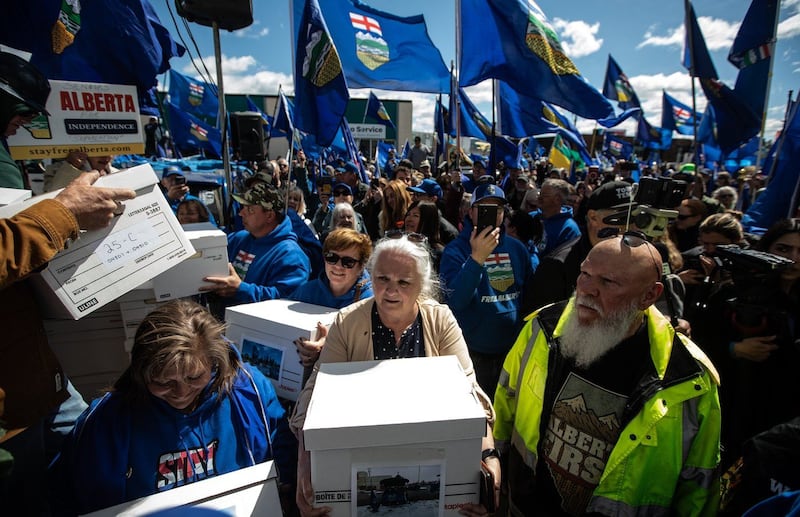
The controversy continues to unfold as separatist organizers push for a referendum this fall. Elections Alberta has yet to verify the signatures, but Stay Free Alberta says more than 300,000 have been collected — well above the roughly 178,000 required.
Researchers warn that a potential referendum could make the separatism debate an even bigger target for foreign influence.
McQuinn said the impact of influence campaigns is difficult to measure but clearly significant.
“The impact is very hard to measure. But we know that Russia spends over $2 billion on this, so they think there’s an impact because they wouldn’t be spending that if they didn’t think it was having an impact.”
He said the challenge is not eliminating debate, but ensuring it remains grounded in domestic voices.
“It’s actually making sure that the dialog is between Canadians, because this is something that’s important that Canadians talk through and understand and debate,” he said. “It’s really about trying to minimize and ensure that outside forces, amplifying and twisting that, don’t have an outsized role.”

