Elisha Thompson of Oshawa, Ont. was 15 years old when she got her first tattoo, and she went on to get many more. She never thought the tattoos she had could one day affect her eyesight.
“I went to school and I was like, ‘guys, I’m getting a tattoo and I was so excited,’” said Thompson, who added, “after that, it was a snowball effect and I started getting more and more tattoos.”
But later in her early 20s, Thompson started to have eyesight symptoms that were difficult for doctors to treat. In the early stages it was never clear that her tattoos, which had become tender and inflamed, were connected to her eyesight issues.
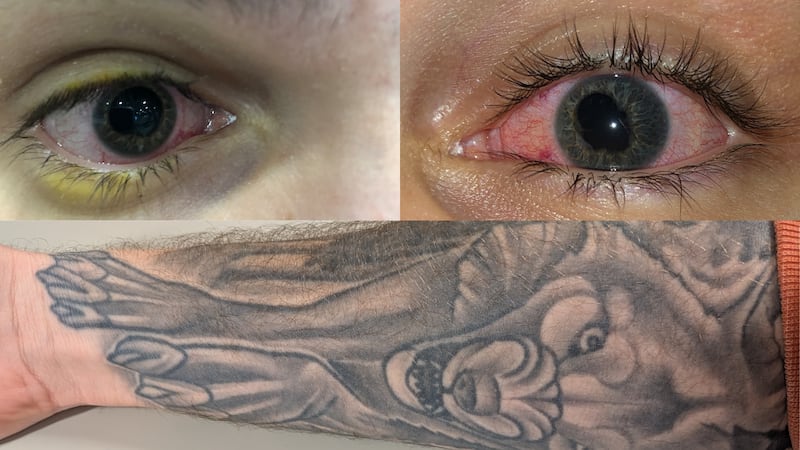
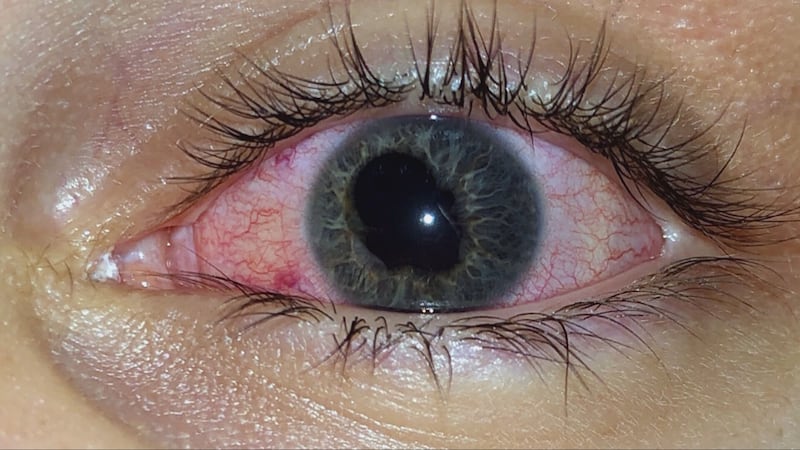
“My eyes would be crusted over. They would be red, I would have to put on sunglasses, and any type of light would hurt my eyes,” said Thompson.
Thompson was diagnosed with tattoo-associated uveitis as her immune system was reacting to the tattoo ink causing eye pain, light sensitivity, and some vision loss.
Thompson is currently on medication to manage her eyesight issues, but said, “I have no vision in my centre-vision in my right eye.”
An Australian study linking tattoos to vision loss is creating concerns in Canada, and a W5 investigation found that even though the condition is very rare, there appears to be a growing number of Canadians who have vision problems related to their tattoos.
What is uveitis?
An Australian report titled “Tattoo-Associated Uveitis: An Emerging Eye Health Challenge” found 40 cases of tattoo-associated uveitis identified in Australia. The report states “this previously rare condition has become a regular entity in Australian uveitis clinics.”
Uveitis is when there is inflammation of the uvea, the middle layer of the eye, which can cause severe pain, redness, blurry vision, and light sensitivity. It is considered a serious condition that could lead to permanent vision loss or blindness if left untreated. Uveitis is rare and tattoo-associated uveitis is considered rarer still.
It occurs when someone has an immune reaction causing eyesight issues, while at the same time the patients tattoos may become raised, itchy, scaly as well as tender and inflamed.
W5 contacted Ophthalmologist Dr. Josephine Richards in Perth, Australia who took part in the study. She says she was concerned when 10 of her patients in Perth, a city of about 2.3 million, were confirmed to have tattoo-associated uveitis. After connecting with colleagues, they were able to find there were at total of 40 cases of tattoo-associated uveitis in Australia. She suspects there are many more.
Richards says the Australian study is important to let other eyecare professional around the world know there could be a correlation between vision loss, eye pain and tattoos.
“If other ophthalmologists and optometrists can be aware that this is an issue, they can look it up and they can see it is quite a serious problem,” said Richards, who added “it will also allow us to raise awareness and seek funding for research to prevent this happening to others in the future.”
W5 reached out to Dr. Nupura Bakshi, a retina and uveitis specialist at St. Michael’s Hospital in Toronto and a member of the Board of Directors with the Canadian Ophthalmological Society. Bakshi said while the Australian case study is important to highlight the issue of tattoo-associated uveitis, she and others have seen individual cases of tattoo-associated uveitis over the years.
“I had my first patient with this condition over 10 years ago. There are patients who have a tattoo, and something in the tattoo triggers their immune system to recognize it as foreign. And then it attacks the eye,” said Bakshi. “It’s important to note it’s not just the tattoo. It’s part of a systemic autoimmune disease in many patients.”

About one-third of Canadians have at least one tattoo, which is about 13 million people. Researchers say if you have tattoos and you are not currently having any issues with them or your eyesight, you should not be alarmed by the study, as the condition is extremely rare.
But it is advisable to be aware of the condition in case you ever develop symptoms such as inflammation, soreness in the tattoo area or vision problems, so you can tell a health professional that there may be a connection between the two.
“You will see that the tattoo is raised, the tattoo is swollen, there are bumps around the tattoo and at the same time they also have inflammation inside their eye,” Bakshi said.
‘For the rest of my life’
W5 also contacted Zachery Adamkowski-Sissons of Thunder Bay, Ont. who also is being treated for the same eyesight condition.
He started to get tattoos in his late teens.
“My wrist has some symbols on it, and I do have more tattoos on my arm sleeve and some numbers,” said Adamkowski-Sissons.
He says he got a tattoo on his wrist when he was 20 years old. About a week later, he started to have a severe reaction in his eye.
“I started having issues with my right eye. It was red and inflamed … and I couldn’t open it," said Adamkowski-Sissons, who added pus developed in the area.
Adamkowski-Sissons has also been diagnosed with tattoo-associated uveitis, which requires ongoing treatment. In the beginning, he said, he was misdiagnosed. Doctors were not sure what was causing his eyesight issues.
He said his own research helped him connect with a doctor in the United States who was able to help correctly diagnose his condition. That doctor suggested treatment with eye injections, steroids and other medications.
“It’s going to be something long term for the rest of my life, and I can’t get more tattoos,” said Adamkowski-Sissons.
Ink quality
There are some concerns about the type of tattoo ink used, which can contain heavy metals, iron oxides and carbon compounds.
Richards says anyone getting a tattoo should go to a reputable artist and to ask if the ink being used is suitable for people.
“I certainly would not want anyone to use calligraphy ink on me,” said Richards. Calligraphy inks can introduce bacteria or contaminates into the skin which could cause bacteria and contaminants leading to infections.
“I think the main thing to keep in mind is to have your tattoo done at a reputable salon with an artist of good reputation. And if possible, find out which pigments are used so you have that for your own records,” said Bakshi.
W5 reached out to Health Canada, and a spokesperson said: “Tattoo parlors are regulated as businesses by the provinces and territories. Professional requirements for tattoo artists vary by province and territory.”
Tattoo inks are subject to Health Canada’s Cosmetic Regulations under the Food and Drugs Act, and the Consumer Packaging and Labelling Act and its regulations.
“Cosmetic products are required to be manufactured free from contaminants such as heavy metals and micro-organisms, and many inks are manufactured to be sterile,” the spokesperson said, adding it’s up to the manufacturer or importer to ensure they are selling a safe product that meet requirements under the Food and Drugs Act and cosmetic regulations.

Bakshi said Canadian ophthalmologists now plan to compile their own data on the number of Canadians with the condition to help the public understand how widespread an issue tattoo-associated uveitis is.
“We’re actually starting to look at collecting a Canadian case series here so we can have our own local data. Even just speaking with other colleagues, we know we have 10-to-15 cases just within our city (Toronto),” said Bakshi.
Inflamed tattoos
Thompson has been dealing with her eyesight issues for 10 years. She also said her eyesight has improved over the past five years following cataract surgery. She agrees more research is needed, especially about the type of inks being used.
She says while many of her tattoos are inflamed, a smaller rose tattoo she paid $350 for has no inflammation at all. She wonders if the inks used in more inexpensive tattoos she had done in the past could be the issue.
“I think I’m going to hold off on my next tattoo until more research is done and more people are informed about what goes into tattoos and what kind of ingredients are in the ink and if your body is going to react to it or not,” said Thompson.
The best advice from Bakshi is: “Don’t worry if your tattoo looks fine. Don’t worry at all. But if your tattoo becomes itchy, inflamed and tender, and you start to experience eyesight issues, then you see should speak with an eyecare professional right away.”

